Skip to content

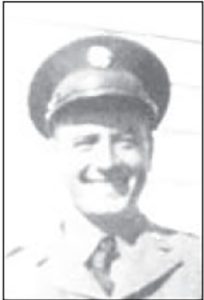
Sepsey, George F.
Army Corporal

George F. Sepsey, age 24, from Sanilac County Croswell, Michigan .

Parents: Joseph Sepsey

Service era: World War II
Schools: Croswell High

Date of death: Tuesday, November 26, 1946
Death details: On April 25, 2025, the Defense POW/MIA Accounting Agency (DPAA) identified the remains of Cpl. Geroge F. Sepsey, missing from World War II. Sepsey entered the U.S. Army from Michigan and served with Company M, 3rd Battalion, 126th Infantry Regiment, 32nd Infantry Division. He was lost during the Buna-Gona Campaign on Papua New Guinea and was last seen near the Soputa-Sanananda Track during a grueling battle against Japan defensive forces there on Nov. 26, 1942. Following the war, the American Graves Registration Service, the military unit responsible for investigating and recovering missing American personnel in the Pacific Theater, began exhuming remains from approximately 11,000 graves in Finschhafen cemeteries in Papua New Guinea for shipment to the Central Identification Point at the Manila Mausoleum in the Philippines for identification. Sepsey was not among those identified. Remains that could not identified at the time were interred as Unknowns at the Manila American Cemetery and Memorial. In 2017, DPAA personnel exhumed one such Unknown, recovered from the Soputa-Sanananda area in March 1943, and sent the remains to the DPAA laboratory for scientific analysis. Based on the laboratory analysis and circumstantial evidence, the remains were identified as those of Sepsey.

Source: National Archives, Defense POW/MIA Accounting Agency, Times Herald (1943)
Buckhannon, Jess C. Jr.
Army Private 1st class

Jess C. Jr. Buckhannon, age 25, from Macomb County Michigan.

Service era: World War II

Date of death: Monday, November 27, 1944
Death details: Killed in action
Cemetery: Manila American

Source: National Archives, American Battle Monuments Commission, Defense POW/MIA Accounting Agency

Poole, William B.
Army Private

William B. Poole, age 21, from Will County Elwood, Illinois .

Service era: World War II

Date of death: Wednesday, January 12, 1944
Death details: In early 1942, the Japanese High Command began a campaign to take control of New Guinea and the Solomon Islands in an effort to cut off American and Australian naval routes and supply lines. From July through November, Allied forces solidified defenses to stop the Japanese advance, and from November 1942 to January 1943, attempted to capture the Solomon Islands. The Japanese had set up significant, almost impenetrable, defenses on the islands, concealed in areas of dense jungle, forcing Allied forces into separated and restricted columns of attack. As they approached Buna, the American and Australian troops faced a network of highly organized, mutually supporting bunkers fitted with reinforced walls, natural camouflage, and supplies. As a result of these difficulties, the first series of Allied attacks were defeated, demoralizing the troops and depleting their resources. It was not until December 2 that the Allies had any significant victories, and fighting in the area would continue until January 22, 1943. Fighting continued on the north coast of New Guinea into 1944, as Allied forces pushed the Japanese farther to the north and west. This campaign included retaking Japanese strongholds at Lae, Finschhafen, and Saidor. Private William B. Poole entered the U.S. Army from Illinois and served in Company I, 126th Infantry Regiment, 32nd Infantry Division. On January 12, 1944, PFC Poole’s unit landed near Saidor, New Guinea and established a defensive outpost. After dark, the outpost was hit by two Japanese bayonet charges and forced to withdraw. When roll call was taken after the battle, Private Poole was missing. He has not been associated with any remains recovered from the area after the war and is still unaccounted-for. Today, Private Poole is memorialized on the Walls of the Missing at the Manila American Cemetery in the Philippines.

Source: National Archives, Defense POW/MIA Accounting Agency

Molitor, Fritz Jr.
Army Private

Fritz Jr. Molitor, age 24, from Grimes County Navasota, Texas .

Service era: World War II

Date of death: Wednesday, January 20, 1943
Death details: In early 1942, the Japanese High Command began a campaign to take control of New Guinea and the Solomon Islands in an effort to cut off American and Australian naval routes and supply lines. From July through November, Allied forces solidified defenses to stop the Japanese advance, and from November 1942 to January 1943, attempted to capture the Solomon Islands. The Japanese had set up significant, almost impenetrable, defenses on the islands, concealed in areas of dense jungle, forcing Allied forces into separated and restricted columns of attack. As they approached Buna, the American and Australian troops faced a network of highly organized, mutually supporting bunkers fitted with reinforced walls, natural camouflage, and supplies. As a result of these difficulties, the first series of Allied attacks were defeated, demoralizing the troops and depleting their resources. It was not until December 2 that the Allies had any significant victories, and fighting in the area would continue until January 22, 1943. Fighting continued on the north coast of New Guinea into 1944, as Allied forces pushed the Japanese farther to the north and west. This campaign included retaking Japanese strongholds at Lae, Finschhafen, and Saidor. Private Fritz Molitor Jr. entered the U.S. Army from Texas and served in the 163rd Infantry Regiment, 41st Infantry Division. On January 20, 1943, Private Molitor was reported missing in action after an attack on a Japanese motor pool on the Sanananda Road, near Buna, New Guinea. A partially buried body was found near the place where he was last seen, but it could not be identified. He has not been associated with any remains recovered from the area after the war and is still unaccounted-for. Today, Private Molitor is memorialized on the Walls of the Missing at the Manila American Cemetery in the Philippines.

Source: National Archives, Defense POW/MIA Accounting Agency, Associated Press (1943)

Barger, Walter L.
Army Private

Walter L. Barger, age 27, from Columbia County Saint Helens, Oregon .

Service era: World War II

Date of death: Monday, January 18, 1943
Death details: Killed in action; missing in action or buried at sea
Cemetery: Tablets of the Missing at Manila American

Source: National Archives, American Battle Monuments Commission, Defense POW/MIA Accounting Agency

Murphy, Robert L.
Army Private

Robert L. Murphy, age 27, from Alameda County Oakland, California .

Parents: Florence Murphy

Service era: World War II

Date of death: Saturday, January 9, 1943
Death details: In early 1942, the Japanese High Command began a campaign to take control of New Guinea and the Solomon Islands in an effort to cut off American and Australian naval routes and supply lines. From July through November, Allied forces solidified defenses to stop the Japanese advance, and from November 1942 to January 1943, attempted to capture the Solomon Islands. The Japanese had set up significant, almost impenetrable, defenses on the islands, concealed in areas of dense jungle, forcing Allied forces into separated and restricted columns of attack. As they approached Buna, the American and Australian troops faced a network of highly organized, mutually supporting bunkers fitted with reinforced walls, natural camouflage, and supplies. As a result of these difficulties, the first series of Allied attacks were defeated, demoralizing the troops and depleting their resources. It was not until December 2 that the Allies had any significant victories, and fighting in the area would continue until January 22, 1943. Fighting continued on the north coast of New Guinea into 1944, as Allied forces pushed the Japanese farther to the north and west. This campaign included retaking Japanese strongholds at Lae, Finschhafen, and Saidor. Private Robert L. Murphy entered the U.S. Army from California and served in Headquarters Company, 163rd Infantry Regiment. On January 9, 1943, PVT Murphy was killed in action near Buna, New Guinea. He was hit during an engagement with the enemy at a point near the junction of two supply trails. There is no record of his burial at the time. His remains have not been recovered or identified following the war, and he is still unaccounted-for. Today, Private Murphy is memorialized on the Walls of the Missing at the Manila American Cemetery in the Philippines.

Source: National Archives, Defense POW/MIA Accounting Agency, Sacramento Union (1945)

Berg, Marvin A.
Army Sergeant

Marvin A. Berg from Los Angeles County Los Angeles, California .

Parents: Florence Berg

Service era: World War II

Date of death: Saturday, January 9, 1943
Death details: Killed in action; missing in action or buried at sea
Cemetery: Tablets of the Missing at Manila American

Source: National Archives, American Battle Monuments Commission, Defense POW/MIA Accounting Agency, Daily News (1943)

Rogers, Frank A.
Army Corporal

Frank A. Rogers from Humboldt County Arcata, California .

Parents: Mary Rogers

Service era: World War II

Date of death: Saturday, January 9, 1943
Death details: In early 1942, the Japanese High Command began a campaign to take control of New Guinea and the Solomon Islands in an effort to cut off American and Australian naval routes and supply lines. From July through November, Allied forces solidified defenses to stop the Japanese advance, and from November 1942 to January 1943, attempted to capture the Solomon Islands. The Japanese had set up significant, almost impenetrable, defenses on the islands, concealed in areas of dense jungle, forcing Allied forces into separated and restricted columns of attack. As they approached Buna, the American and Australian troops faced a network of highly organized, mutually supporting bunkers fitted with reinforced walls, natural camouflage, and supplies. As a result of these difficulties, the first series of Allied attacks were defeated, demoralizing the troops and depleting their resources. It was not until December 2 that the Allies had any significant victories, and fighting in the area would continue until January 22, 1943. Fighting continued on the north coast of New Guinea into 1944, as Allied forces pushed the Japanese farther to the north and west. This campaign included retaking Japanese strongholds at Lae, Finschhafen, and Saidor. Corporal Frank A. Rogers entered the U.S. Army from California and served in Company B, 163rd Infantry Regiment. On January 9, 1943, Corporal Rogers was killed in action near Buna, New Guinea, in a fight for an enemy roadblock on the Killerton Trail, a supply route in the area. Due to fighting in this area taking place in jungle terrain, with troops often widely dispersed, many casualties were never located. CPL Rogers’s remains have not been recovered or identified following the war, and he is still unaccounted-for. Today, Corporal Rogers is memorialized on the Walls of the Missing at the Manila American Cemetery in the Philippines.

Source: National Archives, Defense POW/MIA Accounting Agency, San Francisco News (1943)

Monsted, Thomas O.
Army Private

Thomas O. Monsted, age 28, from Cook County Illinois.

Service era: World War II

Date of death: Saturday, January 9, 1943
Death details: In early 1942, the Japanese High Command began a campaign to take control of New Guinea and the Solomon Islands in an effort to cut off American and Australian naval routes and supply lines. From July through November, Allied forces solidified defenses to stop the Japanese advance, and from November 1942 to January 1943, attempted to capture the Solomon Islands. The Japanese had set up significant, almost impenetrable, defenses on the islands, concealed in areas of dense jungle, forcing Allied forces into separated and restricted columns of attack. As they approached Buna, the American and Australian troops faced a network of highly organized, mutually supporting bunkers fitted with reinforced walls, natural camouflage, and supplies. As a result of these difficulties, the first series of Allied attacks were defeated, demoralizing the troops and depleting their resources. It was not until December 2 that the Allies had any significant victories, and fighting in the area would continue until January 22, 1943. Fighting continued on the north coast of New Guinea into 1944, as Allied forces pushed the Japanese farther to the north and west. This campaign included retaking Japanese strongholds at Lae, Finschhafen, and Saidor. Private Thomas O. Monsted entered the U.S. Army from Illinois and served in Company G, 163rd Infantry Regiment, 41st Infantry Division. On January 9, 1943, Private Monsted was killed in action during fighting along the Killerton Trail, near Buna, New Guinea, but the exact circumstances of his loss are unknown. He has not been associated with any remains recovered from the area after the war and is still unaccounted-for. Today, Private Monsted is memorialized on the Walls of the Missing at the Manila American Cemetery in the Philippines.

Source: National Archives, Defense POW/MIA Accounting Agency, Waukesha County Freeman (1943)

Back To Top