Skip to content

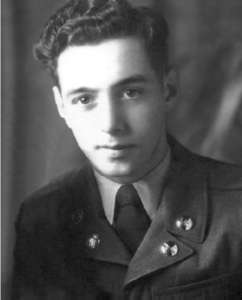
Sanford, William Henry
Army Private 1st class

William Henry Sanford, age 18, from Baltimore City County Maryland.

Service era: Korea
Military history: 35th Infantry Regiment

Date of death: Tuesday, November 28, 1950
Death details: On November 25, 1950, the U.S. Army 2nd and 25th Infantry Divisions were holding defensive positions south of the town of Unsan, North Korea, below the Yalu River. On November 26 and 27, Chinese Communist Forces (CCF) attacked the U.S. troops, pushing them through the towns of Ung-dong and Yongsan-dong, and on to Yongbyon, where they were given orders to establish new defensive lines. Corporal William Henry Sanford entered the U.S. Army from Maryland and was a member of H Company, 2nd Battalion, 35th Infantry Regiment, 25th Infantry Division. He went missing in action on or about November 28, during his unit’s movement to Yongbyon. No one reported seeing CPL Sanford fall in combat and he was not reported as a prisoner of war. His remains were not identified among those returned to U.S. custody after the ceasefire, and he is still unaccounted-for. Today, Corporal Sanford is memorialized on the Courts of the Missing at the National Memorial Cemetery of the Pacific. His name is also inscribed on the Korean War Veterans Memorial Wall in Washington, DC, which was updated in 2022 to include the names of the fallen.

Source: National Archives, 35th Infantry Regiment Association, Defense POW/MIA Accounting Agency
Smith, Shadrach Bordors
Army Corporal

Shadrach Bordors Smith, age 30, from Maryland, Baltimore City county.

Service era: Korea

Date of death: Thursday, November 2, 1950
Death details: During the last week of October 1950, Republic of Korea (ROK) Army forces under the control of the U.S. Eighth Army were advancing deep in North Korean territory, approaching the Yalu River on the Chinese-Korean border. Chinese Communist Forces (CCF) struck back in a surprise attack, engaging the ROK 1st and 6th Divisions near Unsan, some sixty miles north of Pyongyang. The U.S. 1st Cavalry Division, with the 8th Cavalry Regiment in the lead, was rushed forward to reinforce the ROK units in the Unsan area. On November 1, the regiment’s 1st Battalion took up positions north of Unsan, while the 2nd Battalion moved to guard the Nammyon River valley west of town, and the 3rd Battalion was placed in reserve at the valley’s southern end. Sergeant Shadrach Bordors Smith Jr., who joined the U.S. Army from Maryland, was a member of Company B, 2nd Chemical Mortar Battalion. Three companies of the 2nd Chemical Mortar battalion had been positioned near Unsan to provide support to the ROK infantry regiments in the area. After midnight on November 1, 1950, U.S. units in the area were ordered to withdraw to avoid encirclement by the enemy. CCF roadblocks and constant small arms fire led to heavy casualties among the withdrawing men. A firing platoon of Company B was caught behind enemy lines and overrun during the withdrawal. Sergeant Smith went missing during this battle. He was never reported as a prisoner of war and remains unaccounted for. Today, Sergeant Smith is memorialized on the Courts of the Missing at the National Memorial Cemetery of the Pacific.

Source: National Archives, Defense POW/MIA Accounting Agency

Wilson, Charles Earl
Army Private 1st class

Charles Earl Wilson, age 29, from Maryland, Baltimore City county.

Service era: Korea

Date of death: Thursday, November 2, 1950
Death details: During the last week of October 1950, Republic of Korea (ROK) Army forces under the control of the U.S. Eighth Army were advancing deep in North Korean territory, approaching the Yalu River on the Chinese-Korean border. Chinese Communist Forces (CCF) struck back in a surprise attack, engaging the ROK 1st and 6th Divisions near Unsan, some sixty miles north of Pyongyang. The U.S. 1st Cavalry Division, with the 8th Cavalry Regiment in the lead, was rushed forward to reinforce the ROK units in the Unsan area. On November 1, the regiment’s 1st Battalion took up positions north of Unsan, while the 2nd Battalion moved to guard the Nammyon River valley west of town, and the 3rd Battalion was placed in reserve at the valley’s southern end. Corporal Charles Earl Wilson, who joined the U.S. Army from Maryland, was a member of Company E, 2nd Battalion, 8th Cavalry Regiment, 1st Cavalry Division. By midnight on November 1, 1950, the 8th Cavalry Regiment was forced to withdraw from Unsan to Ipsok to avoid encirclement by the enemy. The CCF infiltrated the road out of Unsan and launched continous attacks on the withdrawing men, who had to fight through several enemy roadblocks to reach Ipsok. Corporal Wilson went missing in action during this fighting withdrawal. He was never reported as a prisoner of war, and he remains unaccounted for. Today, Corporal Wilson is memorialized on the Courts of the Missing at the National Memorial Cemetery of the Pacific.

Source: National Archives, Defense POW/MIA Accounting Agency

Jones, Arthur Macon
Army Corporal

Arthur Macon Jones from Maryland, Baltimore City county.

Service era: Korea

Date of death: Tuesday, October 31, 1950
Death details: On July 5, 1950, Task Force Smith, the first U.S. ground element to engage North Korean People’s Army (NKPA) troops, was defending a position north of Osan, South Korea. The Task Force’s goal was to delay enemy forces by blocking their movement down the road south from Suwon to Taejon, which was a major avenue of advance for the NKPA. That morning, the Task Force was engaged by a column of enemy tanks. The anti-tank weapons that the infantrymen employed were ineffective, and a large number of tanks broke through their position. Task Force Smith was forced to withdraw to the south, suffering heavy casualties in the process. Sergeant Arthur Macon Jones, who joined the U.S. Army from Maryland, served with C Company, 1st Battalion, 21st Infantry Regiment, 24th Infantry Division. His unit was part of Task Force Smith, and he was captured by enemy forces on July 5, 1950, and marched to a temporary prison compound at Manpo, North Korea. After a brief rest, his group proceeded to the Apex prison camps near the Yalu River; however, SGT Jones was too weak to continue. His companions were forced to leave him, and it is believed that he died at Manpo on October 31. His remains were not identified among those returned to U.S. custody after the ceasefire. Today, Sergeant Jones is memorialized on the Courts of the Missing at the National Memorial Cemetery of the Pacific.

Source: National Archives, Defense POW/MIA Accounting Agency

Jerome, Richard
Army Private

Richard Jerome, age 18, from Baltimore City County Maryland.

Service era: Korea

Date of death: Sunday, July 30, 1950
Death details: On July 26, 1950, the 2nd Battalion, 7th Cavalry Regiment, and 2nd Battalion, 8th Cavalry Regiment, were defending a section of the Poun-Hwanggan Highway from North Korean People’s Army (NKPA) elements advancing toward Kumch’on. On July 30-31, supported by tanks, the NKPA launched heavy attacks against the American battalions. After a hard-fought delaying action, the 7th Cavalry Regiment received orders to withdraw to support other units at Kumch’on, and the 8th Cavalry Regiment provided cover as they withdrew. Soon after, the 8th Cavalry Regiment withdrew to new positions as well. Though the action was largely successful in delaying the NKPA advance, the area still fell under North Korean control and prevented the recovery of any American remains until U.S. forces retook the area in mid-September. Private First Class Richard Jerome entered the U.S. Army from Maryland and served in H Company of the 2nd Battalion, 7th Cavalry Regiment, 1st Cavalry Division. He went missing during the fighting on July 31, 1950, and reports indicate he was taken as a prisoner and marched north to Seoul, where his last name appears on a blackboard inside an abandoned schoolhouse that was used to hold prisoners. Surviving prisoners of war (POWs) who were interned with PFC Jerome reported that he had died en route to P’yöngyang. Attempts to recover his remains have been unsuccessful, and he was not identified among the remains returned to the U.S. following the war. Today, Private First Class Jerome is memorialized on the Courts of the Missing at the National Memorial Cemetery of the Pacific.

Source: National Archives, Defense POW/MIA Accounting Agency

Bullington, Harry Lafayette
Army 2nd lieutenant

Harry Lafayette Bullington, age 24, from Maryland, Baltimore City county.

Service era: Korea

Date of death: Saturday, July 22, 1950
Death details: On July 22, 1950, the 2nd Battalion of the U.S. Army’s 35th Infantry Regiment was holding defensive positions along the south bank of the rain-swollen Yong stream, south of Mun’gyong, South Korea. The battalion’s Company F was sent across the stream to reinforce a Republic of Korea (ROK) battalion on the north bank, but the ROK-U.S. position was immediately attacked by North Korean People’s Army (NKPA) forces, separating them from the rest of the 2nd Battalion and flanking Company F on both sides. Company F fell back to the stream’s edge under enemy fire, but the current was too powerful for them to cross and the enemy had seized the nearby bridge. U.S. combat engineers on the south bank attempted to launch rafts for the stranded men but were also pinned down by the NKPA until additional American tanks and infantry arrived to give them covering fire. This enabled the engineers to deploy their rafts and evacuate the men of Company F from the north bank. However, several soldiers were lost to enemy fire or while attempting to cross the swollen stream before the rafts could be launched. First Lieutenant Harry Lafayette Bullington Jr., who entered the U.S. Army from Maryland, served with F Company, 2nd Battalion, 35th Infantry Regiment, 25th Infantry Division. He went missing while attempting to cross the Yong stream during this action on July 22, 1950. He was not associated with any remains later recovered from the area, and he is still unaccounted-for. Today, First Lieutenant Bullington is memorialized on the Courts of the Missing at the National Memorial Cemetery of the Pacific.

Source: National Archives, Defense POW/MIA Accounting Agency

Scherer, Kenwood Robert
Navy Reserves Seaman 1st class

Kenwood Robert Scherer from Baltimore, Maryland, Baltimore City county.

Parents: William Scherer

Service era: World War II

Date of death: Monday, December 18, 1944
Death details: He was aboard the destroyer USS Hull as it operated as part of the Fast Carrier Strike Force in the Philippine Sea. On December 17, 1944, the Hull was participating in refueling operations when the ships of its fueling group were engulfed by Typhoon Cobra. The Hull lost its ability to steer amid the enormous waves and began taking on water. The Hull eventually took on too much water to stay afloat and rolled and sank shortly before noon, on December 18. Sixty-two crew members were rescued, but a little more than two-hundred crew members were lost in the sinking.

Source: National Archives, Defense POW/MIA Accounting Agency

Middlekauff, Raymond H.
Army Private 1st class

Raymond H. Middlekauff from Maryland, Baltimore City county.

Service era: World War II

Date of death: Monday, December 4, 1944
Death details: On April 8, 2019, the Defense POW/MIA Accounting Agency (DPAA) identified the remains of Private First Class Raymond H. Middlekauff, missing from World War II. Private First Class Middlekauff entered the U.S. Army from Maryland and was a member of Company F, 22nd Infantry Regiment, 4th Infantry Division. He was reported missing in action on December 4, 1944, during the Battle of Hürtgen Forest, near Grosshau, Germany. Attempts to locate PFC Middlekauff following his loss were unsuccessful. In June 1946, a set of remains was recovered from a minefield in the woods west of Grosshau, near the area of PFC Middlekauff’s loss. These remains could not be identified at the time and were eventually interred as an unknown at the Ardennes American Cemetery in Neupré, Belgium. In 2018, following a historical and anthropological review, DPAA officials recommended that these remains be disinterred for further scientific testing and identification. DPAA analysts used modern forensic techniques to identify PFC Middlekauff from among these remains.

Source: National Archives, Defense POW/MIA Accounting Agency

Utz, Lawrence Russell
Navy Seaman 1st class

Lawrence Russell Utz, age 21, from Baltimore City County Baltimore, Maryland .

Parents: Uriel Albert Utz

Service era: World War II

Date of death: Wednesday, August 2, 1944
Death details: Killed when the USS Fiske was torpedoed in the Atlantic

Source: National Archives, uboat.net, Baltimore Sun (1944)

Swartzback, Woodrow Wilson
Navy Reserves Yeoman 1st class

Woodrow Wilson Swartzback, age 26, from Baltimore City County Baltimore, Maryland .

Spouse: Catherine Irene Swartzback

Service era: World War II

Date of death: Wednesday, June 14, 1944
Death details: Killed aboard the USS Golet when it was destroyed by Japanese forces.

Source: National Archives, oneternalpatrol.com, Baltimore Sun (1945)

Back To Top