Skip to content

Moore, James Richard
Army Private 1st class

James Richard Moore, age 19, from Shawnee County Topeka, Kansas .

Parents: Dorothy S. Moore

Service era: Korea

Date of death: Friday, October 20, 1950
Death details: By July 1950, the North Korean People’s Army (NKPA) had taken control of Taejon, and the U.S. Eighth Army’s 25th Infantry Division and 1st Cavalry Division were sent into action. The 1st Cavalry Division deployed at Pohang between July 18-21 and immediately advanced west on the Taegu-Taejon road to establish blocking positions at Yongdong and defend the city. The ensuing three-day Battle of Yongdong was intense, and the 1st Cavalry Division was ultimately forced to withdraw on July 25 after the 5th Cavalry Regiment alone had lost 275 men. The battle inflicted heavy casualties on the NKPA and delayed its advance enough to allow United Nations (UN) forces to establish the Pusan Perimeter, but the NKPA still managed to capture many American prisoners of war (POWs). Prisoners were marched north to Seoul before being transferred to camps in Pyongyang. Many POWs were eventually rescued, though many others died from exhaustion and mistreatment. Poor record keeping by the NKPA and strained diplomatic tensions following the war have complicated the identification and recovery of those who went missing during the Battle of Yongdong, and many are still unaccounted for. Private First Class James Richard Moore entered the U.S. Army from Kansas and served in F Company of the 2nd Battalion, 5th Cavalry Regiment, 1st Cavalry Division. On July 25, 1950, F Company was south of Yongdong, attempting to rescue units that had been separated from the American positions in the city. Soldiers in F Company faced fierce enemy resistance, and in the confusing fighting, many became separated from the unit and were taken prisoner by the NKPA. Private First Class Moore was captured and subsequently marched to the Moo Hah Girls’ School in Seoul, where he and other prisoners of war wrote their names on the blackboards as an unofficial POW roster. Private First Class Moore’s name appears again on a school’s blackboard, near Pyongyang, among a group of POWs who continued northward toward Manpo. Eventually, NKPA soldiers began murdering POWs as American forces moved north into North Korea. Private First Class Moore was killed along with other POWs on October 20, 1950, near the Sunchon Railroad Tunnel. His remains were recovered by advancing friendly forces and buried in a temporary cemetery near Pyongyang, and following the armistice, many remains from this cemetery were returned to the U.S. and the families of the deceased. However, not all the remains were returned, and PFC Moore’s were not identified among those that were. It is unclear whether he is still interned near Pyongyang or if he was buried as Unknown at the National Memorial Cemetery of the Pacific. Today, Private First Class Moore is memorialized on the Courts of the Missing at the National Memorial Cemetery of the Pacific. His name is also inscribed on the Korean War Veterans Memorial Wall in Washington, DC, which was updated in 2022 to include the names of the fallen.

Source: National Archives, Defense POW/MIA Accounting Agency, Evening Eagle (1951)
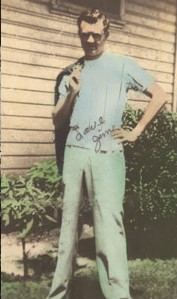
Ruthstrom, Carroll Odell
Army Private

Carroll Odell Ruthstrom, age 18, from Harris County Houston, Texas .

Parents: Thelma Ruthstrom

Service era: Korea

Date of death: Friday, October 20, 1950
Death details: By July 1950, the North Korean People’s Army (NKPA) had taken control of Taejon, and the U.S. Eighth Army’s 25th Infantry Division and 1st Cavalry Division were sent into action. The 1st Cavalry Division deployed at Pohang between July 18-21 and immediately advanced west on the Taegu-Taejon road to establish blocking positions at Yongdong and defend the city. The ensuing three-day Battle of Yongdong was intense, and the 1st Cavalry Division was ultimately forced to withdraw on July 25 after the 5th Cavalry Regiment alone had lost 275 men. The battle inflicted heavy casualties on the NKPA and delayed its advance enough to allow United Nations (UN) forces to establish the Pusan Perimeter, but the NKPA still managed to capture many American prisoners of war (POWs). Prisoners were marched north to Seoul before being transferred to camps in Pyongyang. Many POWs were eventually rescued, though many others died from exhaustion and mistreatment. Poor record keeping by the NKPA and strained diplomatic tensions following the war have complicated the identification and recovery of those who went missing during the Battle of Yongdong, and many are still unaccounted for. Private Carroll Odell Ruthstrom entered the U.S. Army from Texas and served in F Company of the 2nd Battalion, 5th Cavalry Regiment, 1st Cavalry Division. He was captured by the NKPA on July 25, 1950, during the Battle of Yongdong. He was sent north with other prisoners to Seoul where he boarded a train to Pyongyang; however, he was offloaded from the train near Sunchon and executed, along with many other POWs. Private Ruthstrom’s body was eventually recovered, identified, and buried in a temporary military cemetery near Pyongyang; however, his remains were not identified among those returned to U.S. custody following the war. Today, Private Ruthstrom is memorialized on the Courts of the Missing at the National Memorial Cemetery of the Pacific. His name is also inscribed on the Korean War Veterans Memorial Wall in Washington, DC, which was updated in 2022 to include the names of the fallen.

Source: National Archives, Defense POW/MIA Accounting Agency, Houston Chronicle (1951)

Kitchens, George Thomas
Private 1st class

George Thomas Kitchens, age 20, from Simpson County Franklin, Kentucky .

Service era: Korea

Date of death: Wednesday, October 18, 1950
Death details: By July 1950, the North Korean People’s Army (NKPA) had taken control of Taejon, and the U.S. Eighth Army’s 25th Infantry Division and 1st Cavalry Division were sent into action. The 1st Cavalry Division deployed at Pohang between July 18-21 and immediately advanced west on the Taegu-Taejon road to establish blocking positions at Yongdong and defend the city. The ensuing three-day Battle of Yongdong was intense, and the 1st Cavalry Division was ultimately forced to withdraw on July 25 after the 5th Cavalry Regiment alone had lost 275 men. The battle inflicted heavy casualties on the NKPA and delayed its advance enough to allow United Nations (UN) forces to establish the Pusan Perimeter, but the NKPA still managed to capture many American prisoners of war (POWs). Prisoners were marched north to Seoul before being transferred to camps in Pyongyang. Many POWs were eventually rescued, though many others died from exhaustion and mistreatment. Poor record keeping by the NKPA and strained diplomatic tensions following the war have complicated the identification and recovery of those who went missing during the Battle of Yongdong, and many are still unaccounted for. Private First Class George Thomas Kitchens entered the U.S. Army from Kentucky and served as a cook in Headquarters and Headquarters Company of the 34th Battalion, 5th Cavalry Regiment, 1st Cavalry Division. He was captured near Taejon on July 25, 1950, when the town was being attacked by enemy tanks and infantry. He died on or about October 18, 1950, due to exposure and malnutrition while in a North Korean prison camp. Private First Class Kitchens’ body was buried in a railroad depot north of Pyongyang. Attempts to locate and identify PFC Kitchens’ remains among those disinterred from the area following the war have been unsuccessful, and he is still unaccounted-for. Today, Private First Class Kitchens is memorialized on the Courts of the Missing at the National Memorial Cemetery of the Pacific. His name is also inscribed on the Korean War Veterans Memorial Wall in Washington, DC, which was updated in 2022 to include the names of the fallen.

Source: Defense POW/MIA Accounting Agency

Leonard, James Joseph Jr.
Army Private 1st class

James Joseph Jr. Leonard, age 32, from San Francisco County San Francisco, California .

Service era: Korea

Date of death: Tuesday, July 25, 1950
Death details: On August 7, 2017, the Defense POW/MIA Accounting Agency (DPAA) identified the remains of Private First Class James Joseph Leonard Jr., missing from the Korean War. Private First Class Leonard joined the U.S. Army from California and was a member of Company E, 2nd Battalion, 8th Infantry Regiment, 1st Cavalry Division. He was killed in action during a North Korean attack against his unit’s position near Yongdong, South Korea, on July 25, 1950. PFC Leonard’s remains were not recovered in investigations of the area, and he was not identified among remains returned to U.S. custody immediately after the war. In 2017, a local construction crew uncovered human remains near Yongdong, and a South Korean recovery team retrieved the remains; subsequent analysis by DPAA led to the identification of the remains as those of PFC Leonard. Private First Class Leonard is memorialized on the Courts of the Missing at the National Memorial Cemetery of the Pacific. His name is also inscribed on the Korean War Veterans Memorial Wall in Washington, DC, which was updated in 2022 to include the names of the fallen.

Source: National Archives, Defense POW/MIA Accounting Agency, Associated Press (1950)

Wallen, James Alex
Army Private 1st class

James Alex Wallen from Kentucky, Floyd county.

Service era: Korea

Date of death: Tuesday, July 25, 1950
Death details: By July 1950, the North Korean People’s Army (NKPA) had taken control of Taejon, and the U.S. Eighth Army’s 25th Infantry Division and 1st Cavalry Division were sent into action. The 1st Cavalry Division deployed at Pohang between July 18-21 and immediately advanced west on the Taegu-Taejon road to establish blocking positions at Yongdong and defend the city. The ensuing three-day Battle of Yongdong was intense, and the 1st Cavalry Division was ultimately forced to withdraw on July 25 after the 5th Cavalry Regiment alone had lost 275 men. The battle inflicted heavy casualties on the NKPA and delayed its advance enough to allow United Nations (UN) forces to establish the Pusan Perimeter, but the NKPA still managed to capture many American prisoners of war (POWs). Prisoners were marched north to Seoul before being transferred to camps in Pyongyang. Many POWs were eventually rescued, though many others died from exhaustion and mistreatment. Poor record keeping by the NKPA and strained diplomatic tensions following the war have complicated the identification and recovery of those who went missing during the Battle of Yongdong, and many are still unaccounted for.

Corporal James Alex Wallen entered the U.S. Army from Kentucky and served in Company D of the 1st Battalion, 5th Cavalry Regiment, 1st Cavalry Division. On July 24-25, 1950, Company D was supporting the withdrawal of American troops from positions that had been overwhelmed by NKPA forces. Corporal Wallen was captured during these efforts and was among the POWs who were marched north to Seoul and then eventually to Pyongyang. Survivor reports indicate that CPL Wallen died at some point during the journey from Seoul to Pyongyang, and his remains were not recovered. He is still unaccounted-for. Today, Corporal Wallen is Memorialized on the Courts of the Missing at the National Memorial Cemetery of the Pacific.

Source: National Archives, Defense POW/MIA Accounting Agency

Meeker, William Edward
Army Private 1st class

William Edward Meeker, age 18, from El Paso County Lower Valley, Texas .

Parents: Oscar G. Meeker

Service era: Korea

Date of death: Tuesday, July 25, 1950
Death details: By July 1950, the North Korean People’s Army (NKPA) had taken control of Taejon, and the U.S. Eighth Army’s 25th Infantry Division and 1st Cavalry Division were sent into action. The 1st Cavalry Division deployed at Pohang between July 18-21 and immediately advanced west on the Taegu-Taejon road to establish blocking positions at Yongdong and defend the city. The ensuing three-day Battle of Yongdong was intense, and the 1st Cavalry Division was ultimately forced to withdraw on July 25 after the 5th Cavalry Regiment alone had lost 275 men. The battle inflicted heavy casualties on the NKPA and delayed its advance enough to allow United Nations (UN) forces to establish the Pusan Perimeter, but the NKPA still managed to capture many American prisoners of war (POWs). Prisoners were marched north to Seoul before being transferred to camps in Pyongyang. Many POWs were eventually rescued, though many others died from exhaustion and mistreatment. Poor record keeping by the NKPA and strained diplomatic tensions following the war have complicated the identification and recovery of those who went missing during the Battle of Yongdong, and many are still unaccounted for. Corporal William Edward Meeker entered the U.S. Army from Texas and served in F Company of the 2nd Battalion, 5th Cavalry Regiment, 1st Cavalry Division. He was reported as missing in action on July 25, 1950, following the Battle of Yongdong, though specific details regarding his loss are unknown. Corporal Meeker was never reported as captured, and was likely lost during the battle. He was not identified among remains disinterred from the area following the war, and he is still unaccounted-for. Today, Corporal Meeker is memorialized on the Courts of the Missing at the National Memorial Cemetery of the Pacific. His name is also inscribed on the Korean War Veterans Memorial Wall in Washington, DC, which was updated in 2022 to include the names of the fallen.

Source: National Archives, Defense POW/MIA Accounting Agency, El Paso Times (1950)

Angle, Donald Eugene
Army Private

Donald Eugene Angle, age 21, from Washington County Clear Spring, Maryland .

Service era: Korea

Date of death: Tuesday, July 25, 1950
Death details: On July 2, 2019, the Defense POW/MIA Accounting Agency (DPAA) identified the remains of Corporal Donald Eugene Angle, missing from the Korean War. Corporal Angle entered the U.S. Army from Maryland and served as an infantryman assigned to C Company, 1st Battalion, 5th Cavalry Regiment, 1st Cavalry Division. He was killed on or before July 25, 1950, during the Battle of Yongdong, though specific details regarding his loss were unknown and his body was not recovered at the time. In 1951, a search and recovery team of the 565th Quartermaster Graves Registration Command recovered CPL Angle’s remains from a hill less than a mile northwest of Yongdong. The were then turned over to the United Nations Military Cemetery at Tanggok before they were eventually moved to the Central Identification Unit (CIU) at Kokura, Japan. However, CPL Angle’s remains could not be individually identified at the time, and in 1956 he was buried as an unknown at the National Memorial Cemetery of the Pacific in Hawaii. In 2017, the DPAA disinterred and accessioned the remains into the DPAA laboratory for comparison with two other missing soldiers from the area of Yongdong. Although there was not a match between these remains and the two soldiers, the DPAA laboratory continued reexamination, and using advances in forensic techniques were able to successfully identify them as CPL Angle. Corporal Angle is memorialized on the Courts of the Missing at the National Memorial Cemetery of the Pacific. His name is also inscribed on the Korean War Veterans Memorial Wall in Washington, DC, which was updated in 2022 to include the names of the fallen.

Source: National Archives, Defense POW/MIA Accounting Agency, Daily Mail (1950)

Barlotta, Salvatore Joseph
Army Private 1st Class

Salvatore Joseph Barlotta, age 21, from Queens County Flusing, New York .

Service era: Korea

Date of death: Tuesday, July 25, 1950
Death details: By July 1950, the North Korean People’s Army (NKPA) had taken control of Taejon, and the U.S. Eighth Army’s 25th Infantry Division and 1st Cavalry Division were sent into action. The 1st Cavalry Division deployed at Pohang between July 18-21 and immediately advanced west on the Taegu-Taejon road to establish blocking positions at Yongdong and defend the city. The ensuing three-day Battle of Yongdong was intense, and the 1st Cavalry Division was ultimately forced to withdraw on July 25 after the 5th Cavalry Regiment alone had lost 275 men. The battle inflicted heavy casualties on the NKPA and delayed its advance enough to allow United Nations (UN) forces to establish the Pusan Perimeter, but the NKPA still managed to capture many American prisoners of war (POWs). Prisoners were marched north to Seoul before being transferred to camps in Pyongyang. Many POWs were eventually rescued, though many others died from exhaustion and mistreatment. Poor record keeping by the NKPA and strained diplomatic tensions following the war have complicated the identification and recovery of those who went missing during the Battle of Yongdong, and many are still unaccounted for. Corporal Salvatore Joseph Barlotta entered the U.S. Army from New York and served in C Company of the 1st Battalion, 5th Cavalry Regiment, 1st Cavalry Division. He was reported missing in action on July 25, 1950, after the Battle of Yongdong, but details regarding his loss are unknown. Evidence does not suggest he was taken as a prisoner of war, and is likely to have died during the battle. Attempts to locate and identify his remains have been unsuccessful. Today, Corporal Barlotta is memorialized on the Courts of the Missing at the National Memorial Cemetery of the Pacific. His name is also inscribed on the Korean War Veterans Memorial Wall in Washington, DC, which was updated in 2022 to include the names of the fallen.

Source: National Archives, Defense POW/MIA Accounting Agency, Daily News (1954)

Moore, Leslie Darrell
Army Corporal

Leslie Darrell Moore, age 21, from Wright County Hartville, Missouri .

Parents: Iva Moore

Service era: Korea

Date of death: Tuesday, July 25, 1950
Death details: By July 1950, the North Korean People’s Army (NKPA) had taken control of Taejon, and the U.S. Eighth Army’s 25th Infantry Division and 1st Cavalry Division were sent into action. The 1st Cavalry Division deployed at Pohang between July 18-21 and immediately advanced west on the Taegu-Taejon road to establish blocking positions at Yongdong and defend the city. The ensuing three-day Battle of Yongdong was intense, and the 1st Cavalry Division was ultimately forced to withdraw on July 25 after the 5th Cavalry Regiment alone had lost 275 men. The battle inflicted heavy casualties on the NKPA and delayed its advance enough to allow United Nations (UN) forces to establish the Pusan Perimeter, but the NKPA still managed to capture many American prisoners of war (POWs). Prisoners were marched north to Seoul before being transferred to camps in Pyongyang. Many POWs were eventually rescued, though many others died from exhaustion and mistreatment. Poor record keeping by the NKPA and strained diplomatic tensions following the war have complicated the identification and recovery of those who went missing during the Battle of Yongdong, and many are still unaccounted for. Sergeant Leslie Darrell Moore entered the U.S. Army from Missouri and served in F Company of the 2nd Battalion, 5th Cavalry Regiment, 1st Cavalry Division. On July 25, 1950, F Company was attempting to rescue units that had been cut off from American positions in Yongdong and stop an NKPA advance. During this action, F Company saw heavy fighting as they advanced on NKPA positions, splintering the unit into many smaller groups and causing confusion as they attempted to withdraw from the area. Sergeant Moore was lost during this action, and was not seen again following the battle. He was not listed on any official or unofficial POW rosters, and attempts to locate and identify his remains were unsuccessful. Today, Sergeant Moore is memorialized on the Courts of the Missing at the National Memorial Cemetery of the Pacific. His name is also inscribed on the Korean War Veterans Memorial Wall in Washington, DC, which was updated in 2022 to include the names of the fallen.

Source: National Archives, Defense POW/MIA Accounting Agency, Springfield News Leader (1950)

Besemer, Robert Lawrence
Army Corporal

Robert Lawrence Besemer, age 31, from Van Buren County Michigan.

Service era: Korea

Date of death: Tuesday, July 25, 1950
Death details: By July 1950, the North Korean People’s Army (NKPA) had taken control of Taejon, and the U.S. Eighth Army’s 25th Infantry Division and 1st Cavalry Division were sent into action. The 1st Cavalry Division deployed at Pohang between July 18-21 and immediately advanced west on the Taegu-Taejon road to establish blocking positions at Yongdong and defend the city. The ensuing three-day Battle of Yongdong was intense, and the 1st Cavalry Division was ultimately forced to withdraw on July 25 after the 5th Cavalry Regiment alone had lost 275 men. The battle inflicted heavy casualties on the NKPA and delayed its advance enough to allow United Nations (UN) forces to establish the Pusan Perimeter, but the NKPA still managed to capture many American prisoners of war (POWs). Prisoners were marched north to Seoul before being transferred to camps in Pyongyang. Many POWs were eventually rescued, though many others died from exhaustion and mistreatment. Poor record keeping by the NKPA and strained diplomatic tensions following the war have complicated the identification and recovery of those who went missing during the Battle of Yongdong, and many are still unaccounted for. Sergeant Robert Lawrence Besemer, who entered the U.S. Army from Michigan, served in F Company of the 2nd Battalion, 5th Cavalry Regiment, 1st Cavalry Division. On July 24, 1950, F Company was sent to rescue members of units that had been cut off from American positions in Yongdong. While advancing up a hill during this mission, F Company was met with intense enemy fire, and the confused fighting separated several small parties from the rest of the company. Sergeant Besemer was in one of these small groups, and evidence discovered following the war revealed he was taken as a prisoner and marched north to Seoul and then on to camps in Pyongyang. He was reported missing on July 25, 1950; however, he is believed to have died somewhere near Pyongyang in late October 1950, but his remains have not been located. Today, Sergeant Besemer is memorialized on the Courts of the Missing at the National Memorial Cemetery of the Pacific. His name is also inscribed on the Korean War Veterans Memorial Wall in Washington, DC, which was updated in 2022 to include the names of the fallen.

Source: National Archives, Defense POW/MIA Accounting Agency, Grand Haven Tribune (1955)

Back To Top