Skip to content

Bryan, Richard Alvin
Army Private 1st class
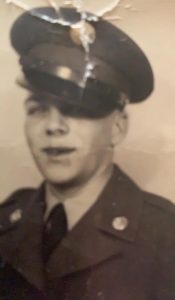
Richard Alvin Bryan, age 18, from Norfolk, Virginia, Norfolk county.

Parents: George S. Bryan (preceded in death) and Gatewood T. Bryan

Service era: Korea

Date of death: Saturday, June 30, 1951
Death details: During the last week of October 1950, Republic of Korea (ROK) Army forces under the control of the U.S. Eighth Army were advancing deep in North Korean territory, approaching the Yalu River on the Chinese-Korean border. Chinese Communist Forces (CCF) struck back in a surprise attack, engaging the ROK 1st and 6th Divisions near Unsan, some sixty miles north of Pyongyang. The U.S. 1st Cavalry Division, with the 8th Cavalry Regiment in the lead, was rushed forward to reinforce the ROK units in the Unsan area. On November 1, the regiment’s 1st Battalion took up positions north of Unsan, while the 2nd Battalion moved to guard the Nammyon River valley west of town, and the 3rd Battalion was placed in reserve at the valley’s southern end. Corporal Richard A. Bryan, who joined the U.S. Army from Virginia, was a member of Company G of the 2nd Battalion, 8th Cavalry Regiment, 1st Cavalry Division. On November 1, 1950, Company G was located west of Unsan with the 2nd Battalion when it came under intense rocket and mortar attack along with assaults from Chinese infantry. It was during these attacks that CPL Bryan went missing in combat. It was found out later from Prisoner of War (POW) repatriates returned after the ceasefire that he was taken prisoner and died in POW Camp 5 at Pyoktong. He was not identified among remains that North Korean officials returned to U.S. custody after the ceasefire. Today, Corporal Bryan is memorialized on the Courts of the Missing at the National Memorial Cemetery of the Pacific. His mother received the following letter from the Army: Information has been received from a recently repatriated soldier, who knew your son in a prison camp in North Korea, that your son died early in 1951, in Camp No. 5, Pyoktong, Korea, of the effects of malnutrition and disease. As the date of his death is not definitely known, it is determined to be June 30, 1951, because that is the latest date on which he can have been alive.”

Source: National Archives, Defense POW/MIA Accounting Agency, Norfolk Virginian Pilot (1953)
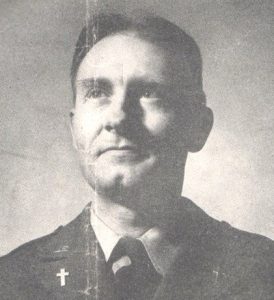
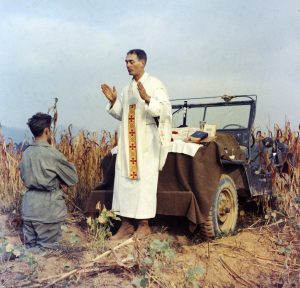
Kapaun, Emil Joseph
Army Captain

Emil Joseph Kapaun, 35 from Pilsen Kansas, Marion county.

Parents: Enos Kapaun

Service era: Korea

Date of death: May 23, 1951
Death details: The Defense POW/MIA Accounting Agency announced that Kapaun, of Pilsen, Kansas, who died as a prisoner of war during the Korean War, was accounted for March 2, 2021.

After serving in World War II, Kapaun returned to active duty in the U.S. Army and served in the Korean War with the 8th Cavalry Regiment, 1st Cavalry Division. On November 2, 1950, his unit was near Unsan when they came under heavy fire from Chinese forces and received orders to withdraw. Approximately a quarter of the unit’s soldiers made their way back to friendly lines. The others, including many wounded soldiers, became trapped. Kapaun volunteered to stay with the wounded, and was soon captured and taken to a Chinese-run prison camp on the Yalu River’s south bank known as Camp 5.
Even after he became gravely ill, Kapaun continued to serve as a spiritual leader for his fellow prisoners, encouraging them to faithfully await their release and regularly defying his captors to bolster the collective morale of the POWs. Due to prolonged malnutrition, he died on May 23, 1951, after which the other POWs buried him in one of the camp’s cemeteries.
As part of the 1953 Korean Armistice Agreement, Kapaun’s remains were among the 1,868 who were returned to U.S. custody, but they were not able to be identified. At a White House ceremony on April 11, 2013, President Barack Obama posthumously awarded Kapaun the Medal of Honor for extraordinary heroism and selflessness.
In 1993, Pope John Paul II declared Kapaun a Servant of God, the first stage toward possible canonization, which is the culmination of the Roman Catholic Church’s recognition of a deceased person as a saint.

Source: National Archives, Defense POW/MIA Accounting Agency, Wichita Eagle (1955)

Harkness, Harry Edward
Army Sergeant

Harry Edward Harkness from Rhode Island, Washington county.

Service era: Korea

Date of death: April 30, 1951
Death details: On September 5, 2017, Defense POW/MIA Accounting Agency (DPAA) identified the remains of Sergeant First Class Harry Edward Harkness, missing from the Korean War. Sergeant First Class Harkness entered the U.S. Army from Rhode Island and served with Company L, 3rd Battalion, 8th Cavalry Regiment, 1st Cavalry Division. On November 2, 1950, he was taken as a prisoner of war (POW) during combat between the 8th Cavalry Regiment and Chinese Communist Forces (CCF) near Unsan, North Korea. Following his capture, he was eventually interned at POW Camp 5 at Pyoktong, where he died of dysentery and malnutrition on or before April 30, 1951. In 1993, the North Korean government repatriated human remains from the POW Camp 5 site, and U.S. analysts eventually identified SFC Harkness among these remains.

Source: National Archives, Defense POW/MIA Accounting Agency

Cox, Clarence Vernon
Army Sergeant

Clarence Vernon Cox, age 21, from Elwood, Indiana, Madison county.

Parents: Lydia E. Cox

Service era: Korea

Date of death: Friday, November 10, 1950
Death details: During the last week of October 1950, Republic of Korea (ROK) Army forces under the control of the U.S. Eighth Army were advancing deep in North Korean territory, approaching the Yalu River on the Chinese-Korean border. Chinese Communist Forces (CCF) struck back in a surprise attack, engaging the ROK 1st and 6th Divisions near Unsan, some sixty miles north of Pyongyang. The U.S. 1st Cavalry Division, with the 8th Cavalry Regiment in the lead, was rushed forward to reinforce the ROK units in the Unsan area. On November 1, the regiment’s 1st Battalion took up positions north of Unsan, while the 2nd Battalion moved to guard the Nammyon River valley west of town, and the 3rd Battalion was placed in reserve at the valley’s southern end. Sergeant First Class Clarence Vernon Cox Jr., who joined the U.S. Army from Indiana, was a member of Company G of the 2nd Battalion, 8th Cavalry Regiment, 1st Cavalry Division. On November 1, 1950, Company G was occupying defensive positions with the 2nd Battalion near Unsan when the Battalion came under intense rocket and mortar fire accompanied by infantry assaults and was forced to withdraw. Sergeant First Class Cox went missing during the withdrawal, though specific details regarding his loss are unknown. He was never reported as a prisoner of war, and his remains were not identified among those returned to the U.S. following the war. Today, Sergeant First Class Cox is memorialized on the Courts of the Missing at the National Memorial Cemetery of the Pacific.

Source: National Archives, Defense POW/MIA Accounting Agency, Indianapolis News (1950)

DeCosta, Salvatore
Army Sergeant 1st class

Salvatore DeCosta, age 17, from Newark, New Jersey, Essex county.

Parents: Mildred Decosta

Service era: Korea

Date of death: Wednesday, November 8, 1950
Death details: During the last week of October 1950, Republic of Korea (ROK) Army forces under the control of the U.S. Eighth Army were advancing deep in North Korean territory, approaching the Yalu River on the Chinese-Korean border. Chinese Communist Forces (CCF) struck back in a surprise attack, engaging the ROK 1st and 6th Divisions near Unsan, some sixty miles north of Pyongyang. The U.S. 1st Cavalry Division, with the 8th Cavalry Regiment in the lead, was rushed forward to reinforce the ROK units in the Unsan area. On November 1, the regiment’s 1st Battalion took up positions north of Unsan, while the 2nd Battalion moved to guard the Nammyon River valley west of town, and the 3rd Battalion was placed in reserve at the valley’s southern end. Master Sergeant Salvatore DeCosta, who joined the U.S. Army from New Jersey, was a member of Company I of the 3rd Battalion, 8th Cavalry Regiment, 1st Cavalry Division. On November 2, 1950, members of Company I were occupying defensive positions with the 3rd Battalion near Unsan when they received orders to withdraw. The units faced enemy fire as they withdrew, and MSG DeCosta was wounded during the action and eventually captured. After the war, surviving prisoners reported that they witnessed MSG DeCosta’s death a few days after his capture while on a march to Prison Camp 5 near Pyoktong; however, other returnees reported that they heard that MSG DeCosta had died at Unsan. Master Sergeant DeCosta’s remains were not recovered and he was not identified among remains returned to U.S. custody after the ceasefire. Today, Master Sergeant DeCosta is memorialized on the Courts of the Missing at the National Memorial Cemetery of the Pacific.

Source: National Archives, Defense POW/MIA Accounting Agency, Passaic Herald News (1953)

Abele, Francis Howard
Army Sergeant

Francis Howard Abele, age 27, from New Haven, Connecticut, New Haven county.

Parents: Harry Abele

Service era: Korea

Date of death: Sunday, November 5, 1950
Death details: During the last week of October 1950, Republic of Korea (ROK) Army forces under the control of the U.S. Eighth Army were advancing deep in North Korean territory, approaching the Yalu River on the Chinese-Korean border. Chinese Communist Forces (CCF) struck back in a surprise attack, engaging the ROK 1st and 6th Divisions near Unsan, some sixty miles north of Pyongyang. The U.S. 1st Cavalry Division, with the 8th Cavalry Regiment in the lead, was rushed forward to reinforce the ROK units in the Unsan area. On November 1, the regiment’s 1st Battalion took up positions north of Unsan, while the 2nd Battalion moved to guard the Nammyon River valley west of town, and the 3rd Battalion was placed in reserve at the valley’s southern end. Sergeant First Class Francis Howard Abele entered the U.S. Army from Connecticut and served in Company E, 2nd Battalion, 8th Cavalry Regiment, 1st Cavalry Division. He was killed in action southeast of Unsan, North Korea, on November 5, 1950, as his unit fought off encroaching CCF. His remains have not been recovered or identified, and he remains unaccounted-for. Today, Sergeant First Class Abele is memorialized on the Courts of the Missing at the National Memorial Cemetery of the Pacific.

Source: National Archives, Defense POW/MIA Accounting Agency, Meriden Journal (1950)

Torres, Elias Eli
Army Corporal

Elias Eli Torres, age 19, from Guadalupita, New Mexico, Mora county.

Parents: Luisita Torres

Service era: Korea

Date of death: Sunday, November 5, 1950
Death details: During the last week of October 1950, Republic of Korea (ROK) Army forces under the control of the U.S. Eighth Army were advancing deep in North Korean territory, approaching the Yalu River on the Chinese-Korean border. Chinese Communist Forces (CCF) struck back in a surprise attack, engaging the ROK 1st and 6th Divisions near Unsan, some sixty miles north of Pyongyang. The U.S. 1st Cavalry Division, with the 8th Cavalry Regiment in the lead, was rushed forward to reinforce the ROK units in the Unsan area. On November 1, the regiment’s 1st Battalion took up positions north of Unsan, while the 2nd Battalion moved to guard the Nammyon River valley west of town, and the 3rd Battalion was placed in reserve at the valley’s southern end. Corporal Elias Eli Torres entered the U.S. Army from New Mexico and was a member of E Company of the 2nd Battalion, 8th Cavalry Regiment, 1st Cavalry Division. On November 5, 1950, E Company was in defensive positions with the 2nd Battalion near Unsan when it was nearly surrounded by the CCF, came under heavy attack, and was forced to withdraw. Withdrawing to the south, the battalions took heavy casualties as they fought through Chinese roadblocks in Unsan and on the Unsan-Ipsok road. It was during this withdrawal combat when CPL Torres received a massive chest wound. His life could not be saved, and the chaotic nature if the fighting prevented the recovery of his remains. After the close of the war, survivors of this incident affirmed witnessing CPL Torres’ death. He has not been identified among any remains returned to U.S. custody after the ceasefire. Today, Corporal Torres is memorialized on the Courts of the Missing at the National Memorial Cemetery of the Pacific.

Source: Defense POW/MIA Accounting Agency, National Archives, Albuquerque Tribune (1950)

Arendt, Stanley Paul
Army Private 1st Class

Stanley Paul Arendt, age 22, from Palatine, Illinois, Tazewell county.

Parents: Stanley Arendt
Spouse: Nelda
Children: Lamar, 3

Service era: Korea
Schools: Palatine High graduate

Date of death: Thursday, November 2, 1950
Death details: On February 5, 2010, the Joint POW/MIA Accounting Command (JPAC, now DPAA) identified the remains of Corporal Stanley Paul Arendt, missing from the Korean War. Corporal Stanley Paul Arendt entered the U.S. Army from Illinois and served in Company L, 3rd Battalion, 8th Cavalry Regiment, 1st Cavalry Division. He was captured in early November 1950 during the Battle of Unsan. Repatriated American POWs reported that CPL Arendt was in a group of soldiers that were executed by their captors near the battlefield. In 2004, a joint U.S. and North Korean team excavated a mass grave near the battlefield at Unsan and recovered the remains of the executed American service members. Analysts used modern forensic tools to identify CPL Arendt from among these remains.

Source: National Archives, Defense POW/MIA Accounting Agency, Chicago Tribune (1950)

Blakeslee, Leland Fred
Army Corporal

Leland Fred Blakeslee, age 19, from Bolivar, New York, Allegany county.

Parents: M.F. Blakeslee

Service era: Korea

Date of death: Thursday, November 2, 1950
Death details: During the last week of October 1950, Republic of Korea (ROK) Army forces under the control of the U.S. Eighth Army were advancing deep in North Korean territory, approaching the Yalu River on the Chinese-Korean border. Chinese Communist Forces (CCF) struck back in a surprise attack, engaging the ROK 1st and 6th Divisions near Unsan, some sixty miles north of Pyongyang. The U.S. 1st Cavalry Division, with the 8th Cavalry Regiment in the lead, was rushed forward to reinforce the ROK units in the Unsan area. On November 1, the regiment’s 1st Battalion took up positions north of Unsan, while the 2nd Battalion moved to guard the Nammyon River valley west of town, and the 3rd Battalion was placed in reserve at the valley’s southern end. Sergeant Leland F. Blakeslee, who joined the U.S. Army from New York, was a member of Company K of the 3rd Battalion, 8th Cavalry Regiment, 1st Cavalry Division. On November 2, 1950, Company K was in a defensive position within the 3rd Battalion sector near Unsan when they were hit by a surprise enemy mortar and infantry attack and forced to withdraw back to the 3rd Battalion’s command post. Units faced enemy fire during the withdrawal, and once near the command post, SGT Blakeslee was among a group of troops who were ambushed by enemy forces and scattered. Sergeant Blakeslee went missing at some point during the ambush, and could not be located following the incident. He was never reported as a prisoner of war and was not identified among the remains that North Korean officials returned to U.S. custody after the ceasefire. Today, Sergeant Blakeslee is memorialized on the Courts of the Missing at the National Memorial Cemetery of the Pacific.

Source: National Archives, Defense POW/MIA Accounting Agency, Olean Times Herald

Chantre, Melvin Henry
Army Corporal

Melvin Henry Chantre, age 27, from Massachusetts, Bristol county.

Service era: Korea

Date of death: Thursday, November 2, 1950
Death details: During the last week of October 1950, Republic of Korea (ROK) Army forces under the control of the U.S. Eighth Army were advancing deep in North Korean territory, approaching the Yalu River on the Chinese-Korean border. Chinese Communist Forces (CCF) struck back in a surprise attack, engaging the ROK 1st and 6th Divisions near Unsan, some sixty miles north of Pyongyang. The U.S. 1st Cavalry Division, with the 8th Cavalry Regiment in the lead, was rushed forward to reinforce the ROK units in the Unsan area. On November 1, the regiment’s 1st Battalion took up positions north of Unsan, while the 2nd Battalion moved to guard the Nammyon River valley west of town, and the 3rd Battalion was placed in reserve at the valley’s southern end. Corporal Melvin H. Chantre, who joined the U.S. Army from Massachusetts, served with Headquarters Company of the 3rd Battalion, 8th Cavalry Regiment, 1st Cavalry Division. On November 2, 1950, Headquarters Company, 3rd Battalion was with the Battalion Command Post near Unsan. The unit came under heavy mortar and infantry attack and received orders to form a defense perimeter. Eventually surrounded and besieged by CCF, the American units became trapped and dug inside foxholes or behind bunkers. It was during the chaotic fighting during the withdrawal that CPL Chantre was reported missing and could not be located following the incident. He was not reported to be a prisoner of war and his remains were not among those that North Korean officials returned to U.S. custody after the ceasefire. Today, Corporal Chantre is memorialized on the Courts of the Missing at the National Memorial Cemetery of the Pacific.

Source: National Archives, Defense POW/MIA Accounting Agency

Back To Top