Skip to content

Manring, George Carey
Army Sergeant 1st class

George Carey Manring, age 21, from Polk County Lake Wales, Florida .

Parents: W. H. Manring

Service era: Korea

Date of death: Wednesday, December 6, 1950
Death details: On March 17, 2025, the Defense POW/MIA Accounting Agency (DPAA) identified the remains of Master Sgt. George Carey Manring, missing from World War II. Manring entered the U.S. Army from Florida and served with Battery B, 57th Field Artillery Battalion, 7th Infantry Division. He was reported missing in action on Dec. 6, 1950, in the vicinity of Hagaru-ri, North Korea, during the Battle of Chosin Reservoir. The U.S. Army did not receive any information before or after the war to indicate that he was held as a POW and, absent evidence of Manring’s continued survival, issued him a presumptive finding of death of Dec. 31, 1953. In July 2018 the North Korean government turned over 55 boxes, purported to contain the remains of U.S. service members killed during the Korean War. Those remains arrived at Joint Base Pearl Harbor-Hickam, Hawaii on Aug. 1, 2018, and were subsequently accessioned into the DPAA laboratory for identification. The laboratory analysis and the totality of the circumstantial evidence available established an association between one set of these remains and Manring. Manring is memorialized on the Courts of the Missing at the National Memorial Cemetery of the Pacific. His name is also inscribed on the Korean War Veterans Memorial Wall in Washington, DC, which was updated in 2022 to include the names of the fallen.

Source: National Archives, Defense POW/MIA Accounting Agency, Associated Press (1951)
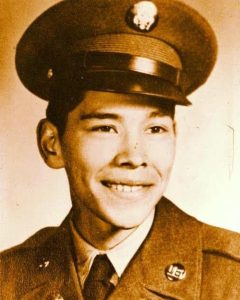
Estrada, Albert Julio
Army Private 1st class

Albert Julio Estrada, age 18, from Yolo County Woodland, California .

Service era: Korea

Date of death: Wednesday, December 6, 1950
Death details: On April 16, 2025, the Defense POW/MIA Accounting Agency identified the remains of Cpl. Albert Julio Estrada, missing from the Korean War. Estrada entered the U.S. Army from California and was a member of Battery B, 57th Field Artillery Battalion, 7th Infantry Division. Estrada’s B Battery was part of the task-organized 31st Regimental Combat Team, which had been organized to relieve the 5th Marines on the east side of the Chosin Reservoir. The 31st RCT arrived at the P’ungnyuri Inlet on Nov. 27, 1950. That night, Chinese Communist Forces launched a massive surprise attack against the 31st RCT. Large-scale attacks continued through Dec. 1, when the RCT withdrew to the town of Hagaru-ri at the base of the Chosin Reservoir. By Dec. 2, the survivors of the 31st RCT were in place on the defensive perimeter surrounding the town of Hagaru-ri near East Hill. Chinese forces attacked their positions on the evening of Dec. 3 and again overnight on December 5-6. A general withdrawal to Hamhung began on December 6. Estrada went missing during the fighting in Hagaru-ri on Dec. 6, 1950. The U.S. Army did not receive any information to indicate that he was ever held as a Prisoner of War and, absent evidence of his survival, on Dec. 31, 1953, issued a presumptive finding of death. He was declared non-recoverable on Jan. 16, 1956. In July 2018 North Korea turned over 55 boxes, purported to contain the remains of American service members killed during the Korean War. The remains arrived at Joint Base Pearl Harbor-Hickam, Hawaii on Aug. 1, 2018, and were subsequently accessioned into the DPAA laboratory for identification. Based on the laboratory analysis and total circumstantial evidence, a portion of the remains were identified as those of Estrada. He is memorialized on the Courts of the Missing at the National Memorial Cemetery of the Pacific. His name is also inscribed on the Korean War Veterans Memorial Wall in Washington, DC, which was updated in 2022 to include the names of the fallen.

Source: National Archives, Defense POW/MIA Accounting Agency, Los Angeles Times (1954)

Nickel, Donald Edward
Army Private 1st class

Donald Edward Nickel, age 20, from Alameda County Oakland, California .

Parents: William Nickel

Service era: Korea
Schools: Creston High

Date of death: Wednesday, December 6, 1950
Death details: On June 23, 2025, the Defense POW/MIA Accounting Agency identified the remains of U.S. Army Cpl. Donald Edward Nickel, missing from the Korean War. Nickel entered the Army from California and served with Headquarters Battery, 57th Field Artillery Battalion, 7th Infantry Division. On Nov. 27, 1950, the 31st Regimental Combat Team, which comprised several units, including Nickel’s 57th Field Artillery Battalion, was tasked with replacing the 5th Marine Regiment on the east side of the Chosin Reservoir perimeter. That night, Chinese Communist Forces launched a massive surprise attack against the thinly spread forces of the 31st RCT. Large-scale attacks continued through Dec. 1, when the RCT began their fighting withdrawal south to the town of Hagaru-ri at the base of the Chosin Reservoir. It was at some point during the battle around the Chosin Reservoir and subsequent withdrawal that Nickel was lost. On Dec. 6, 1950, he was listed as missing in action after the final stragglers arrived at Hagaru-ri and his battalion was able to compile an accurate list of its losses. The U.S. Army did not receive any information to indicate that he was ever held as a prisoner of war and, absent evidence of his survival, on Dec. 31, 1953, issued Nickel a presumptive finding of death. In July 2018 North Korea turned over 55 boxes, purported to contain the remains of American service members killed during the Korean War. The remains arrived at Joint Base Pearl Harbor-Hickam, Hawaii on Aug. 1, 2018, and were accessioned into the DPAA laboratory there for identification. Based on the laboratory analysis and total circumstantial evidence, a set of remains from the boxes were found to be those of Nickel. He is memorialized on the Courts of the Missing at the National Memorial Cemetery of the Pacific, Honolulu. His name is also inscribed on the Korean War Veterans Memorial Wall in Washington, D.C., which was updated in 2022 to include the names of the fallen.

Source: National Archives, Defense POW/MIA Accounting Agency, Grand Rapids Press (1951)

Faust, Albert Henry
Army Private

Albert Henry Faust, age 18, from Berks County Pennsylvania.

Service era: Korea

Date of death: Wednesday, December 6, 1950
Death details: On May 29, 2025, the Defense POW/MIA Accounting Agency identified the remains of U.S. Army Pfc. Albert H. Faust, missing from the Korean War. Faust entered the U.S. Army from Pennsylvania and served in Battery B, 57th Field Artillery Battalion, 7th Infantry Division. In late November 1950, the 31st Regimental Combat Team, tasked with replacing the 5th Marine Regiment on the east side of the Chosin Reservoir, arrived at the P’ungnyuri Inlet. That night, Chinese Communist Forces launched a massive surprise attack against the 31st RCT. Large-scale attacks continued through December 1, when the unit withdrew to the town of Hagaru-ri. Survivors established a defensive perimeter around Hagaru-ri near East Hill, where additional attacks occurred on the evening of December 3 and again overnight on December 5–6. Faust went missing during the fighting on December 6, 1950. He was never reported as a prisoner of war, and his remains were not recovered at the time. In 1954, as part of Operation Glory, the United Nations Command, the Democratic People’s Republic of Korea, and the Chinese People’s Volunteer Army exchanged the remains of fallen service members. In 1956, the unidentified remains, including were transported to Honolulu for burial as Unknowns at the National Memorial Cemetery of the Pacific. On April 12, 2021, as part of the Korean War Disinterment Project, a set of remains from the NMCP was disinterred and accessioned into the DPAA Laboratory for analysis. Using modern forensic techniques, Faust was positively identified. He is memorialized on the Courts of the Missing at the National Memorial Cemetery of the Pacific. His name is also inscribed on the Korean War Veterans Memorial Wall in Washington, D.C., which was updated in 2022 to include the names of the fallen.

Source: National Archives, Defense POW/MIA Accounting Agency

Back To Top