Skip to content

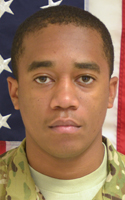
Gordon, Terry K. D.
Army Specialist

Terry K. D. Gordon, age 22, from Shubuta, Mississippi.

Service era: Afghanistan
Military history: 1st Squadron, 6th Cavalry Regiment, 1st Combat Aviation Brigade, 1st Infantry Division, Fort Riley, Kansas

Date of death: Tuesday, December 17, 2013
Death details: Died in a helicopter crash. Killed were Randy L Billings, Joshua B. Silverman, Peter C. Bohler, Omar W. Forde, Jesse L. Williams, Terry K.D. Gordon

Source: Department of Defense, Military Times

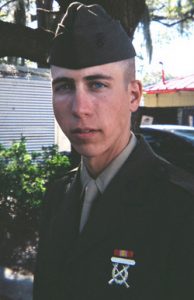
Lee, Dustin Jerome
Marines Corporal

Dustin Jerome Lee, age 20, from Quitman, Mississippi, Clarke county.

Parents: Rachel Lee

Service era: Iraq
Military history: B Co, Hq Bn, (3D Recon Bn, Rct-6, Ii Mef Fwd), Mclb Albany, Ga

Date of death: Wednesday, March 21, 2007
Death details: Hostile; Taqqadum, Iraq

Source: Department of Defense, family, findagrave.com

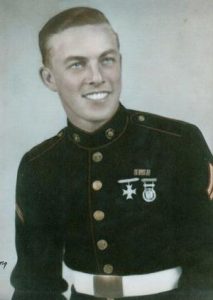
Haywood, William C.
Marines Corporal

William C. Haywood, age 23, from Enterprise, Mississippi, Clarke county.

Service era: World War II

Date of death: Sunday, November 21, 1943
Death details: From November 20 through 23, 1943, the U.S. Marine Corps and U.S. Navy conducted a large-scale amphibious assault on the Japanese-held atoll of Tarawa as part of Operation Galvanic, the Allied capture of the Gilbert Islands. Located 2,500 miles southwest of Hawaii, Tarawa was a crucial stepping stone in the planned U.S. offensive across the central Pacific toward Japan. The Japanese garrison on Tarawa’s main island of Betio was well-entrenched with hundreds of bunkers and gun positions behind formidable beach obstacles. The first wave of Marines approaching the shore encountered lower-than-expected tides, forcing them to leave their landing craft on the reef and wade the hundreds of yards to the beach under intense enemy fire. The heaviest number of U.S. casualties were suffered during this phase of the landing. Eventually, rising tides allowed U.S. warships to maneuver closer to shore and support the troops with effective naval gunfire. More Marines landed on the second day, launching attacks inland from the beaches and seizing the Japanese airfield on the island. However, the enemy launched vicious counterattacks and two more days of intense fighting were needed to secure Betio. The last enemy strongpoints were taken on the morning of November 23. The fighting on Betio cost the Marines nearly 3,000 casualties but enabled U.S. forces to press further across the Pacific and yielded valuable tactical lessons that reduced U.S. losses in future amphibious landings. Corporal William Curtis Haywood joined the U.S. Marine Corps from Mississippi and served with Company L, 3rd Battalion, 2nd Marine Regiment, 2nd Marine Division. He was killed in action on Betio Island on November 21, 1943, during the Battle of Tarawa. He was buried in Cemetery #11 on Betio, but after the war his remains could not be identified among those recovered from the island. Today, Corporal Haywood is memorialized on the Courts of the Missing at the National Memorial Cemetery of the Pacific.

Source: National Archives, Defense POW/MIA Accounting Agency

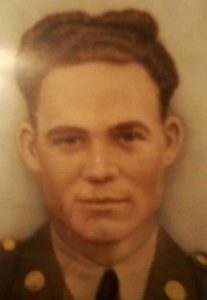
Boutwell, Rufus L.
Army Staff sergeant

Rufus L. Boutwell, age 26, from Mississippi, Clarke county.

Service era: World War II

Date of death: Saturday, July 4, 1942
Death details: Following the Allied surrender on the Bataan Peninsula on April 9, 1942, the Japanese began the forcible transfer of American and Filipino prisoners of war to various prison camps in central Luzon, at the northern end of the Philippines. The largest of these camps was the notorious Cabanatuan Prison Camp. At its peak, Cabanatuan held approximately 8,000 American and Filipino prisoners of war that were captured during and after the Fall of Bataan. Camp overcrowding worsened with the arrival of Allied prisoners who had surrendered from Corregidor on May 6, 1942. Conditions at the camp were poor and food and water supplied extremely limited, leading to widespread malnutrition and outbreaks of malaria and dysentery. By the time the camp was liberated in early 1945, approximately 2,800 Americans had died at Cabanatuan. Prisoners were forced to bury the dead in makeshift communal graves often completed without records or markers. As a result, identifying and recovering remains interred at Cabanatuan was difficult in the years after the war. Staff Sergeant Rufus L. Boutwell entered the U.S. Army Air Forces from Mississippi and served in the 91st Bombardment Squadron, 27th Bombardment Group in the Philippines during World War II. He was captured in Bataan following the American surrender on April 9, 1942, and died of dysentery on July 4, 1942, at the Cabanatuan Prison Camp in Nueva Ecija Province. He was buried in a communal grave in the camp cemetery along with other deceased American POWs; however, his remains could not be associated with any remains recovered from Cabanatuan after the war. Today, Staff Sergeant Boutwell is memorialized on the Walls of the Missing at the Manila American Cemetery in the Philippines.
Cemetery: Manila American Cemetery

Source: National Archives, American Battle Monuments Commission, Defense POW/MIA Accounting Agency
Back To Top