Skip to content

Brown, Daniel J.
Army Sergeant

Daniel J. Brown from Jerome, Idaho, Jerome county.

Service era: Afghanistan
Military history: 2nd Battalion, 8th Infantry Regiment, 2nd Brigade Combat Team, 4th Infantry Division, Fort Carson, Colorado.

Date of death: Saturday, March 24, 2012
Death details: Died in Kandahar Province, Afghanistan of wounds suffered when enemy forces attacked his unit with an improvised explosive device.

Source: Department of Defense

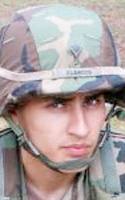
Alarcon, Ivan Vargas
Army Staff Sergeant

Ivan Vargas Alarcon, age 23, from Jerome, Idaho, Jerome county.

Service era: Iraq
Military history: 473D Quartermaster Company, (Mnc-I) Hunter Army Airfield, Ga

Date of death: Thursday, November 17, 2005
Death details: Tal Afar, Iraq

Source: Department of Defense, Military Times

Bailey, Max Leon
Army Private 1st class

Max Leon Bailey from Idaho, Jerome county.

Service era: Korea

Date of death: Thursday, November 30, 1950
Death details: On November 27, 1950, the 31st Regimental Combat Team (RCT), tasked with replacing the 5th Marine Regiment on the east side of the Chosin Reservoir, arrived at the P’ungnyuri Inlet. That night, Chinese Communist Forces (CCF) launched a surprise attack against the 31st RCT. Although the Chinese were numerically superior, the 31st RCT managed to repel the initial attack. The CCF attacked again on the night of November 28, and late on the morning of November 29 the men occupying the northernmost perimeter conducted a fighting withdrawal to consolidate with the rest of the RCT in the perimeter south of the P’ungnyuri Inlet. The CCF continued their attacks on the consolidated perimeter, and on the night of November 30, the Chinese launched a massive attack. On December 1, the 31st RCT began to withdraw from the P’ungnyuri Inlet to Hagaru-ri. Heavy fighting occurred during the withdrawal and many more men were lost. Remnants of the 31st RCT began arriving at Hagaru-ri on December 2. The CCF then attacked the village, and the 31st began to withdraw to Hamhung on December 6, 1950. Corporal Max Leon Bailey, who joined the U.S. Army from Idaho, served with the Heavy Mortar Company, 31st Infantry Regiment, 7th Infantry Division. His unit was part of the 31st Regimental Combat Team, and he was reported missing during the CCF counterattacks on November 30, 1950, though specific details regarding his loss are unknown. No one saw him fall, and he was never reported to be a prisoner of war. His remains were not identified among those returned to U.S. custody after the war. Today, Corporal Bailey is memorialized on the Courts of the Missing at the National Memorial Cemetery of the Pacific.

Source: National Archives, Defense POW/MIA Accounting Agency
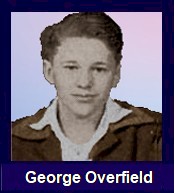
Overfield, George Nezbert
Army Private 1st class

George Nezbert Overfield, age 19, from Jerome, Idaho, Jerome county.

Service era: Korea
Military history: 35th Infantry Regiment

Date of death: Sunday, September 17, 1950
Death details: Killed in action, South Korea
Cemetery: Jerome Cemetery

Source: National Archives, 35th Infantry Regiment Association

Badgerow, Keith M.
Army Private

Keith M. Badgerow, age 20, from Idaho, Jerome county.

Service era: World War II

Date of death: Wednesday, July 22, 1942
Death details: Following the Allied surrender on the Bataan Peninsula on April 9, 1942, the Japanese began the forcible transfer of American and Filipino prisoners of war to various prison camps in central Luzon, at the northern end of the Philippines. The largest of these camps was the notorious Cabanatuan Prison Camp. At its peak, Cabanatuan held approximately 8,000 American and Filipino prisoners of war that were captured during and after the Fall of Bataan. Camp overcrowding worsened with the arrival of Allied prisoners who had surrendered from Corregidor on May 6, 1942. Conditions at the camp were poor and food and water supplied extremely limited, leading to widespread malnutrition and outbreaks of malaria and dysentery. By the time the camp was liberated in early 1945, approximately 2,800 Americans had died at Cabanatuan. Prisoners were forced to bury the dead in makeshift communal graves often completed without records or markers. As a result, identifying and recovering remains interred at Cabanatuan was difficult in the years after the war. Private Keith M. Badgerow entered the U.S. Army Air Forces from Iowa and served in Headquarters Squadron of the 19th Bombardment Group in the Philippines during World War II. He was captured in Bataan following the American surrender and died of dysentery on July 22, 1942, at the Cabanatuan Prison Camp in Nueva Ecija Province. He was buried in a communal grave in the camp cemetery along with other deceased American POWs; however, his remains could not be associated with any remains recovered from Cabanatuan after the war. Today, Private Badgerow is memorialized on the Walls of the Missing at the Manila American Cemetery in the Philippines.
Cemetery: Tablets of the Missing at Manila American Cemetery

Source: National Archives, American Battle Monuments Commission, Defense POW/MIA Accounting Agency

Back To Top