Skip to content

McDaniel, William Franklin
Army Corporal

William Franklin McDaniel, age 20, from Kentucky, McCracken county.

Service era: Korea

Date of death: Wednesday, November 29, 1950
Death details: On November 29, 1950, men from Company G of the U.S. 1st Marine Regiment, MP Company and Tank Company, 1st Marine Division, Company B and elements of Company D of the 31st Infantry Regiment, Headquarters Company of the X Corps, and Royal Marines from Number 41 Independent Commando Battalion were sent north from Koto-ri to open the main supply route to Hagaru-ri and resupply and reinforce Allied troops that had been surrounded near the Chosin Reservoir. The group, known as Task Force Drysdale, set out with tanks and other vehicles in the lead and rear, and initially only met light resistance from Chinese Communist Forces (CCF). As attacks increased in ferocity, the group became fragmented as the CCF managed to establish road blocks that further split the task force. Soon, the CCF blew a bridge and halted the convoy altogether. The Royal Marines and most of Company G were north of the bridge at this time and were able to continue to Hagaru-ri. Near the south end of the convoy, a destroyed truck blocked the road. The tanks and troops south of the destroyed truck fought as long as possible before ultimately returning to Koto-ri on November 30. The men between the blown bridge and the destroyed truck, however, were trapped, and subjected to several mortar barrages before CCF moved into hand-to-hand combat range. Fighting raged there until the morning of November 30, when the survivors were forced to surrender. Over 300 troops were wounded, captured, or died during the action. Sergeant William Franklin McDaniel entered the U.S. Army from Kentucky and served in Headquarters Company, X Corps. He went missing during Task Force Drysdale’s drive from Koto-ri to Hagaru-ri, though specific details regarding his loss are unknown. No one saw him fall, and there is no evidence suggesting he was ever alive in enemy hands. Attempts following the war to recover or identify his remains were unsuccessful. Today, Sergeant McDaniel is memorialized on the Courts of the Missing at the National Memorial Cemetery of the Pacific.

Source: National Archives, Defense POW/MIA Accounting Agency
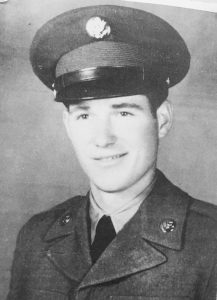
McCabe, John Edward
Army Private 1st class

John Edward McCabe, age 22, from Kentucky, Mason county.

Parents: James McCabe

Service era: Korea

Date of death: Thursday, November 2, 1950
Death details: During the last week of October 1950, Republic of Korea (ROK) Army forces under the control of the U.S. Eighth Army were advancing deep in North Korean territory, approaching the Yalu River on the Chinese-Korean border. Chinese Communist Forces (CCF) struck back in a surprise attack, engaging the ROK 1st and 6th Divisions near Unsan, some sixty miles north of Pyongyang. The U.S. 1st Cavalry Division, with the 8th Cavalry Regiment in the lead, was rushed forward to reinforce the ROK units in the Unsan area. On November 1, the regiment’s 1st Battalion took up positions north of Unsan, while the 2nd Battalion moved to guard the Nammyon River valley west of town, and the 3rd Battalion was placed in reserve at the valley’s southern end. Private First Class John Edward McCabe joined the U.S. Army from Kentucky and was a member of Company M, 3rd Battalion, 8th Cavalry Regiment, 1st Cavalry Division. On November 2, 1950, Company M was serving as a security unit supporting 8th Cavalry Regiment elements near Unsan when it was hit by an enemy attack and forced to withdraw. Private First Class McCabe was taken as a prisoner of war (POW) at some point during the withdrawal. Repatriated POWs reported that PFC McCabe died on November 13, 1950; his remains were not identified among those returned to the U.S. following the war. Today, Private First Class McCabe is memorialized on the Courts of the Missing at the National Memorial Cemetery of the Pacific.

Source: National Archives, Defense POW/MIA Accounting Agency, Kentucky Post (1950)

Higgins, James Thomas
Army Corporal

James Thomas Higgins, age 20, from Kentucky, Harlan county.

Parents: Samuel E. Higgins

Service era: Korea

Date of death: Wednesday, November 1, 1950
Death details: On May 2, 2000, Joint Task Force-Full Accounting (JTF-FA, now DPAA) identified the remains of Sergeant James Thomas Higgins, missing from the Korean War. Sergeant Higgins, who entered the U.S. Army from Kentucky, served with Company E, 2nd Battalion, 8th Cavalry Regiment, 1st Cavalry Division. On November 1, 1950, SGT Higgins was killed by a grenade explosion during combat with Chinese Communist Forces in Pyongan Province, North Korea. His remains were buried near the battlefield where he fell, but could not be recovered at the time. In 1997, U.S. analysts traveled to Pyong-an Province and excavated a burial site correlating to an area where the 8th Cavalry Regiment fought during the Korean War. The site yielded the commingled remains of four individuals along with military and other artifacts, and U.S. forensic analysts eventually identified SGT Higgins from among these remains.

Source: National Archives, Defense POW/MIA Accounting Agency, Courier Journal (1950)

Neal, Ardell Nation
Army Private 1st class

Ardell Nation Neal, age 23, from Kentucky, Ohio county.

Service era: Korea

Date of death: Wednesday, November 1, 1950
Death details: During the last week of October 1950, Republic of Korea (ROK) Army forces under the control of the U.S. Eighth Army were advancing deep in North Korean territory, approaching the Yalu River on the Chinese-Korean border. Chinese Communist Forces (CCF) struck back in a surprise attack, engaging the ROK 1st and 6th Divisions near Unsan, some sixty miles north of Pyongyang. The U.S. 1st Cavalry Division, with the 8th Cavalry Regiment in the lead, was rushed forward to reinforce the ROK units in the Unsan area. On November 1, the regiment’s 1st Battalion took up positions north of Unsan, while the 2nd Battalion moved to guard the Nammyon River valley west of town, and the 3rd Battalion was placed in reserve at the valley’s southern end. Corporal Ardell National Neal joined the U.S. Army from Kentucky and was a member of Company G of the 2nd Battalion, 8th Cavalry Regiment, 1st Cavalry Division. On November 1, 1950, Company G was conducting defensive operations with the 2nd Battalion near Unsan when it came under an intense rocket and mortar attack and was forced to withdraw. Corporal Neal went missing during this action, though circumstances surrounding his loss are unknown. He was never reported as a prisoner of war, and his remains were not identified among those returned to the U.S. following the war. Today, Corporal Neal is memorialized on the Courts of the Missing at the National Memorial Cemetery of the Pacific.

Source: National Archives, Defense POW/MIA Accounting Agency, Owensboro Messenger Inquirer (1955)

Radford, Johnnie Eugene
Army Private 1st class

Johnnie Eugene Radford from Kentucky, Cumberland county.

Service era: Korea

Date of death: Sunday, July 16, 1950
Death details: On the evening of July 15, 1950, the U.S. Army’s 19th Infantry Regiment held defensive positions along the south bank of the Kum River. As dusk approached, North Korean People’s Army (NKPA) tanks appeared on the opposite shore and began firing on the U.S. positions. Although U.S. troops repulsed the attacks that evening, the next morning the NKPA crossed the river and launched a major attack against the 19th Regiment. As the regiment began withdrawing south to Taejon, the North Koreans pushed deep into their defensive lines and set up a roadblock en route to Taejon. When retreating American convoys could not break through the roadblock, soldiers were forced to leave the road and attempt to make their way in small groups across the countryside. Of the 900 soldiers in the 19th Infantry when the Battle of Kum River started, only 434 made it to friendly lines. Corporal Johnnie Eugene Radford entered the U.S. Army from Kentucky and served with Company C, 1st Battalion, 19th Infantry Regiment, 24th Infantry Division. He went missing in action on July 16, during the Battle of Kum River, while attempting to withdraw through and around an enemy roadblock outside Taejon. Specific details regarding his loss are unknown. He was never reported to be a prisoner of war, and he remains unaccounted for. Today, Corporal Radford is memorialized on the Courts of the Missing at the National Memorial Cemetery of the Pacific.

Source: National Archives, Defense POW/MIA Accounting Agency

Sallee, Raymond
Army Private 1st class

Raymond Sallee from Kentucky, Mercer county.

Service era: Korea

Date of death: Sunday, July 16, 1950
Death details: On the evening of July 15, 1950, the U.S. Army’s 19th Infantry Regiment held defensive positions along the south bank of the Kum River. As dusk approached, North Korean People’s Army (NKPA) tanks appeared on the opposite shore and began firing on the U.S. positions. Although U.S. troops repulsed the attacks that evening, the next morning the NKPA crossed the river and launched a major attack against the 19th Regiment. As the regiment began withdrawing south to Taejon, the North Koreans pushed deep into their defensive lines and set up a roadblock en route to Taejon. When retreating American convoys could not break through the roadblock, soldiers were forced to leave the road and attempt to make their way in small groups across the countryside. Of the 900 soldiers in the 19th Infantry when the Battle of Kum River started, only 434 made it to friendly lines. Private First Class Raymond Sallee entered the U.S. Army from Kentucky and served with Company E, 2nd Battalion, 19th Infantry Regiment, 24th Infantry Division. He went missing on July 16 during the Battle of Kum River, as Company E attempted to withdraw through an enemy roadblock outside Taejon. Specific details regarding his loss are unknown. He was never reported to be a prisoner of war, and his remains were never recovered. Today, Private First Class Sallee is memorialized on the Courts of the Missing at the National Memorial Cemetery of the Pacific.

Source: National Archives, Defense POW/MIA Accounting Agency

Wright, Robert Arle
Army Private

Robert Arle Wright, age 18, from Kentucky, Daviess county.

Service era: Korea

Date of death: Sunday, July 16, 1950
Death details: The government identified Robert’s remains on August 15, 2022. On the evening of July 15, 1950, the U.S. Army’s 19th Infantry Regiment held defensive positions along the south bank of the Kum River. As dusk approached, North Korean People’s Army (NKPA) tanks appeared on the opposite shore and began firing on the U.S. positions. Although U.S. troops repulsed the attacks that evening, the next morning the NKPA crossed the river and launched a major attack against the 19th Regiment. As the regiment began withdrawing south to Taejon, the North Koreans pushed deep into their defensive lines and set up a roadblock en route to Taejon. When retreating American convoys could not break through the roadblock, soldiers were forced to leave the road and attempt to make their way in small groups across the countryside. Of the 900 soldiers in the 19th Infantry when the Battle of Kum River started, only 434 made it to friendly lines. Private First Class Robert Arle Wright entered the U.S. Army from Kentucky and served with Company C, 1st Battalion, 19th Infantry Regiment, 24th Infantry Division. He went missing on July 16, when Company C’s positions outside Taejon were overrun during the Battle of Kum River. He was never reported to be a prisoner of war. Today, Private First Class Wright is memorialized on the Courts of the Missing at the National Memorial Cemetery of the Pacific.

Source: National Archives, Defense POW/MIA Accounting Agency

Haag, Douglas Hopkins
Army 1st lieutenant

Douglas Hopkins Haag from Kentucky, Jefferson county.

Service era: Korea

Date of death: Wednesday, July 12, 1950
Death details: On February 28, 2013, the Joint POW/MIA Accounting Command (JPAC, now DPAA) identified the remains of First Lieutenant Douglas Hopkins Haag, missing from the Korean War. First Lieutenant Haag, who entered the U.S. Army from Kentucky, served with Company K, 3rd Battalion, 21st Infantry Regiment, 24th Infantry Division. On July 12, 1950, he was killed in action while his unit was engaged in combat with North Korean People’s Army (NKPA) forces near the town of Chochiwon, South Korea. His remains could not be recovered immediately following his loss. In 2012, a joint U.S./South Korean investigative team recovered remains near Chochiwon which were later identified as those of 1LT Haag.

Source: National Archives, Defense POW/MIA Accounting Agency

Cox, Boyd E.
Army Private 1st class

Boyd E. Cox from Kentucky, Whitley county.

Service era: Korea

Date of death: Wednesday, July 5, 1950
Death details: On July 5, 1950, Task Force Smith, the first U.S. ground element to engage North Korean People’s Army (NKPA) troops, was defending a position north of Osan, South Korea. The Task Force’s goal was to delay enemy forces by blocking their movement down the road south from Suwon to Taejon, which was a major avenue of advance for the NKPA. That morning, the Task Force was engaged by a column of enemy tanks. The anti-tank weapons that the infantrymen employed were ineffective, and a large number of tanks broke through their position. Task Force Smith was forced to withdraw to the south, suffering heavy casualties in the process. Corporal Boyd Edward Cox, who joined the U.S. Army from Kentucky, served with B Company, 1st Battalion, 21st Infantry Regiment, 24th Infantry Division. His unit was part of Task Force Smith, and he was captured by enemy forces on July 5 and marched north with other prisoners. He died near Yonchon, South Korea, while en route to the Apex prison camps in North Korea. Searches for his remains have been unsuccessful, and he is still unaccounted for. Today, Corporal Cox is memorialized on the Courts of the Missing at the National Memorial Cemetery of the Pacific.

Source: National Archives, Defense POW/MIA Accounting Agency

Beliles, Otis E. H.
Army Private

Otis E. H. Beliles from Kentucky, Butler county.

Service era: World War II

Date of death: Sunday, October 21, 1945
Death details: The Battle of the Hürtgen Forest, one of the bloodiest conflicts of World War II, was fought between Allied and German forces from September 1944 to February 1945. As U.S. forces advanced eastward into Germany, the defending Germans manned “Siegfried Line” positions opposite the Belgian border. The battle grew to involve approximately 200,000 troops, with tens of thousands of casualties on both sides. American forces initially entered the area seeking to block German reinforcements from moving north toward the fighting around Aachen, the westernmost city of Germany, near the borders with Belgium and the Netherlands. In the battle’s second phase and as part of the Allied’s larger offense toward the Rhine River, U.S. troops attempted to push through the forest to the banks of Roer River. Aided by bad weather and rough terrain, German forces in the Hürtgen Forest put up unexpectedly strong resistance due to a well-prepared defense. American forces were unable to break through to the Rur before the German Ardennes offensive struck in December 1944, known as the Battle of the Bulge, which halted the eastward Allied advance until February 1945. Private Otis E.H. Beliles, who joined the U.S. Army from Kentucky, served with Company B, 60th Infantry Regiment, 9th Infantry Division, which participated in the Battle of the Hürtgen Forest. On October 21, 1944, Company B was engaged in attacks on the town of Stolberg, Germany. Private Otis was serving as a scout and was lost at some point during this engagement. He was neither seen again nor reported as a prisoner of war. Search attempts following the battle were attempted but nearly impossible due to enemy presence in the area and Private Beliles’s remains were not recovered. Today, Private Beliles is memorialized on the Walls of the Missing at the Netherlands American Cemetery in Margraten, Netherlands.
Cemetery: Tablets of the Missing at Netherlands American

Source: National Archives, American Battle Monuments Commission, Defense POW/MIA Accounting Agency

Back To Top