Skip to content

Alvarez, Sandolio C.
Army Private
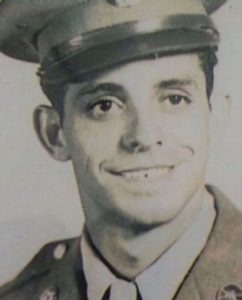
Sandolio C. Alvarez, age 23, from Hillsborough County Florida.

Service era: World War II
Military history: 5307 Composite Unit

Date of death: Saturday, July 1, 1944
Death details: The siege of Myitkyina was an engagement during the Burma Campaign of World War II, which was a battle for the strategic airfield and village of Myitkyina, Burma, and occurred from May to August 1944. Allied troops, led by Merrill’s Marauders (later designated the 475th Infantry Regiment) and supported by elements of the Chinese Army, attacked a much larger Japanese force at Myitkyina. While the airfield was seized within days, it proved more difficult to force the Japanese out of the village of Myitkyina. For more than ten weeks, the Japanese Army played a defensive strategy before slowly abandoning the village, by river and at night.Tropical diseases such as scrub typhus, cerebral malaria, amoebic dysentery and skin fungus contributed significantly to nearly 300 U.S. casualties during the campaign. Soldiers who died at Myitkyina were buried in makeshift graves near the village. These graves rapidly reverted back into the jungle after the campaign, making it exceedingly difficult for American Graves Registration personnel to locate and recover them after the war.
Private Sandolio C. Alvarez, who joined the U.S. Army from Florida, served with Company F, 475th Infantry Regiment. He was reported missing in action on July 1, 1944, after his unit was facing heavy enemy fire near Myitkyina. Battlefield conditions precluded an extensive search for Private Alvarez at the time, and when searches were conducted after the war, his remains could not be recovered. Today, Private Alvarez is memorialized on the Walls of the Missing at the Manila American Cemetery in the Philippines.

Source: National Archives, Defense POW/MIA Accounting Agency, Tampa Tribune (1945), Tampa Times (1946)
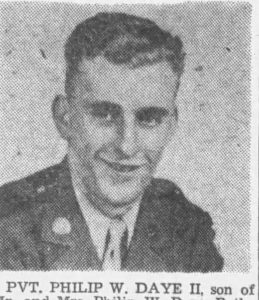
Daye, Philip W. II
Army Private

Philip W. II Daye, age 21, from Oxford County Bethel, Maine .
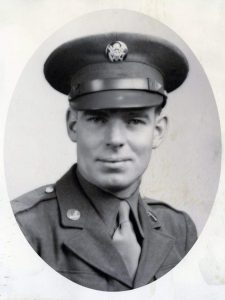
Parents: Philip W. Daye

Service era: World War II

Date of death: Saturday, July 1, 1944
Death details: The siege of Myitkyina was an engagement during the Burma Campaign of World War II, which was a battle for the strategic airfield and village of Myitkyina, Burma, and occurred from May to August 1944. Allied troops, led by Merrill’s Marauders (later designated the 475th Infantry Regiment) and supported by elements of the Chinese Army, attacked a much larger Japanese force at Myitkyina. While the airfield was seized within days, it proved more difficult to force the Japanese out of the village of Myitkyina. For more than ten weeks, the Japanese Army played a defensive strategy before slowly abandoning the village, by river and at night.Tropical diseases such as scrub typhus, cerebral malaria, amoebic dysentery and skin fungus contributed significantly to nearly 300 U.S. casualties during the campaign. Soldiers who died at Myitkyina were buried in makeshift graves near the village. These graves rapidly reverted back into the jungle after the campaign, making it exceedingly difficult for American Graves Registration personnel to locate and recover them after the war.
Private Philip W. Daye, who joined the U.S. Army from Maine, served with Company E, 5307th Composite Unit (Provisional) known as “Merrill’s Marauders.” He was killed in action on July 1, 1944, in the midst of the battle for Myitkyina. Records provide no further information on the specific circumstances surrounding his death, and his remains could not be recovered after the war. Today, Private Daye is memorialized on the Walls of the Missing at the Manila American Cemetery in the Philippines.

Source: National Archives, Defense POW/MIA Accounting Agency, Sun Journal (1944), Advertiser Democrat (2014)

Geary, Philip J.
Army Private

Philip J. Geary, age 37, from Macomb County Roseville, Michigan .
Service era: World War II

Date of death: Saturday, July 1, 1944
Death details: On August 27, 2025, the Defense POW/MIA Accounting Agency identified the remains of U.S. Army Pvt. Philip J. Geary, missing from World War II. Geary entered the U.S. Army from Michigan and served with the 475th Infantry Regiment in the China-India-Burma Theater. From May to Aug. 1944. Allied troops, led by “Merrill’s Marauders,” later designated the 475th Infantry Regiment, and supported by elements of the Chinese Army, attacked a much larger Japanese force at the strategic airfield of the village of Myitkyina, Burma, in a battle that came to be known as the siege of Myitkyina. While the airfield was seized within days, it proved more difficult to force the Japanese forces out of the village. For more than ten weeks, the Japanese Army played a defensive strategy before slowly abandoning the village, by river and at night. Geary was lost on July 1, 1941, in the midst of the battle for Myitkyina. Soldiers who died at Myitkyina were buried near the village in makeshift graves which rapidly reverted back into the jungle after the campaign, making it exceedingly difficult for American Graves Registration personnel to locate and recover them after the war. Eventually, all known burials were concentrated into the U.S. Military Cemetery at Myitkyina. In 1946 all of the remains at the U.S. Military Cemetery at Myitkyina were disinterred and transferred to the U.S. Military Cemetery at Kalaikunda, India, where those that could not be identified were sent to the Central Identification Laboratory on Oahu for further analysis. Despite the efforts of Central Identification Laboratory staff, a number of remains could still not be identified at the time and were subsequently buried as World War II Unknowns in the National Memorial Cemetery of the Pacific in Honolulu. In Nov. 2021, as part of the Battle of Myitkyina project, DPAA personnel disinterred one such Unknown and transferred the remains to the DPAA laboratory for further study. There, based on the laboratory analysis and total circumstantial evidence, one set of these previously unidentified remains was found to be those of Geary.

Source: National Archives, Defense POW/MIA Accounting Agency, Ann Arbor News (1944)

Hunt, Joe J.
Army Private 1st class

Joe J. Hunt, age 20, from Vigo County Farmersburg, Indiana .

Parents: Eula B. Hunt

Service era: World War II

Date of death: Saturday, July 1, 1944
Death details: The siege of Myitkyina was an engagement during the Burma Campaign of World War II, which was a battle for the strategic airfield and village of Myitkyina, Burma, and occurred from May to August 1944. Allied troops, led by Merrill’s Marauders (later designated the 475th Infantry Regiment) and supported by elements of the Chinese Army, attacked a much larger Japanese force at Myitkyina. While the airfield was seized within days, it proved more difficult to force the Japanese out of the village of Myitkyina. For more than ten weeks, the Japanese Army played a defensive strategy before slowly abandoning the village, by river and at night.Tropical diseases such as scrub typhus, cerebral malaria, amoebic dysentery and skin fungus contributed significantly to nearly 300 U.S. casualties during the campaign. Soldiers who died at Myitkyina were buried in makeshift graves near the village. These graves rapidly reverted back into the jungle after the campaign, making it exceedingly difficult for American Graves Registration personnel to locate and recover them after the war.
Private First Class Joe J. Hunt, who joined the U.S. Army from Indiana, served with Headquarters Company, 475th Infantry Regiment. He was killed in action on July 1, 1944, during the Myitkyina campaign, but the specific circumstances of his death are unknown. Search efforts after the way have not recovered his remains, and he is still unaccounted-for. Today, Private First Class Hunt is memorialized on the Walls of the Missing at the Manila American Cemetery in the Philippines.

Source: National Archives, Defense POW/MIA Accounting Agency, Indianapolis Star (1944)

Sokolowski, Walter L.
Army Private 1st class

Walter L. Sokolowski, age 21, from Luzerne County Nanticoke, Pennsylvania .

Service era: World War II

Date of death: Saturday, July 1, 1944
Death details: The siege of Myitkyina was an engagement during the Burma Campaign of World War II, which was a battle for the strategic airfield and village of Myitkyina, Burma, and occurred from May to August 1944. Allied troops, led by Merrill’s Marauders (later designated the 475th Infantry Regiment) and supported by elements of the Chinese Army, attacked a much larger Japanese force at Myitkyina. While the airfield was seized within days, it proved more difficult to force the Japanese out of the village of Myitkyina. For more than ten weeks, the Japanese Army played a defensive strategy before slowly abandoning the village, by river and at night.Tropical diseases such as scrub typhus, cerebral malaria, amoebic dysentery and skin fungus contributed significantly to nearly 300 U.S. casualties during the campaign. Soldiers who died at Myitkyina were buried in makeshift graves near the village. These graves rapidly reverted back into the jungle after the campaign, making it exceedingly difficult for American Graves Registration personnel to locate and recover them after the war.
Private First Class Walter L. Sokolowski, who joined the U.S. Army from Pennsylvania, served with the 475th Infantry Regiment in the China-India-Burma Theater. He died on July 1, 1944, in the midst of the Myitkyina campaign, but there are no specific circumstances recorded about his death. His remains could not be recovered after the war. Today, Private First Class Sokolowski is memorialized on the Walls of the Missing at the Manila American Cemetery in the Philippines.

Source: National Archives, Defense POW/MIA Accounting Agency, Times Tribune (1946)

Vincent, Robert L.
Army Private 1st class

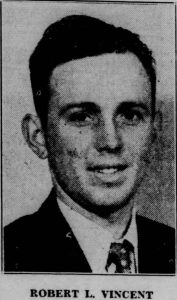
Robert L. Vincent, age 23, from Muhlenberg County Central City, Kentucky .
Parents: Edgar Vincnet
Spouse: Junita N. Vincent

Service era: World War II

Date of death: Saturday, July 1, 1944
Death details: The siege of Myitkyina was an engagement during the Burma Campaign of World War II, which was a battle for the strategic airfield and village of Myitkyina, Burma, and occurred from May to August 1944. Allied troops, led by Merrill’s Marauders (later designated the 475th Infantry Regiment) and supported by elements of the Chinese Army, attacked a much larger Japanese force at Myitkyina. While the airfield was seized within days, it proved more difficult to force the Japanese out of the village of Myitkyina. For more than ten weeks, the Japanese Army played a defensive strategy before slowly abandoning the village, by river and at night.Tropical diseases such as scrub typhus, cerebral malaria, amoebic dysentery and skin fungus contributed significantly to nearly 300 U.S. casualties during the campaign. Soldiers who died at Myitkyina were buried in makeshift graves near the village. These graves rapidly reverted back into the jungle after the campaign, making it exceedingly difficult for American Graves Registration personnel to locate and recover them after the war.
Private First Class Robert L. Vincent, who joined the U.S. Army from Kentucky, served with the 475th Infantry Regiment in the China-India-Burma Theater. He died on July 1, 1944, in the midst of the battle for Myitkyina, and records provide no further information on the specific circumstances surrounding his death. His remains could not be recovered after the war. Today, Private First Class Vincent is memorialized on the Walls of the Missing at the Manila American Cemetery in the Philippines.

Source: National Archives, Defense POW/MIA Accounting Agency, The Messenger (1944)

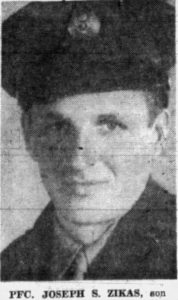
Zikas, Joseph S.
Army Private 1st class

Joseph S. Zikas from Westchester County Port Chester, New York .

Parents: Joseph Zikas

Service era: World War II
Military history: 5307 Composite Unit

Date of death: Saturday, July 1, 1944
Death details: The siege of Myitkyina was an engagement during the Burma Campaign of World War II, which was a battle for the strategic airfield and village of Myitkyina, Burma, and occurred from May to August 1944. Allied troops, led by Merrill’s Marauders (later designated the 475th Infantry Regiment) and supported by elements of the Chinese Army, attacked a much larger Japanese force at Myitkyina. While the airfield was seized within days, it proved more difficult to force the Japanese out of the village of Myitkyina. For more than ten weeks, the Japanese Army played a defensive strategy before slowly abandoning the village, by river and at night.Tropical diseases such as scrub typhus, cerebral malaria, amoebic dysentery and skin fungus contributed significantly to nearly 300 U.S. casualties during the campaign. Soldiers who died at Myitkyina were buried in makeshift graves near the village. These graves rapidly reverted back into the jungle after the campaign, making it exceedingly difficult for American Graves Registration personnel to locate and recover them after the war.
Private First Class Joseph S. Zikas, who joined the U.S. Army from New York, served with the 475th Infantry Regiment in the China-India-Burma Theater. He died on July 1, 1944, in the midst of the battle for the village of Myitkyina, and records do not provide any further information pertaining to the specific circumstances surrounding his death. His remains could not be recovered after the war. Today, Private First Class Zikas is memorialized on the walls of the Missing at the Manila American Cemetery in the Philippines.

Source: National Archives, Defense POW/MIA Accounting Agency, Daily Item (1944)

Back To Top