Skip to content

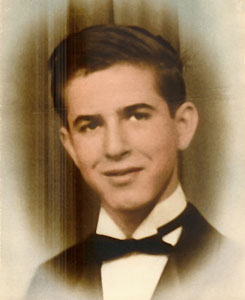
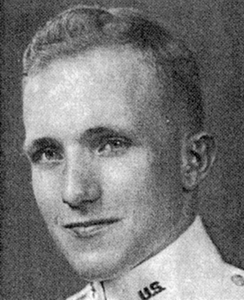
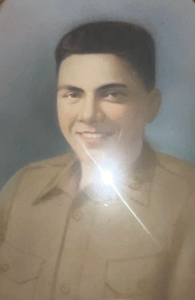
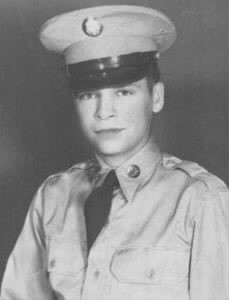
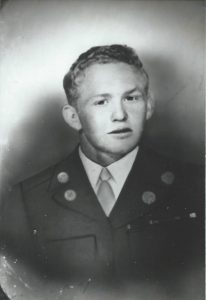
Witherell, Francis Kenneth
Army Corporal

Francis Kenneth Witherell, age 26, from Chautauqua County Dunkirk, New York .

Parents: Gladys M. Witherell

Service era: Korea

Date of death: Tuesday, August 29, 1950
Death details: On July 28, 1950, members of the 3rd Battalion, 34th Infantry Regiment, 24th Infantry Division, were in defensive positions near Kochang, South Korea, west of the Naktong River. They served as part of a defensive formation soon to be known as the Pusan Perimeter, meant to delay the North Korean People’s Army’s (NKPA) advance through South Korea long enough so that reinforcements could arrive at Pusan Harbor. That night, members of the 34th Infantry reported seeing a procession of enemy tanks and infantry assemble behind a roadblock west of Kochang. The next morning, this NKPA force attacked the 34th Infantry positions from two directions. Continuous enemy fire eventually forced the regiment to withdraw to the east; however, Company I was cut off by the NKPA. A counterattack was successful in rescuing all but one platoon from Company I, though many men were killed or went missing during these actions. Corporal Francis Kenneth Witherell entered the U.S. Army from New York and was a member of K Company, 3rd Battalion, 34th Infantry Regiment, 24th Infantry Division. He was captured during this fighting near Kochang on August 29, 1950. Following his capture, CPL Witherell was marched with other prisoners of war (POWs) toward Pyongyang, North Korea. Repatriated POWs later reported he was killed by a prison guard on October 20 while aboard a POW transport train that was stopped in a tunnel near Sunchon, North Korea. He was buried nearby and later reinterred in the U.N. Military Cemetery at Pyongyang, though he was not identified among the remains returned from this area to the U.S. following the war. He is still unaccounted-for. Today, Corporal Witherell is memorialized on the Courts of the Missing at the National Memorial Cemetery of the Pacific. His name is also inscribed on the Korean War Veterans Memorial Wall in Washington, DC, which was updated in 2022 to include the names of the fallen.

Source: National Archives, Defense POW/MIA Accounting Agency, Buffalo Courier Express (1950)
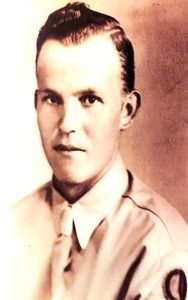
Mares, Charlie John
Army Major sergeant

Charlie John Mares, age 29, from Fayette County Waelder, Texas .

Parents: Cyril J. Mares

Service era: Korea

Date of death: Monday, July 31, 1950
Death details: On February 4, 2019, the Defense POW/MIA Accounting Agency (DPAA) identified the remains of Master Sergeant Charlie John Mares, missing from the Korean War. Master Sergeant Mares, who joined the U.S. Army from Texas, was a member of C Company, 1st Battalion, 34th Infantry Regiment, 24th Infantry Division. On July 31, 1950, he was killed by enemy fire while supporting the defensive positions near Kwonbin-ni, South Korea, west of the Naktong River. In May 1951, the American Graves Registration Service recovered several sets of human remains from the area of MSG Mares’s loss. These remains were sent to the Central Identification Unit in Kokura, Japan for analysis, some of which could not be identified at the time and were buried as “unknowns” at the National Memorial Cemetery of the Pacific in Honolulu, Hawaii. In 2018, one set of “unknowns” was disinterred by DPAA analysts who, using historical unit data and modern forensic technology, were able to identify these remains as those of MSG Mares. Master Sergeant Mares is memorialized on the Courts of the Missing at the National Memorial Cemetery of the Pacific. His name is also inscribed on the Korean War Veterans Memorial Wall in Washington, DC, which was updated in 2022 to include the names of the fallen.

Source: National Archives, Defense POW/MIA Accounting Agency, Paris News (1964)

Toress, Robert Joseph
Army Private

Robert Joseph Toress, age 18, from Hampden County Springfield, Massachusetts .

Parents: Samuel F. Toress

Service era: Korea

Date of death: Monday, July 31, 1950
Death details: On July 28, 1950, members of the 3rd Battalion, 34th Infantry Regiment, 24th Infantry Division, were in defensive positions near Kochang, South Korea, west of the Naktong River. They served as part of a defensive formation soon to be known as the Pusan Perimeter, meant to delay the North Korean People’s Army’s (NKPA) advance through South Korea long enough so that reinforcements could arrive at Pusan Harbor. That night, members of the 34th Infantry reported seeing a procession of enemy tanks and infantry assemble behind a roadblock west of Kochang. The next morning, this NKPA force attacked the 34th Infantry positions from two directions. Continuous enemy fire eventually forced the regiment to withdraw to the east; however, Company I was cut off by the NKPA. A counterattack was successful in rescuing all but one platoon from Company I, though many men were killed or went missing during these actions. Private Robert J. Toress entered the U.S. Army from Massachusetts and was a member of D Company, 1st Battalion, 34th Infantry Regiment, 24th Infantry Division. He was killed in action on July 31 during the early morning fighting near Kochang. His body was not recovered at the time, and his remains were not recovered or identified following the war. Today, Private Toress is memorialized on the Courts of the Missing at the National Memorial Cemetery of the Pacific. His name is also inscribed on the Korean War Veterans Memorial Wall in Washington, DC, which was updated in 2022 to include the names of the fallen.

Source: National Archives, Defense POW/MIA Accounting Agency, The Republican (1950)

Hyman, Rufus Johnston
Army 1st lieutenant

Rufus Johnston Hyman, age 23, from Shelby County Memphis, Tennessee .

Parents: O. W. Hyman

Service era: Korea
Schools: Central High, West Point (1948)

Date of death: Sunday, July 30, 1950
Death details: On February 20, 2019, the Defense POW/MIA Accounting Agency identified the remains of Seaman First Class Oris V. Brandt, missing from the Korean War. Captain Rufus Johnston Hyman entered the U.S. Army from Tennessee and served with A Company, 1st Battalion, 34th Infantry Regiment, 24th Infantry Division. In late July 1950 the 34th Infantry Regiment occupied positions near Kochang, South Korea, in part of a defensive formation known as the Pusan Perimeter. There, they attempted to halt the advance of the North Korean People’s Army (NKPA) long enough for United Nations reinforcements to arrive in Pusan Harbor. On the morning of July 29, 1950 the NKPA attacked the 34th Infantry from multiple directions with masses of infantry and tanks. CPT Hyman was reported to be missing on July 30 after this fighting near Kochang. In 1951, a search team recovered remains from an isolated gravesite near where the 34th Infantry had fought the year before. The remains could not be identified and were eventually interred as an unknown in the National Memorial Cemetery of the Pacific in Hawaii. In July of 2017, analysts at DPAA disinterred these remains and used modern forensic tools to identify them as those of CPT Hyman. Captain Hyman is memorialized on the Courts of the Missing at the National Memorial Cemetery of the Pacific. His name is also inscribed on the Korean War Veterans Memorial Wall in Washington, DC, which was updated in 2022 to include the names of the fallen.

Source: National Archives, Defense POW/MIA Accounting Agency, Commercial Appeal (1954)

Boggs, Bish
Army Sergeant

Bish Boggs, age 38, from Laurel County Keavy, Kentucky .

Parents: Maudie Boggs

Service era: Korea

Date of death: Saturday, July 29, 1950
Death details: On July 28, 1950, members of the 3rd Battalion, 34th Infantry Regiment, 24th Infantry Division, were in defensive positions near Kochang, South Korea, west of the Naktong River. They served as part of a defensive formation soon to be known as the Pusan Perimeter, meant to delay the North Korean People’s Army’s (NKPA) advance through South Korea long enough so that reinforcements could arrive at Pusan Harbor. That night, members of the 34th Infantry reported seeing a procession of enemy tanks and infantry assemble behind a roadblock west of Kochang. The next morning, this NKPA force attacked the 34th Infantry positions from two directions. Continuous enemy fire eventually forced the regiment to withdraw to the east; however, Company I was cut off by the NKPA. A counterattack was successful in rescuing all but one platoon from Company I, though many men were killed or went missing during these actions. Sergeant First Class Bish Boggs entered the U.S. Army from Kentucky and was a member of I Company, 3rd Battalion, 34th Infantry Regiment, 24th Infantry Division. He went missing in action during the fighting on July 29, though the exact circumstances surrounding his loss are unknown. He was never reported to be a prisoner of war, and his remains were not recovered following the war. Today, Sergeant First Class Boggs is memorialized on the Courts of the Missing at the National Memorial Cemetery of the Pacific. His name is also inscribed on the Korean War Veterans Memorial Wall in Washington, DC, which was updated in 2022 to include the names of the fallen.

Source: National Archives, Defense POW/MIA Accounting Agency, Corbin Times Tribune (1950)

Woods, Roger Lee
Army Private

Roger Lee Woods, age 18, from Hamilton County Cincinnati, Ohio .

Service era: Korea

Date of death: Saturday, July 29, 1950
Death details: On May 21, 2019, the Defense POW/MIA Accounting Agency (DPAA) announced it has accounted for the remains of Private First Class Rogers Lee Woods, missing from the Korean War. Private First Class Woods entered the U.S. Army from Ohio and was a member of I Company, 3rd Battalion, 34th Infantry Regiment, 24th Infantry Division. In late July 1950, his unit was stationed in defensive positions near Kochang, South Korea, west of the Naktong River, as part of a formation soon to be known as the Pusan Perimeter. On the morning of July 29, North Korean People’s Army (NKPA) forces attacked the 3rd Battalion’s positions from two directions. The continuous enemy fire eventually forced the regiment to withdraw to the east; however, I Company was cut off, and PFC Woods was killed in this action, though the precise circumstances of his loss remain unknown. In October 1950, his remains were recovered from Kochang by the 565th Quartermaster Graves Registration Company, but were not identified at the time and were eventually interred as an unknown at the National Memorial Cemetery of the Pacific, Hawaii. In 2018, advances in forensic technology prompted the disinterment and eventual identification of PFC Woods’ remains. Private First Class Woods is memorialized on the Courts of the Missing at the National Memorial Cemetery of the Pacific. His name is also inscribed on the Korean War Veterans Memorial Wall in Washington, DC, which was updated in 2022 to include the names of the fallen.

Source: National Archives, Defense POW/MIA Accounting Agency, Associated Press (1954)

Brower, George Thomas
Army Sergeant

George Thomas Brower, age 29, from Anson County Goldsboro, North Carolina .

Parents: Illa Mae Brower

Service era: Korea

Date of death: Saturday, July 29, 1950
Death details: On July 28, 1950, members of the 3rd Battalion, 34th Infantry Regiment, 24th Infantry Division, were in defensive positions near Kochang, South Korea, west of the Naktong River. They served as part of a defensive formation soon to be known as the Pusan Perimeter, meant to delay the North Korean People’s Army’s (NKPA) advance through South Korea long enough so that reinforcements could arrive at Pusan Harbor. That night, members of the 34th Infantry reported seeing a procession of enemy tanks and infantry assemble behind a roadblock west of Kochang. The next morning, this NKPA force attacked the 34th Infantry positions from two directions. Continuous enemy fire eventually forced the regiment to withdraw to the east; however, Company I was cut off by the NKPA. A counterattack was successful in rescuing all but one platoon from Company I, though many men were killed or went missing during these actions. Sergeant First Class George Thomas Brower entered the U.S. Army from North Carolina and was a member of I Company, 3rd Battalion, 34th Infantry Regiment, 24th Infantry Division. He went missing sometime during the fighting south of Taegu on July 29, though the exact circumstances surrounding his loss are unknown. He was never reported as alive in enemy hands, and his remains were not recovered or identified following the ceasefire. Today, Sergeant First Class Brower is memorialized on the Courts of the Missing at the National Memorial Cemetery of the Pacific. His name is also inscribed on the Korean War Veterans Memorial Wall in Washington, DC, which was updated in 2022 to include the names of the fallen.

Source: National Archives, Defense POW/MIA Accounting Agency, News and Reocrd (1950)

Carrouth, Ralph Norman
Army Private 1st class

Ralph Norman Carrouth, age 20, from Cabarrus County Kannapolis, North Carolina .

Parents: Leslie Carrouth

Service era: Korea

Date of death: Saturday, July 29, 1950
Death details: On July 28, 1950, members of the 3rd Battalion, 34th Infantry Regiment, 24th Infantry Division, were in defensive positions near Kochang, South Korea, west of the Naktong River. They served as part of a defensive formation soon to be known as the Pusan Perimeter, meant to delay the North Korean People’s Army’s (NKPA) advance through South Korea long enough so that reinforcements could arrive at Pusan Harbor. That night, members of the 34th Infantry reported seeing a procession of enemy tanks and infantry assemble behind a roadblock west of Kochang. The next morning, this NKPA force attacked the 34th Infantry positions from two directions. Continuous enemy fire eventually forced the regiment to withdraw to the east; however, Company I was cut off by the NKPA. A counterattack was successful in rescuing all but one platoon from Company I, though many men were killed or went missing during these actions. Corporal Ralph Norman Carrouth entered the U.S. Army from North Carolina and was a member of I Company, 3rd Battalion, 34th Infantry Regiment, 24th Infantry Division. He was captured during the fighting near Kochang on July 29. Following his capture, CPL Carrouth was marched with other prisoners of war (POWs) toward Seoul and Pyongyang. After the war, returned prisoners reported that CPL Carrouth died of dysentery and malnutrition while still traveling north on October 9, and was buried on the side of the road south of Pyongyang. His remains were not recovered, and he was not identified among the remains returned to the U.S. following the war. Today, Corporal Carrouth is memorialized on the Courts of the Missing at the National Memorial Cemetery of the Pacific. His name is also inscribed on the Korean War Veterans Memorial Wall in Washington, DC, which was updated in 2022 to include the names of the fallen.

Source: National Archives, Defense POW/MIA Accounting Agency, News and Reocrd (1950)

Coons, Frederick Eugene
Army Private 1st class

Frederick Eugene Coons, age 22, from Buchanan County Saint Joseph, Missouri .

Parents: Nancy Ethel Coons

Service era: Korea

Date of death: Saturday, July 29, 1950
Death details: On October 29, 2018, the Defense POW/MIA Accounting Agency (DPAA) identified the remains of Corporal Frederick Eugene Coons, missing from the Korean War. Corporal Coons, who entered the U.S. Army from Missouri, was a member of A Company, 1st Battalion, 34th Infantry Regiment, 24th Infantry Division. On July 29, 1950, CPL Coons was declared missing in action after setting up a roadblock near Geochang, South Korea. He was not seen to fall in battle and he was not reported as a prisoner of war, and no remains recovered from this loss area at the time were associated with him. In 1952, the U.S. military recovered three sets of remains from a shallow grave near the village of Apkong-ni, South Korea, with most of the recovered remains eventually sent for identification to the Central Identification Unit in Kokura, Japan; however, one set was declared unidentifiable and was transferred for burial at the National Memorial Cemetery of the Pacific, Hawaii. In 2018, DPAA disinterred this set of unidentified remains for reexamination and using modern forensic techniques, analysts identified the remains as those of CPL Coons. Corporal Coons is memorialized on the Courts of the Missing at the National Memorial Cemetery of the Pacific. His name is also inscribed on the Korean War Veterans Memorial Wall in Washington, DC, which was updated in 2022 to include the names of the fallen.

Source: National Archives, Defense POW/MIA Accounting Agency, Carthage Evening Press (1954)

Coulter, Richard Charles
Army Sergeant 1st class

Richard Charles Coulter, age 29, from Monongalia County Everettsville, West Virginia .

Parents: Sherman S. Coulter

Service era: Korea

Date of death: Saturday, July 29, 1950
Death details: On July 28, 1950, members of the 3rd Battalion, 34th Infantry Regiment, 24th Infantry Division, were in defensive positions near Kochang, South Korea, west of the Naktong River. They served as part of a defensive formation soon to be known as the Pusan Perimeter, meant to delay the North Korean People’s Army’s (NKPA) advance through South Korea long enough so that reinforcements could arrive at Pusan Harbor. That night, members of the 34th Infantry reported seeing a procession of enemy tanks and infantry assemble behind a roadblock west of Kochang. The next morning, this NKPA force attacked the 34th Infantry positions from two directions. Continuous enemy fire eventually forced the regiment to withdraw to the east; however, Company I was cut off by the NKPA. A counterattack was successful in rescuing all but one platoon from Company I, though many men were killed or went missing during these actions. Master Sergeant Richard Charles Coulter entered the U.S. Army from West Virginia and was a member of K Company, 3rd Battalion, 34th Infantry Regiment, 24th Infantry Division. He was killed during the early morning hours on July 29, 1950, when his company became involved in a firefight just west of the Hwang River near Kochang, South Korea. His remains were not recovered at the time of his loss, and could not be located or identified following the war. He is still unaccounted-for. Today, Master Sergeant Coulter is memorialized on the Courts of the Missing at the National Memorial Cemetery of the Pacific. His name is also inscribed on the Korean War Veterans Memorial Wall in Washington, DC, which was updated in 2022 to include the names of the fallen.

Source: National Archives, Defense POW/MIA Accounting Agency, Hinton Daily News (1950)

Back To Top