Monroe, Vincent Duncan
Navy Commander
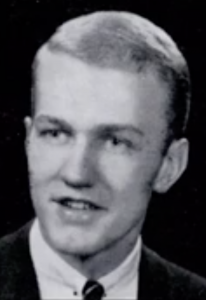
Vincent Duncan Monroe from Oaklyn, New Jersey.
Date of death: May 18, 1968
Death details: On September 11, 1978, the Central Identification Laboratory-Hawaii (CILHI) identified the remains of Captain Vincent Duncan Monroe, missing from the Vietnam War.
Captain Monroe entered the U.S. Navy from New Jersey and was a member of Reconnaissance Heavy Attack Squadron 11, Carrier Air Wing 11. On May 18, 1968, he was the radar intercept officer aboard an RA-5C Vigilante (bureau number 149283, call sign “Glen Rock 606”) that launched from the USS Kitty Hawk (CVA-63) on a reconnaissance mission over North Vietnam. While over Vinh Son, the aircraft was hit by enemy anti-aircraft fire, burst into flames and crashed. CAPT Monroe was killed in the incident and search teams were unable to locate his remains at the time of his loss. In 1978, the Vietnamese government repatriated human remains correlating to this loss, and analysts were able to identify CAPT Monroe from among these remains.
Source: National Archives, Defense POW/MIA Accounting Agency
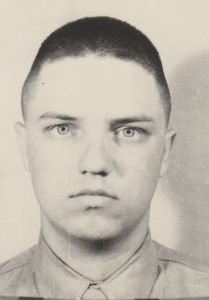 Death details: In late March 1953, elements of the 1st Marine Division manned a string of outposts along a 33-mile section of the main line of resistance on the Korean Peninsula, near the present-day Demilitarized Zone (DMZ). The 1st Marine Division’s 5th Marine Regiment was responsible for three of these outposts, named Carson, Reno, and Vegas, or collectively “the Nevada Cities Complex.” On March 26, Chinese Communist Forces attacked all three outposts. Although Carson managed to stave off the assault, Reno and Vegas, which were more lightly manned, eventually succumbed to the enemy. Over 1,000 Marines were killed, wounded, or went missing during the attack on the Nevada Cities Complex. Private First Class Jay Mann joined the U.S. Marine Corps from New Jersey and was a member of H Company, 3rd Battalion, 5th Marine Regiment, 1st Marine Division. He went missing in action during the fighting at the Nevada Cities Complex on March 26, 1953. Private First Class Mann was never reported to be a prisoner of war, and he was not identified among remains returned to U.S. custody after the conflict’s ceasefire. Today, Private First Class Mann is memorialized on the Courts of the Missing at the National Memorial Cemetery of the Pacific.