Skip to content

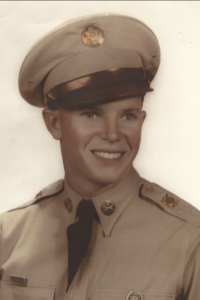
Bays, Jimmie Darrell
Army Private 1st class

Jimmie Darrell Bays, age 18, from Kanawha County Rensford, West Virginia .

Parents: Bertha Bays

Service era: Korea

Date of death: Tuesday, September 5, 1950
Death details: On August 31, 1950, the North Korean People’s Army (NKPA) engaged in a large-scale offensive against the U.S. defensive line in South Korea. The defensive position, known as the Pusan Perimeter, was intended to prevent NKPA forces from reaching the harbor in Pusan, South Korea, where American reinforcements would arrive. The late-August offensive allowed the NKPA to penetrate deep into allied territory. On September 3, members of the 9th Infantry Regiment, 2nd Infantry Division, organized near Yongsan, South Korea and counterattacked the NKPA forces. By September 5, with the help of air and artillery support, the U.S. counteroffensive succeeded in pushing the enemy back across the Naktong River. Private First Class Jimmie Darrell Bays, who joined the U.S. Army from West Virginia, was a member of H Company of the 2nd Battalion, 9th Infantry Regiment, 2nd Infantry Division. He was among men stationed on the Pusan Perimeter who took part in the September counterattack. Private First Class Bays was killed in the action on September 5, 1950, and the tactical situation prevented the recovery of his remains. Searches of the Yongsan area following the end of hostilities were unsuccessful in locating PFC Bays. Today, Private First Class Bays is memorialized on the Courts of the Missing at the National Memorial Cemetery of the Pacific. His name is also inscribed on the Korean War Veterans Memorial Wall in Washington, DC, which was updated in 2022 to include the names of the fallen.

Source: National Archives, Defense POW/MIA Accounting Agency, Hinton Daily News (1950)

Glasgow, Frank Edmond
Army Private

Frank Edmond Glasgow, age 20, from Prince Edward County Farmville, Virginia .

Service era: Korea

Date of death: Monday, September 4, 1950
Death details: On August 31, 1950, the North Korean People’s Army (NKPA) engaged in a large-scale offensive against the U.S. defensive line in South Korea. The defensive position, known as the Pusan Perimeter, was intended to prevent NKPA forces from reaching the harbor in Pusan, South Korea, where American reinforcements would arrive. The late-August offensive allowed the NKPA to penetrate deep into allied territory. On September 3, members of the 9th Infantry Regiment, 2nd Infantry Division, organized near Yongsan, South Korea and counterattacked the NKPA forces. By September 5, with the help of air and artillery support, the U.S. counteroffensive succeeded in pushing the enemy back across the Naktong River. Private First Class Frank Edmond Glasgow, who joined the U.S. Army from Virginia, was a member of G Company of the 2nd Battalion, 9th Infantry Regiment, 2nd Infantry Division, and he was among men who took part in the counterattack near Yongsan. PFC Glasgow went missing in action during the fighting on September 4. He was never seen alive in enemy hands as a prisoner of war, and searches of the Yongsan area following the end of hostilities were unsuccessful in locating his remains. Today, Private First Class Glasgow is memorialized on the Courts of the Missing at the National Memorial Cemetery of the Pacific. His name is also inscribed on the Korean War Veterans Memorial Wall in Washington, DC, which was updated in 2022 to include the names of the fallen.

Source: National Archives, Defense POW/MIA Accounting Agency, Farmville Herald (1954)

Lilly, Edmund Jones III
Army 2nd lieutenant

Edmund Jones III Lilly, age 22, from Cumberland County Asheville, North Carolina .

Parents: E. J. Lilly
Spouse: Married

Service era: Korea
Schools: West Point (1950)
Military history: Second Division

Date of death: Sunday, September 3, 1950
Death details: On December 8, 2003, the Joint POW/MIA Accounting Command (JPAC, now DPAA) identified the remains of Second Lieutenant Edmund Jones Lilly III, missing from the Korean War. Second Lieutenant Lilly entered the U.S. Army from North Carolina and served in Company B, 1st Battalion, 9th Infantry Regiment, 2nd Infantry Division. In late August 1950, Company B occupied Hill 209 near Yongsan, South Korea, which was one of a series of U.S. defensive positions known as the Pusan Perimeter, which was critical for protecting the strategic harbor at Pusan. On August 31, 1950, North Korean People’s Army forces launched an attack on the Pusan Perimeter, and Hill 209 was assaulted by an overwhelming enemy force that captured it after several days of pitched fighting. 2LT Lilly was killed during this battle on September 3, 1950. His body was reportedly located when U.S. forces recaptured the hill, but it could not be recovered at the time. In 2002, a South Korean investigative team found remains on the hill and returned them to U.S. custody. These remains were identified as those of Second Lieutenant Lilly. Second Lieutenant Lilly is memorialized on the Courts of the Missing at the National Memorial Cemetery of the Pacific. His name is also inscribed on the Korean War Veterans Memorial Wall in Washington, DC, which was updated in 2022 to include the names of the fallen.

Source: National Archives, Defense POW/MIA Accounting Agency, Asheville Citizen Times (1950)

Musick, George
Army Sergeant 1st class

George Musick, age 32, from Lucas County Chariton, Iowa .

Parents: Anna Musick

Service era: Korea

Date of death: Sunday, September 3, 1950
Death details: On August 31, 1950, the North Korean People’s Army (NKPA) engaged in a large-scale offensive against the U.S. defensive line in South Korea. The defensive position, known as the Pusan Perimeter, was intended to prevent NKPA forces from reaching the harbor in Pusan, South Korea, where American reinforcements would arrive. The late-August offensive allowed the NKPA to penetrate deep into allied territory. On September 3, members of the 9th Infantry Regiment, 2nd Infantry Division, organized near Yongsan, South Korea and counterattacked the NKPA forces. By September 5, with the help of air and artillery support, the U.S. counteroffensive succeeded in pushing the enemy back across the Naktong River. Sergeant First Class George Musick, who joined the U.S. Army from Iowa, was a member of H Company of the 2nd Battalion, 9th Infantry Regiment, 2nd Infantry Division, and he was among men who took part in the counterattack near Yongsan. Sergeant First Class Musick was killed in action against North Korean People’s Army (NKPA) forces on September 3. The tactical situation prevented the recovery of his body, and searches of the Yongsan area following the end of hostilities were unsuccessful in locating his remains. Today, Sergeant First Class Musick is memorialized on the Courts of the Missing at the National Memorial Cemetery of the Pacific. His name is also inscribed on the Korean War Veterans Memorial Wall in Washington, DC, which was updated in 2022 to include the names of the fallen.

Source: National Archives, Defense POW/MIA Accounting Agency, Sioux City Journal (1950)

Sprague, Oscar L.
Army Private 1st Class

Oscar L. Sprague, age 25, from Washington County Millinocket, Maine .

Parents: Clifford Sprague

Service era: Korea

Date of death: Sunday, September 3, 1950
Death details: On April 23, 2025, the Defense POW/MIA Accounting Agency identified the remains of Cpl. Oscar L. Sprague, missing from the Korean War. Sprague entered the U.S. Army from Maine and was a member of H Company of the 2nd Battalion, 9th Infantry Regiment, 2nd Infantry Division. On August 31, 1950, the North Korean People’s Army engaged in a large-scale offensive against the U.S. defensive line in South Korea. The defensive position, known as the Pusan Perimeter, was intended to prevent NKPA forces from reaching the harbor in Pusan, South Korea, where American reinforcements would arrive. On Sept. 3, members of Sprague’s 9th Infantry Regiment, 2nd Infantry Division, organized near Yongsan, South Korea, and counterattacked the NKPA forces. By Sept. 5, with the help of air and artillery support, the U.S. counteroffensive succeeded in pushing the enemy back across the Naktong River. Sprague was among a group of about seventy men who were ambushed by NKPA forces while trying to move into position for the Sept. 3 counteroffensive. These men became cut off from their allies and were forced into a defensive perimeter atop a small hill near Yongsan. They held their lines for three days, despite nearly incessant enemy attempts to dislodge them. On Sept. 3, Sprague went missing during fighting on the hill. Survivors of the incident testified that Sprague’s actions contributed greatly to the sturdy defense of the perimeter. He was never seen alive in enemy custody as a prisoner of war, and searches of the Yongsan area following the end of hostilities were unsuccessful in locating his remains. In 1951, the 565th Graves Registration Company had recovered a set of remains from a shallow grave near the Naktong Bulge region of the Pusan Perimeter. The remains could not be positively identified at the time and on Feb. 14, 1956, were transferred and interred as Unknown X-1984 in the National Memorial Cemetery of the Pacific, also known as the Punchbowl, in Honolulu. In July of 2018, the DPAA proposed a plan to disinter 652 Korean War Unknowns from the Punchbowl, and on Oct. 7, 2019, as part of this effort, DPAA personnel disinterred Unknown X-1984 and sent the remains to the DPAA laboratory for scientific analysis. Based on the laboratory analysis and total circumstantial evidence, the previously unidentified remains were found to be those of Sprague. He is memorialized on the Courts of the Missing at the National Memorial Cemetery of the Pacific. His name is also inscribed on the Korean War Veterans Memorial Wall in Washington, DC, which was updated in 2022 to include the names of the fallen.

Source: National Archives, Defense POW/MIA Accounting Agency, Morning Sentinel (1954)

Wiswell, Albert Vincent
Army Private

Albert Vincent Wiswell, age 21, from Stearns County Freeport, Minnesota .

Service era: Korea

Date of death: Sunday, September 3, 1950
Death details: On August 31, 1950, the North Korean People’s Army (NKPA) engaged in a large-scale offensive against the U.S. defensive line in South Korea. The defensive position, known as the Pusan Perimeter, was intended to prevent NKPA forces from reaching the harbor in Pusan, South Korea, where American reinforcements would arrive. The late-August offensive allowed the NKPA to penetrate deep into allied territory. On September 3, members of the 9th Infantry Regiment, 2nd Infantry Division, organized near Yongsan, South Korea and counterattacked the NKPA forces. By September 5, with the help of air and artillery support, the U.S. counteroffensive succeeded in pushing the enemy back across the Naktong River. Private Albert Vincent Wiswell, who joined the U.S. Army from Minnesota, was a member of H Company of the 2nd Battalion, 9th Infantry Regiment, 2nd Infantry Division. He was among soldiers who took part in the U.S. counterattack near Yongsan, and he was killed in action against North Korean People’s Army (NKPA) forces on September 3. The tactical situation prevented the recovery of Private Wiswell’s body, and searches of the Yongsan area following the end of hostilities were unsuccessful in locating his remains. Today, Private Wiswell is memorialized on the Courts of the Missing at the National Memorial Cemetery of the Pacific. His name is also inscribed on the Korean War Veterans Memorial Wall in Washington, DC, which was updated in 2022 to include the names of the fallen.

Source: National Archives, Defense POW/MIA Accounting Agency, Star Tribune (1951)

Cecil, Jesse Leon Jr.
Army Private 1st class

Jesse Leon Jr. Cecil, age 20, from Allegheny County Turtle Creek, Pennsylvania .

Parents: Jesse L. Cecil Sr.

Service era: Korea

Date of death: Friday, September 1, 1950
Death details: In late July of 1950, reinforcements from the U.S. Army’s 2nd Infantry Division arrived in Pusan, South Korea, and within hours of their arrival were already being moved to the front lines along the Pusan Perimeter to help repel the invading North Korean People’s Army (NKPA). Troops were positioned along the eastern bank of the Naktong River, which was shallow enough to be crossed on foot in several places. On August 31, members of the 9th Infantry Regiment, 2nd Infantry Division, were defending the eastern shore of the Naktong, near the town of Yongsan, when at nightfall the NKPA advanced over the Naktong and began an offensive against American positions along the river. Heavy fighting broke out, and many of the 9th Infantry Regiment’s positions were overrun. Corporal Jessie Leon Cecil Jr., who entered the U.S. Army from Pennsylvania, was a member of Headquarters and Headquarters Company, 9th Infantry Regiment, 2nd Infantry Division. He went missing on or about September 1, 1950, near Yongsan, South Korea, though specific details surrounding his loss are unknown. He was never reported as a prisoner of war, and attempts to locate his remains following the end of hostilities were unsuccessful. Today, Corporal Cecil is memorialized on the Courts of the Missing at the National Memorial Cemetery of the Pacific. His name is also inscribed on the Korean War Veterans Memorial Wall in Washington, DC, which was updated in 2022 to include the names of the fallen.

Source: National Archives, Defense POW/MIA Accounting Agency, Pittsburgh Sun Telegraph (1954)

Cordero, Ernesto Jose
Army Corporal

Ernesto Jose Cordero, age 32, from Dawson County Lexington, Nebraska .

Service era: Korea

Date of death: Friday, September 1, 1950
Death details: In late July of 1950, reinforcements from the U.S. Army’s 2nd Infantry Division arrived in Pusan, South Korea, and within hours of their arrival were already being moved to the front lines along the Pusan Perimeter to help repel the invading North Korean People’s Army (NKPA). Troops were positioned along the eastern bank of the Naktong River, which was shallow enough to be crossed on foot in several places. On August 31, members of the 9th Infantry Regiment, 2nd Infantry Division, were defending the eastern shore of the Naktong, near the town of Yongsan, when at nightfall the NKPA advanced over the Naktong and began an offensive against American positions along the river. Heavy fighting broke out, and many of the 9th Infantry Regiment’s positions were overrun. Sergeant Ernesto Jose Cordero, who joined the U.S. Army from Nebraska, was a member of F Company of the 2nd Battalion, 9th Infantry Regiment, 2nd Infantry Division. His unit was defending positions along on the Naktong on the night of August 31, 1950, and happened to be along the main axis of the NKPA’s attack. The men of F Company put up a fierce defense, but were overwhelmed by the early morning on September 1, with survivors falling back to defensive lines in rear or holding portions of the line that the enemy had bypassed. Sergeant Cordero went missing at some point during the fighting between August 31 and September 1. He was never seen in enemy custody as a prisoner of war, and attempts to locate him or his remains following the end of hostilities were unsuccessful. Today, Sergeant Cordero is memorialized on the Courts of the Missing at the National Memorial Cemetery of the Pacific. His name is also inscribed on the Korean War Veterans Memorial Wall in Washington, DC, which was updated in 2022 to include the names of the fallen.

Source: National Archives, Defense POW/MIA Accounting Agency, Custer County Chief

Crotty, Richard Edward
Army Corporal

Richard Edward Crotty, age 22, from Peoria County Peoria, Illinois .

Parents: Mabel E. Crotty

Service era: Korea

Date of death: Friday, September 1, 1950
Death details: In late July of 1950, reinforcements from the U.S. Army’s 2nd Infantry Division arrived in Pusan, South Korea, and within hours of their arrival were already being moved to the front lines along the Pusan Perimeter to help repel the invading North Korean People’s Army (NKPA). Troops were positioned along the eastern bank of the Naktong River, which was shallow enough to be crossed on foot in several places. On August 31, members of the 9th Infantry Regiment, 2nd Infantry Division, were defending the eastern shore of the Naktong, near the town of Yongsan, when at nightfall the NKPA advanced over the Naktong and began an offensive against American positions along the river. Heavy fighting broke out, and many of the 9th Infantry Regiment’s positions were overrun. Sergeant Richard Edward Crotty, who joined the U.S. Army from Illinois, was a member of E Company of the 2nd Battalion, 9th Infantry Regiment, 2nd Infantry Division. E Company was stationed two miles east of the Naktong at the time of the August 31 NKPA assault, and SGT Crotty was lost sometime during the fighting, though exact details regarding his disappearance are unknown. He was never seen as a prisoner of war, and attempts to locate his remains following the end of hostilities were unsuccessful. Today, Sergeant Crotty is memorialized on the Courts of the Missing at the National Memorial Cemetery of the Pacific.

Source: National Archives, Defense POW/MIA Accounting Agency, Streator Times (1950)

Greer, Leslie Franklin
Army Private 1st class

Leslie Franklin Greer, age 20, from Scott County Ephesus, Mississippi .

Parents: Mattie Greer. He wrote his last letter to his mom Aug. 12, 1950: “I’m lying out on the ground writing on my pack now so I hope you can read this letter. Sorry I haven’t written sooner, but nine of us got lost from our company and just got back to them this morning about dinner time.”

Service era: Korea
Schools: Ringgold High

Date of death: Friday, September 1, 1950
Death details: In late July of 1950, reinforcements from the U.S. Army’s 2nd Infantry Division arrived in Pusan, South Korea, and within hours of their arrival were already being moved to the front lines along the Pusan Perimeter to help repel the invading North Korean People’s Army (NKPA). Troops were positioned along the eastern bank of the Naktong River, which was shallow enough to be crossed on foot in several places. On August 31, members of the 9th Infantry Regiment, 2nd Infantry Division, were defending the eastern shore of the Naktong, near the town of Yongsan, when at nightfall the NKPA advanced over the Naktong and began an offensive against American positions along the river. Heavy fighting broke out, and many of the 9th Infantry Regiment’s positions were overrun. Corporal Leslie Franklin Greer, who joined the U.S. Army from Mississippi, was a member of the Headquarters Company of the 9th Infantry Regiment, 2nd Infantry Division. His unit was stationed along the Naktong on the night of August 31, and he went missing at some point during the NKPA advance. Specific details regarding his loss are unknown. He was never seen in enemy custody as a prisoner of war, and attempts to locate his remains following the end of hostilities were unsuccessful. Today, Corporal Greer is memorialized on the Courts of the Missing at the National Memorial Cemetery of the Pacific. His name is also inscribed on the Korean War Veterans Memorial Wall in Washington, DC, which was updated in 2022 to include the names of the fallen.

Source: National Archives, Defense POW/MIA Accounting Agency, Winston County Journal

Back To Top