Skip to content

Harkness, Harry Edward
Army Sergeant
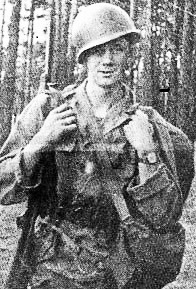
Harry Edward Harkness from Rhode Island, Washington county.

Service era: Korea

Date of death: April 30, 1951
Death details: On September 5, 2017, Defense POW/MIA Accounting Agency (DPAA) identified the remains of Sergeant First Class Harry Edward Harkness, missing from the Korean War. Sergeant First Class Harkness entered the U.S. Army from Rhode Island and served with Company L, 3rd Battalion, 8th Cavalry Regiment, 1st Cavalry Division. On November 2, 1950, he was taken as a prisoner of war (POW) during combat between the 8th Cavalry Regiment and Chinese Communist Forces (CCF) near Unsan, North Korea. Following his capture, he was eventually interned at POW Camp 5 at Pyoktong, where he died of dysentery and malnutrition on or before April 30, 1951. In 1993, the North Korean government repatriated human remains from the POW Camp 5 site, and U.S. analysts eventually identified SFC Harkness among these remains.

Source: National Archives, Defense POW/MIA Accounting Agency

Closson, Archie James
Army Private

Archie James Closson from Rhode Island, Kent county.

Service era: Korea

Date of death: Wednesday, March 21, 1951
Death details: On July 11, 1950, the U.S. Army’s 21st Infantry Regiment, which had arrived in Korea six days earlier, was placed in defensive positions near the town of Chochiwon, South Korea. The regiment was not at full strength and lacked artillery and anti-tank weapons. That day, they were attacked by North Korean forces and were forced to withdraw to avoid being surrounded, as well as to buy time until they could be reinforced and resupplied. Private First Class Archie James Closson, who joined the U.S. Army from Rhode Island, served with M Company, 3rd Battalion, 21st Infantry Regiment, 24th Infantry Division. He was captured by enemy forces on July 12, near Chochiwon, and forced to march north to the Apex prison camps in North Korea. He died of exhaustion and pneumonia on March 21, 1951, at the camp near An-dong and was buried a short distance from the camp. His remains were not identified among those returned to U.S. custody after the cease fire. Today, Private First Class Closson is memorialized on the Courts of the Missing at the National Memorial Cemetery of the Pacific.

Source: National Archives, Defense POW/MIA Accounting Agency

Baron, John
Army Private 1st class

John Baron from Rhode Island, Providence county.

Service era: Korea

Date of death: Thursday, January 25, 1951
Death details: On July 11, 1950, the U.S. Army’s 21st Infantry Regiment, which had arrived in Korea six days earlier, was placed in defensive positions near the town of Chochiwon, South Korea. The regiment was not at full strength and lacked artillery and anti-tank weapons. That day, they were attacked by North Korean forces and were forced to withdraw to avoid being surrounded, as well as to buy time until they could be reinforced and resupplied. Corporal John Baron, who joined the U.S. Army from Rhode Island, served with Headquarters Company, 3rd Battalion, 21st Infantry Regiment, 24th Infantry Division. He was taken prisoner of war on or about August 11, 1950, near Chochiwon, South Korea. After his capture, he was marched to the Apex prison camps in North Korea, and on January 25, 1951, he died of exhaustion and pneumonia while en route and was buried where he fell. His remains have not been recovered or identified among those returned to U.S. custody after the war, and he is still unaccounted-for. Today, Corporal Baron is memorialized on the Courts of the Missing at the National Memorial Cemetery of the Pacific.

Source: National Archives, Defense POW/MIA Accounting Agency

Rice, Robert Edward
Army Private 1st class

Robert Edward Rice, age 21, from Rhode Island, Washington county.

Service era: Korea
Military history: 35th Infantry Regiment

Date of death: Monday, November 27, 1950
Death details: On November 27, 1950, B Company of the U.S. Army’s 35th Infantry Regiment, an element of Task Force Dolvin/Wilson, was holding a hastily erected defensive position near the village of Tong-dong, North Korea, when Chinese Communist Forces (CCF) attacked the company’s perimeter from two sides. After heavy fighting, the Chinese successfully infiltrated the American positions, forcing a withdrawal under heavy mortar and artillery fire. The U.S. troops pulled back to another position a mile farther south. Corporal Robert Edward Rice entered the U.S. Army from Rhode Island and served with B Company, 1st Battalion, 35th Infantry Regiment, 25th Infantry Division. On November 27, CPL Rice was captured by enemy forces during this withdrawal from Tong-dong. As a prisoner of war (POW), he was eventually marched to POW Camp 1, at Kange, where he died on or before March 31, 1951. He was buried near the camp. His remains were not identified among those returned to the U.S. following the ceasefire, and he is still unaccounted-for. Today, Corporal Rice is memorialized on the Courts of the Missing at the National Memorial Cemetery of the Pacific.

Source: National Archives, 35th Infantry Regiment Association, Defense POW/MIA Accounting Agency

Thomas, George B.
Army Private 1st class

George B. Thomas from Rhode Island, Providence county.

Service era: World War II

Date of death: Sunday, November 25, 1945
Death details: Finding of death
Cemetery: Unaccounted For

Source: National Archives, Defense POW/MIA Accounting Agency

Brown, Chester E.
Army Private

Chester E. Brown from Rhode Island, Providence county.

Service era: World War II

Date of death: Thursday, March 4, 1943
Death details: Following the Allied surrender on the Bataan Peninsula on April 9, 1942, the Japanese began the forcible transfer of American and Filipino prisoners of war to various prison camps in central Luzon, at the northern end of the Philippines. The largest of these camps was the notorious Cabanatuan Prison Camp. At its peak, Cabanatuan held approximately 8,000 American and Filipino prisoners of war that were captured during and after the Fall of Bataan. Camp overcrowding worsened with the arrival of Allied prisoners who had surrendered from Corregidor on May 6, 1942. Conditions at the camp were poor, with food and water extremely limited, leading to widespread malnutrition and outbreaks of malaria and dysentery. By the time the camp was liberated in early 1945, approximately 2,800 Americans had died at Cabanatuan. Prisoners were forced to bury the dead in makeshift communal graves, often completed without records or markers. As a result, identifying and recovering remains interred at Cabanatuan was difficult in the years after the war. Private Chester E. Brown entered the U.S. Army Air Forces from Rhode Island and served with Headquarters Squadron, 24th Pursuit Group in the Philippines during World War II. He was captured in Bataan following the American surrender on April 9, 1942, and died of colitis on March 4, 1943 at the Cabanatuan Prison Camp in Nueva Ecija Province. He was buried in a communal grave in the camp cemetery along with other deceased American POWs; however, his remains could not be associated with any remains recovered from Cabanatuan after the war. Today, Private Brown is memorialized on the Walls of the Missing at the Manila American Cemetery in the Philippines.
Cemetery: Manila American Cemetery

Source: National Archives, American Battle Monuments Commission, Defense POW/MIA Accounting Agency

Carroll, Kenneth H.
Army Private

Kenneth H. Carroll from Rhode Island, Kent county.

Service era: World War II

Date of death: Thursday, November 12, 1942
Death details: Following the Allied surrender on the Bataan Peninsula on April 9, 1942, the Japanese began the forcible transfer of American and Filipino prisoners of war to various prison camps in central Luzon, at the northern end of the Philippines. The largest of these camps was the notorious Cabanatuan Prison Camp. At its peak, Cabanatuan held approximately 8,000 American and Filipino prisoners of war that were captured during and after the Fall of Bataan. Camp overcrowding worsened with the arrival of Allied prisoners who had surrendered from Corregidor on May 6, 1942. Conditions at the camp were poor, with food and water extremely limited, leading to widespread malnutrition and outbreaks of malaria and dysentery. By the time the camp was liberated in early 1945, approximately 2,800 Americans had died at Cabanatuan. Prisoners were forced to bury the dead in makeshift communal graves, often completed without records or markers. As a result, identifying and recovering remains interred at Cabanatuan was difficult in the years after the war. Private Kenneth H. Carroll joined the U.S. Army Air Forces from Rhode Island and was a member of the 27th Materials Squadron in the Philippines during World War II. He was captured in Bataan following the American surrender on April 9, 1942, and died ofberiberi on November 12, 1942, at the Cabanatuan Prison Camp in Nueva Ecija Province. He was buried in a communal grave in the camp cemetery along with other deceased American POWs; however, his remains could not be associated with any remains recovered from Cabanatuan after the war. Today, Private Carroll is memorialized on the Walls of the Missing at the Manila American Cemetery in the Philippines.

Source: National Archives, Defense POW/MIA Accounting Agency

DeViney, John S. Jr.
Army Staff sergeant

John S. Jr. DeViney from Rhode Island, Providence county.

Service era: World War II

Date of death: Sunday, August 23, 1942
Death details: Following the Allied surrender on the Bataan Peninsula on April 9, 1942, the Japanese began the forcible transfer of American and Filipino prisoners of war to various prison camps in central Luzon, at the northern end of the Philippines. The largest of these camps was the notorious Cabanatuan Prison Camp. At its peak, Cabanatuan held approximately 8,000 American and Filipino prisoners of war that were captured during and after the Fall of Bataan. Camp overcrowding worsened with the arrival of Allied prisoners who had surrendered from Corregidor on May 6, 1942. Conditions at the camp were poor and food and water supplied extremely limited, leading to widespread malnutrition and outbreaks of malaria and dysentery. By the time the camp was liberated in early 1945, approximately 2,800 Americans had died at Cabanatuan. Prisoners were forced to bury the dead in makeshift communal graves often completed without records or markers. As a result, identifying and recovering remains interred at Cabanatuan was difficult in the years after the war. Sergeant John S. DeViney Jr. joined the U.S. Army Air Forces from Rhode Island and served with the 3rd Pursuit Squadron, 24th Pursuit Group in the Philippines during World War II. He was captured in Bataan following the American surrender and died of pneumonia and malaria on August 23, 1942, at the Cabanatuan Prison Camp in Nueva Ecija Province. He was buried in a communal grave in the camp cemetery along with other deceased American POWs; however, his remains could not be associated with any remains recovered from Cabanatuan after the war. Today, Sergeant DeViney is memorialized on the Walls of the Missing at the Manila American Cemetery in the Philippines.

Source: National Archives, Defense POW/MIA Accounting Agency

McConnell, Henry J.
Army Private 1st class

Henry J. McConnell from Rhode Island, Providence county.

Service era: World War II

Date of death: Sunday, July 26, 1942
Death details: Following the Allied surrender on the Bataan Peninsula on April 9, 1942, the Japanese began the forcible transfer of American and Filipino prisoners of war to various prison camps in central Luzon, at the northern end of the Philippines. The largest of these camps was the notorious Cabanatuan Prison Camp. At its peak, Cabanatuan held approximately 8,000 American and Filipino prisoners of war that were captured during and after the Fall of Bataan. Camp overcrowding worsened with the arrival of Allied prisoners who had surrendered from Corregidor on May 6, 1942. Conditions at the camp were poor, with food and water extremely limited, leading to widespread malnutrition and outbreaks of malaria and dysentery. By the time the camp was liberated in early 1945, approximately 2,800 Americans had died at Cabanatuan. Prisoners were forced to bury the dead in makeshift communal graves, often completed without records or markers. As a result, identifying and recovering remains interred at Cabanatuan was difficult in the years after the war. Private First Class Henry J. McConnell, who entered the U.S. Army Air Forces from Rhode Island, served with the 2nd Observation Squadron, which was stationed on the Philippines during the fall of Bataan. After the American surrender, he was interned in the Cabanatuan Prison Camp, where he died of dysentery and malaria on July 26, 1942. He was buried in a communal grave at the camp cemetery; however, post-war attempts to identify him among the remains disinterred from Cabanatuan were unsuccessful. Today, Private First Class McConnell is memorialized on the Walls of the Missing at the Manila American Cemetery in the Philippines.

Source: National Archives, Defense POW/MIA Accounting Agency

Back To Top