Skip to content

Seadore, Larry Lewis
Army Private 1st class

Larry Lewis Seadore, age 21, from Long Pine, Nebraska, Rock county.

Parents: John Seadore

Service era: Veitnam

Date of death: Friday, July 17, 1970
Death details: Killed while on night patrol in Vietnam

Source: National Archives, Columbus Telegram (1970)

Sybrant, Donald Louis
Army Sergeant

Donald Louis Sybrant, age 21, from Rock County Ainsworth, Nebraska .

Service era: Korea

Date of death: Thursday, November 30, 1950
Death details: By mid-November 1950, U.S. and Allied forces had advanced to within approximately sixty miles of the Yalu River, the border between North Korea and China. On November 25, approximately 300,000 Chinese Communist Forces (CCF) “volunteers” suddenly and fiercely counterattacked after crossing the Yalu. The 2nd Infantry Division, located the farthest north of units at the Chongchon River, could not halt the CCF advance and was ordered to withdraw to defensive positions at Sunchon in the South Pyongan province of North Korea. As the division pulled back from Kunu-ri toward Sunchon, it conducted an intense rearguard action while fighting to break through well-defended roadblocks set up by CCF infiltrators. The withdrawal was not complete until December 1, and the 2nd Infantry Division suffered extremely heavy casualties in the process. Sergeant First Class Donald Louis Sybrant, who joined the U.S. Army from Nebraska, served with Headquarters, Headquarters and Service Company, 2nd Engineer Combat Battalion, 2nd Infantry Division. Sergeant First Class Sybrant went missing on November 30, 1950, as his unit was withdrawing from Kunu-ri to Sunchon. No one saw him fall, and his body was not recovered after the battle. Records indicate that he was not held as a prisoner of war, and his remains were not among those returned to U.S. custody after the war. Sergeant First Class Sybrant is memorialized on the Courts of the Missing at the National Memorial Cemetery of the Pacific.

Source: National Archives, Defense POW/MIA Accounting Agency, Lincoln Sunday Journal and Star (1955)

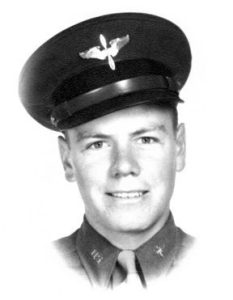
Litz, Andrew J.
Army 2nd lieutenant

Andrew J. Litz, age 21, from Rock County Nebraska.

Parents: Ora Litz

Service era: World War II

Date of death: Tuesday, April 24, 1945
Death details: On Dec. 23, 2025, the Defense POW/MIA Accounting Agency identified the remains of U.S. Army Air Forces 2nd Lt. Andrew J. Litz, missing from World War II. Litz entered the service from Nebraska and served with the 458th Bombardment Squadron, 330th Bombardment Group. On April 14, 1945, he was the navigator on a B-29 Superfortress aircraft that took off on a combat mission against targets in Tokyo, Japan. During the mission, the aircraft was shot down. Litz survived the crash but was captured and later imprisoned at the Tokyo Military Prison. He died on the night of May 25–26, 1945, when an air raid ignited a fire that burned much of Tokyo, including the Military Prison. Following the war, the American Graves Registration Service recovered 65 sets of remains from the prison but was unable to identify any as Litz. Thirty-nine Unknowns associated with the Tokyo Military Prison were interred at Fort McKinley Cemetery, now the Manila American Cemetery and Memorial, in Manila, the Philippines. In 2022, DPAA exhumed those 39 Unknowns for laboratory analysis. There, scientists used modern forensic techniques to identify Litz.

Source: National Archives, Defense POW/MIA Accounting Agency, Rock County Leader

Libolt, Lester H.
Army Corporal

Lester H. Libolt, age 21, from Rock County Nebraska.

Service era: World War II

Date of death: Sunday, December 7, 1941
Death details: On June 11, 2025, the Defense POW/MIA Accounting Agency identified the remains of U.S. Army Air Forces Cpl. Lester H. Libolt, missing from World War II. Libolt entered the U.S. Army Air Forces from Nebraska and served in the 431st Bombardment Squadron, 11th Bombardment Group at Hickam Airfield on the island of Oahu, Hawaii, during World War II. On Dec. 7, 1941, Japanese military forces conducted a surprise attack on U.S. forces at Pearl Harbor, Hawaii, as well as surrounding U.S. military installations, including Hickam Field and Schofield Army Barracks. While U.S. Pacific Fleet at Pearl Harbor was Japan’s primary target, enemy planes also had orders to attack the airfields on Oahu. Japanese dive bombers and fighters attacked Hickam Field, then turned on the base facilities, destroying the Hawaiian Air Depot’s engineering building and hangers, attempting to take out the underground fuel tanks, and attacking the barracks. Fighter planes also made strafing attacks on personnel caught out in the open. The attack lasted four hours, and 91 men died at Hickam Field that day, including Libolt. In the days following the attack, Navy personnel recovered the remains of U.S. Army and U.S. Army Air Forces casualties, which were subsequently interred in the Schofield Barracks Cemetery. In August 1947, tasked with recovering and identifying fallen U.S. personnel from World War II, members of the American Graves Registration Service disinterred the remains of U.S. casualties from the Schofield Cemetery and transferred them to the Central Identification Laboratory at Schofield Barracks. The laboratory staff was unable to confirm the identifications of 12 men from the Hickam Field attack at that time, and the unidentified remains were subsequently buried as Unknowns in the National Memorial Cemetery of the Pacific, known as the Punchbowl, in Honolulu. In June 2019, DPAA personnel began exhuming the 12 Schofield Barracks Unknowns from the Punchbowl for analysis, including one set of remains disinterred in 2020, which was transferred to a DPAA Laboratory for further study. There, based on the laboratory analysis, and total circumstantial evidence, the remains were identified as those of Libolt.

Source: National Archives, Defense POW/MIA Accounting Agency, Lincoln Evening Journal (1945)
Back To Top