Skip to content

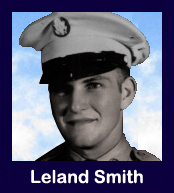
Smith, Leland Ford
Army Private 1st class

Leland Ford Smith, age 18, from Angola, Indiana, Steuben county.

Service era: Korea
Military history: 35th Infantry Regiment

Date of death: Tuesday, November 28, 1950
Death details: Died captured, North Korea. Remains recovered 2014
Cemetery: Jamestown, Fremont

Source: National Archives, Weicht Funeral Home, 35th Infantry Regiment Association

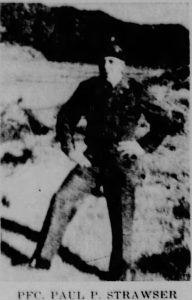
Strawser, Paul Peirson
Army Private 1st class

Paul Peirson Strawser, age 22, from Steuben County Ashley, Indiana .

Parents: Loyal S. Strawser

Service era: Korea

Date of death: Wednesday, November 22, 1950
Death details: Members of the U.S. 34th Infantry Regiment were among the first U.S. ground troops to arrive in South Korea following the North Korean Peoples Army (NKPA) invasion on June 25, 1950. The 34th, which had been on garrison duty in Japan, was undermanned and under-equipped and had little field experience. It’s mission was to delay the NKPA’s surge to the south as long as possible so that reinforcements could arrive. On July 6 the NKPA attacked the 1st and 3rd Battalions of the 34th Infantry north of the town of Chonan, South Korea. The U.S. troops withdrew slowly back to Chonan, and established defensive lines there. Corporal Paul Peirson Strawser entered the U.S. Army from Indiana and served with A Company, 1st Battalion, 34th Infantry Regiment, 24th Infantry Division. He was captured by enemy forces near Chonan, South Korea, on July 6, 1950, and marched north to the Apex Camps near the Yalu River. A repatriated American prisoner of war (POW) later reported that CPL Strawser died of malnutrition at the Hangjang-Ni Prison Camp, North Korea, on November 22. His remains were not identified among those returned to U.S. custody after the war, and he is still unaccounted-for. Today, Corporal Strawser is memorialized on the Courts of the Missing at the National Memorial Cemetery of the Pacific. His name is also inscribed on the Korean War Veterans Memorial Wall in Washington, DC, which was updated in 2022 to include the names of the fallen.

Source: National Archives, Defense POW/MIA Accounting Agency, Steuben Republican (1950)

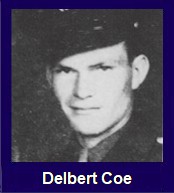
Coe, Delbert L.
Army Private 1st class

Delbert L. Coe, age 22, from Pleasant Lake, Indiana, Steuben county.

Service era: World War II
Military history: 35th Infantry Regiment

Date of death: Sunday, April 29, 1945
Death details: Killed in action in Luzon, Philippines
Cemetery: Manila American

Source: National Archives, 35th Infantry Regiment Association

Massey, Howard I.
Army Staff sergeant

Howard I. Massey, age 34, from Steuben County Indiana.

Spouse: Married

Service era: World War II

Date of death: Tuesday, January 9, 1945
Death details: On December 13, 1944, Japanese forces in the Philippines began the transfer of 1,621 Allied prisoners of war (POWs) to Japan. The POWs were to make the journey aboard transport ships whose harsh conditions and extreme overcrowding led survivors to refer to them as “Hell Ships.” The ships also lacked markings that would distinguish them from any other military target, causing some of them to be attacked by Allied forces who could not identify them as POW transports. On December 14, 1944, Allied aircraft attacked the first ship, the Oryoku Maru, in Subic Bay in the Philippines, killing many Allied POWs who became lost in the water, sank with the ship, or were washed ashore. Survivors of the bombing were put aboard two other ships, the Enoura Maru and the Brazil Maru, to continue on to Japan. During the journey, while anchored in Takao Harbor, Formosa (present-day Taiwan), the Enoura Maru was attacked by Allied aircraft from the USS Hornet (CV-8), killing Allied POWs who were lost in the water, on board the ship, or on the nearby shore. Survivors of the Enoura Maru bombing were loaded onto the Brazil Maru, and reached Japan on January 30, 1945. As a result of these incidents, Allied POWs were lost in the Philippines, at sea between the Philippines and Taiwan, while anchored in Taiwan, at sea between Taiwan and Japan, and in Japan. The attacks on these POW transports ultimately resulted in a series of death notifications from the Japanese government through the International Red Cross (IRC), and some casualties were given up to five different dates of death at various locations during the transfer. Witness accounts from surviving POWs offer detailed information for a handful of casualties, but the specific dates of loss and/or last-known locations for many of these POWs are based on the most recent reported date of death. Staff Sergeant Howard I. Massey, who entered the U.S. Army from Indiana, served in the 192nd Tank Battalion in the Philippines during World War II. He was taken as a POW following the Japanese invasion and interned in the islands until December 1944, when he was put aboard the Oryoku Maru for transport to Japan. Records indicate SSG Massey was killed several weeks later in the attack on the Enoura Maru; however, these reports often involve information solely furnished by enemy governments, with some casualties given multiple dates of death. Future research may determine that these reports were inaccurate. Staff Sergeant Massey’s remains could not be identified following the war, and he is still unaccounted-for. Today, Staff Sergeant Massey is memorialized on the Walls of the Missing at the Manila American Cemetery in the Philippines.

Source: National Archives, Defense POW/MIA Accounting Agency, Indianapolis Star (1945)
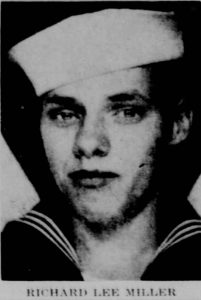
Miller, Richard Lee
Navy Seaman 1st class

Richard Lee Miller, age 18, from Steuben County Angola, Indiana .

Parents: Mabel Hollinger

Service era: World War II

Date of death: Thursday, October 15, 1942
Death details: On October 15, 1942, he was in a U.S. convoy of six ships that was towing barges loaded with urgently needed supplies toward Guadalcanal. The American forces on that island were in dire need of resupply. When the convoy was spotted by enemy aircraft, all but two ships withdrew from the area. The two ships that pressed on were the USS Meredith (DD-434,) a destroyer, and the USS Vireo (AM-54,) a lightly armed towing vessel. Upon receiving word that Japanese surface warships were operating in the area, both ships were forced to turn back from their mission. Because of its age and slow speed, Vireo was abandoned, and the crew taken aboard the Meredith. Within minutes, the Meredith was attacked by a large force of enemy aircraft. The destroyer sustained multiple bomb and torpedo hits and quickly sank. The survivors spent three days at sea before being rescued. The majority of the crews of both ships was killed in the incident.

Source: National Archives, Defense POW/MIA Accounting Agency, Steuben Republican (1942)

Back To Top