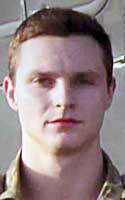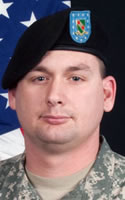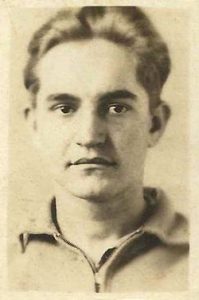
Carrol J. Arrington from Wood County Texas.
Service era: World War II
Date of death: Tuesday, June 30, 1942
Death details: On May 21, 1942, Japanese guards conscripted (a forced enlistment) American prisoners of war (POWs) from the Camp O’Donnell POW camp for a road construction detail along Tayabas Road, near Calauag, Philippines. During the journey to their work site, the group stopped at the Pasay Elementary School, which was being used as a POW holding camp, to replace several unfit Camp O’Donnell prisoners on the project with newly-captured POWs from Corregidor. The number of prisoners exchanged is unknown, but the work detail arrived at the Tayabas Road site on May 29. Nearly three hundred POWs began road construction along the Basiad River to connect Route 1G (Old Tayabas Road) with a highway running north from Legazpi on the Bicol Peninsula. As work progressed, many POWs fell ill to malnutrition and disease. Over the next two months, Japanese guards sent the sickest prisoners 175 miles north to Bilibid Prison in Manila, though the number and identity of the POWs sent to Bilibid are unknown. The Japanese guards closed the project by late July when most prisoners became too sick or weak to work. Any surviving POWs were sent to Bilibid, while those who died while working on the project were buried either at the work site, at Bilibid Prison, or at other locations along the way. Private Carrol J. Arrington, who entered the U.S. Army from Texas, served with the Quartermaster Corps in the Philippines during World War II. He was taken prisoner after the American surrender in April 1942 and was forced on the Bataan Death March to Camp O’Donnell in the Tarlac Province. While at Camp O’Donnell, Private Arrington was assigned to the labor crew working on the Tayabas Road project. While working on the labor detail, he reportedly died from malaria, dysentery, and anemia on June 30, 1942. He was reportedly buried with other POWs near Tayabas Road; however, he was not identified among remains recovered from the area after the war. He is still unaccounted-for. Today, Private Arrington is memorialized on the Walls of the Missing at the Manila American Cemetery in the Philippines.
Cemetery: Tablets of the Missing at Manila American Cemetery
Source: National Archives, American Battle Monuments Commission, Defense POW/MIA Accunting Agency