Branscum, Arlis Ray
Army Corporal
Arlis Ray Branscum, age 21, from Arkansas, Pike county.
Service era: Vietnam
Date of death: Sunday, February 8, 1970
Source: National Archives
Arlis Ray Branscum, age 21, from Arkansas, Pike county.
Service era: Vietnam
Date of death: Sunday, February 8, 1970
Source: National Archives
Charles Edwin Beaty, age 26, from Arkansas, Craighead county.
Parents: Eva Howard
Service era: Korea
Date of death: Sunday, December 3, 1950
Death details: On the evening of November 27, 1950, Chinese Communist Forces (CCF) launched a massive attack against the U.S. and United Nations (UN) troops stationed in the Chosin Reservoir area in north-east North Korea. The resulting seventeen-day conflict became known as the Battle of Chosin Reservoir. At the time of the initial CCF attack, members of the U.S. Army’s 31st and 32nd Infantry Regiments were defending the area north of Sinhung-ni, on the east side of the reservoir. The defenders were overwhelmed by the numerically superior CCF, and on December 1 were forced to withdraw to friendly lines at Hagaru-ri. Many men were lost or captured during the withdraw, with survivors reaching friendly lines in Hagaru-ri on December 2 and 3. Once at Hagaru-ri, the survivors of the withdrawal manned a section of the perimeter near East Hill, a strong defensive position overlooking the town. On the night of December 3, the Chinese attacked the Hagaru-ri perimeter and overwhelmed the defenders there. Many Americans were killed or went missing during these actions. Sergeant Charles Edwin Beaty entered the U.S. Army from Arkansas and was a member of I Company, 3rd Battalion, 31st Infantry Regiment, 7th Infantry Division. On December 3, 1950, he went missing in action near Hagaru-ri, though specific details surrounding his loss are unknown. His remains have not been identified among those returned to U.S. custody after the ceasefire, and he is still unaccounted-for. Today, Sergeant Beaty is memorialized on the Courts of the Missing at the National Memorial Cemetery of the Pacific.
Source: National Archives, Defense POW/MIA Accounting Agency, Wilmington Daily Press Journal (1951)
Billie Frank Adams, age 30, from Arkansas, Arkansas county.
Service era: Korea
Date of death: Thursday, November 2, 1950
Death details: During the last week of October 1950, Republic of Korea (ROK) Army forces under the control of the U.S. Eighth Army were advancing deep in North Korean territory, approaching the Yalu River on the Chinese-Korean border. Chinese Communist Forces (CCF) struck back in a surprise attack, engaging the ROK 1st and 6th Divisions near Unsan, some sixty miles north of Pyongyang. The U.S. 1st Cavalry Division, with the 8th Cavalry Regiment in the lead, was rushed forward to reinforce the ROK units in the Unsan area. On November 1, the regiment’s 1st Battalion took up positions north of Unsan, while the 2nd Battalion moved to guard the Nammyon River valley west of town, and the 3rd Battalion was placed in reserve at the valley’s southern end. Sergeant Billie F. Adams, who entered the U.S. Army from Arkansas, was a member of the Medical Company of the 8th Cavalry Regiment, 1st Cavalry Division. Elements of the medical company were assigned to each of the regiment’s three battalions during combat actions at Unsan. Late on November 1, 1950, 1st and 2nd Battalions were experiencing rocket and infantry attacks and were forced to withdraw through the Unsan area to Ipsok; they succeeded in extricating their companies but with heavy losses in personnel. On November 2, while in defensive actions near the Nammyon River, and south of Unsan, members of the 3rd Battalion were also ordered to withdraw from the area. The last of the three Battalions to withdraw, the members started moving around midnight, but became cut off and surrounded. They began building a defense perimeter, and the battalion held off several attacks before its members broke out or surrendered. During the course of this battle, SGT Adams went missing; however, no evidence exists that he was captured by the enemy. He remains unaccounted-for. Today, Sergeant Adams is memorialized on the Courts of the Missing at the National Memorial Cemetery of the Pacific.
Source: National Archives, Defense POW/MIA Accounting Agency
Virgel Guy, age 30, from Arkansas, Marion county.
Service era: Korea
Date of death: Thursday, November 2, 1950
Death details: During the last week of October 1950, Republic of Korea (ROK) Army forces under the control of the U.S. Eighth Army were advancing deep in North Korean territory, approaching the Yalu River on the Chinese-Korean border. Chinese Communist Forces (CCF) struck back in a surprise attack, engaging the ROK 1st and 6th Divisions near Unsan, some sixty miles north of Pyongyang. The U.S. 1st Cavalry Division, with the 8th Cavalry Regiment in the lead, was rushed forward to reinforce the ROK units in the Unsan area. On November 1, the regiment’s 1st Battalion took up positions north of Unsan, while the 2nd Battalion moved to guard the Nammyon River valley west of town, and the 3rd Battalion was placed in reserve at the valley’s southern end. Sergeant First Class Virgel Guy joined the U.S. Army from Arkansas and was a member of Company K of the 3rd Battalion, 8th Cavalry Regiment, 1st Cavalry Division. On November 2, 1950, members of Company K were in a reserve position overlooking the Nammyon River valley when the Company was attacked by the enemy. Sergeant First Class Guy was reported killed during this action. His remains were not recovered, and he was not identified among the remains returned to U.S. custody after the ceasefire. Today, Sergeant First Class Guy is memorialized on the Courts of the Missing at the National Memorial Cemetery of the Pacific.
Source: National Archives, Defense POW/MIA Accounting Agency
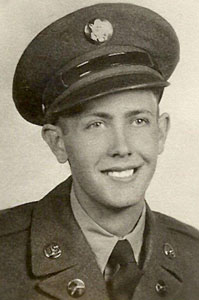
Marion Livington Collinsworth from Arkansas, Washington county.
Service era: Korea
Date of death: Sunday, July 16, 1950
Death details: On the evening of July 15, 1950, the U.S. Army’s 19th Infantry Regiment held defensive positions along the south bank of the Kum River. As dusk approached, North Korean People’s Army (NKPA) tanks appeared on the opposite shore and began firing on the U.S. positions. Although U.S. troops repulsed the attacks that evening, the next morning the NKPA crossed the river and launched a major attack against the 19th Regiment. As the regiment began withdrawing south to Taejon, the North Koreans pushed deep into their defensive lines and set up a roadblock en route to Taejon. When retreating American convoys could not break through the roadblock, soldiers were forced to leave the road and attempt to make their way in small groups across the countryside. Of the 900 soldiers in the 19th Infantry when the Battle of Kum River started, only 434 made it to friendly lines. Private First Class Marion Livington Collinsworth entered the U.S. Army from Arkansas and served with Company A, 1st Battalion, 19th Infantry Regiment, 24th Infantry Division. He went missing on July 16, during the Battle of Kum River, while his unit was attempting to withdraw through an enemy roadblock outside Taejon. He was not reported as a prisoner of war, and he remains unaccounted for. Today, Private First Class Collinsworth is memorialized on the Courts of the Missing at the National Memorial Cemetery of the Pacific.
Source: National Archives, Defense POW/MIA Accounting Agency
Nolan Stobaugh from Arkansas, Van Buren county.
Service era: World War II
Date of death: Saturday, February 16, 1946
Death details: Finding of death
Source: National Archives
Benjamin J. Shackelford from Arkansas, Washington county.
Service era: World War II
Date of death: Tuesday, June 6, 1944
Death details: On May 17, 1944, U.S. and Chinese troops began the siege of Myitkyina, Burma. The town, which was occupied by the Japanese, possessed a strategically vital airstrip that would allow supplies and aerial support to reach troops fighting in difficult jungle terrain of the China-Burma-India Theater. While Chinese units comprised the majority of the ground combat troops, the U.S. Army’s 5307th Composite Unit, also known as Merrill’s Marauders, was also active in the fighting. The Japanese were able to defend the town until August 3, 1944, when their remaining men were ordered to withdraw. Hard fighting, difficult terrain, and the outbreak of disease led to significant casualties among the Chinese and American units that fought to take control of the town. Private Benjamin J. Shackelford entered the U.S. Army from Arkansas and served in the 236th Engineer Combat Battalion. During the fighting in and around Myitkyina, the 236th Battalion spent 59 days on the front lines as infantry, in constant contact with the enemy. Private Shackelford was killed on July 6, 1944, near the village of Namkwi, Burma. The exact circumstances of his loss are unknown. His remains have not been recovered or identified following the war, and he is still unaccounted-for. Today, Private Shackelford is memorialized on the Walls of the Missing at the Manila American Cemetery in the Philippines.
Source: National Archives, Defense POW/MIA Accounting Agency
Virgle Hamock from Arkansas, Polk county.
Service era: World War II
Date of death: Saturday, December 12, 1942
Death details: Following the Allied surrender on the Bataan Peninsula on April 9, 1942, the Japanese began the forcible transfer of American and Filipino prisoners of war to various prison camps in central Luzon, at the northern end of the Philippines. The largest of these camps was the notorious Cabanatuan Prison Camp. At its peak, Cabanatuan held approximately 8,000 American and Filipino prisoners of war that were captured during and after the Fall of Bataan. Camp overcrowding worsened with the arrival of Allied prisoners who had surrendered from Corregidor on May 6, 1942. Conditions at the camp were poor, with food and water extremely limited, leading to widespread malnutrition and outbreaks of malaria and dysentery. By the time the camp was liberated in early 1945, approximately 2,800 Americans had died at Cabanatuan. Prisoners were forced to bury the dead in makeshift communal graves, often completed without records or markers. As a result, identifying and recovering remains interred at Cabanatuan was difficult in the years after the war. Private Virgle L. Hamock entered the U.S. Army from Arkansas and served with the 31st Infantry Regiment in the Philippines during World War II. He was captured in Bataan following the American surrender on April 9, 1942, and died of pellagra on December 12, 1942, at the Cabanatuan Prison Camp in Nueva Ecija Province. He was buried in a communal grave in the camp cemetery along with other deceased American POWs; however, his remains could not be associated with any remains recovered from Cabanatuan after the war. Today, Private Hamock is memorialized on the Walls of the Missing at the Manila American Cemetery in the Philippines.
Source: National Archives, Defense POW/MIA Accounting Agency
Delmor W. Erwin from Arkansas, Jackson county.
Service era: World War II
Date of death: Thursday, November 26, 1942
Death details: Following the Allied surrender on the Bataan Peninsula on April 9, 1942, the Japanese began the forcible transfer of American and Filipino prisoners of war to various prison camps in central Luzon, at the northern end of the Philippines. The largest of these camps was the notorious Cabanatuan Prison Camp. At its peak, Cabanatuan held approximately 8,000 American and Filipino prisoners of war that were captured during and after the Fall of Bataan. Camp overcrowding worsened with the arrival of Allied prisoners who had surrendered from Corregidor on May 6, 1942. Conditions at the camp were poor and food and water supplied extremely limited, leading to widespread malnutrition and outbreaks of malaria and dysentery. By the time the camp was liberated in early 1945, approximately 2,800 Americans had died at Cabanatuan. Prisoners were forced to bury the dead in makeshift communal graves often completed without records or markers. As a result, identifying and recovering remains interred at Cabanatuan was difficult in the years after the war. Corporal Delmor W. Erwin joined the U.S. Army from Arizona and was a member of Company E, 31st Infantry Regiment, in the Philippines during World War II. He was captured in Bataan following the American surrender on April 9, 1942 and died of malaria on November 26, 1942 at the Cabanatuan Prison Camp in Nueva Ecija Province. He was buried in a communal grave in the camp cemetery along with other deceased American POWs; however, his remains could not be associated with any remains recovered from Cabanatuan after the war. Today, Corporal Erwin is memorialized on the Walls of the Missing at the Manila American Cemetery in the Philippines.
Source: National Archives, Defense POW/MIA Accounting Agency
Alex Martin from Arkansas, Drew county.
Service era: World War II
Date of death: Sunday, November 22, 1942
Death details: Following the Allied surrender on the Bataan Peninsula on April 9, 1942, the Japanese began the forcible transfer of American and Filipino prisoners of war to various prison camps in central Luzon, at the northern end of the Philippines. The largest of these camps was the notorious Cabanatuan Prison Camp. At its peak, Cabanatuan held approximately 8,000 American and Filipino prisoners of war that were captured during and after the Fall of Bataan. Camp overcrowding worsened with the arrival of Allied prisoners who had surrendered from Corregidor on May 6, 1942. Conditions at the camp were poor, with food and water extremely limited, leading to widespread malnutrition and outbreaks of malaria and dysentery. By the time the camp was liberated in early 1945, approximately 2,800 Americans had died at Cabanatuan. Prisoners were forced to bury the dead in makeshift communal graves, often completed without records or markers. As a result, identifying and recovering remains interred at Cabanatuan was difficult in the years after the war. Corporal Alex Martin entered the U.S. Army Air Forces from Arkansas and served with Headquarters Squadron, 19th Bombardment Group in the Philippines during World War II. He was captured in Bataan following the American surrender on April 9, 1942, and died of dysentery on November 22, 1942, at the Cabanatuan Prison Camp in Nueva Ecija Province. He was buried in a communal grave in the camp cemetery along with other deceased American POWs; however, his remains could not be associated with any remains recovered from Cabanatuan after the war. Today, Corporal Martin is memorialized on the Walls of the Missing at the Manila American Cemetery in the Philippines.
Source: National Archives, Defense POW/MIA Accounting Agency