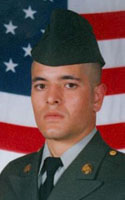
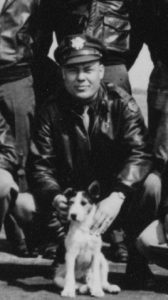
Hozie M. Harris, age 38, from Carson County Texas.
Parents: Roxie E. Harris
Service era: World War II
Date of death: Tuesday, January 9, 1945
Death details: On December 13, 1944, Japanese forces in the Philippines began the transfer of 1,621 Allied prisoners of war (POWs) to Japan. The POWs were to make the journey aboard transport ships whose harsh conditions and extreme overcrowding led survivors to refer to them as “Hell Ships.” The ships also lacked markings that would distinguish them from any other military target, causing some of them to be attacked by Allied forces who could not identify them as POW transports. On December 14, 1944, Allied aircraft attacked the first ship, the Oryoku Maru, in Subic Bay in the Philippines, killing many Allied POWs who became lost in the water, sank with the ship, or were washed ashore. Survivors of the bombing were put aboard two other ships, the Enoura Maru and the Brazil Maru, to continue on to Japan. During the journey, while anchored in Takao Harbor, Formosa (present-day Taiwan), the Enoura Maru was attacked by Allied aircraft from the USS Hornet (CV-8), killing Allied POWs who were lost in the water, on board the ship, or on the nearby shore. Survivors of the Enoura Maru bombing were loaded onto the Brazil Maru, and reached Japan on January 30, 1945. As a result of these incidents, Allied POWs were lost in the Philippines, at sea between the Philippines and Taiwan, while anchored in Taiwan, at sea between Taiwan and Japan, and in Japan. The attacks on these POW transports ultimately resulted in a series of death notifications from the Japanese government through the International Red Cross (IRC), and some casualties were given up to five different dates of death at various locations during the transfer. Witness accounts from surviving POWs offer detailed information for a handful of casualties, but the specific dates of loss and/or last-known locations for many of these POWs are based on the most recent reported date of death. Corporal Hozie M. Harris, who entered the U.S. Army from Oklahoma, served at the Philippine Medical Depot at Fort McKinley at the time of the Japanese invasion. He was taken prisoner by Japanese forces and interned on the Philippines until December 1944, when he was put aboard the ship Oryoku Maru for transport to Japan. CPL Harris was killed several weeks later in the attack on the Enoura Maru; however, these reports often involve information solely furnished by enemy governments, with some casualties given multiple dates of death. Future research may determine that these reports were inaccurate. CPL Harris’s remains could not be identified following the war, and he is still unaccounted for. Today, Corporal Harris is memorialized on the Walls of the Missing at the Manila American Cemetery in the Philippines.
Source: National Archives, Defense POW/MIA Accounting Agency, Times Record News (1945)