Skip to content

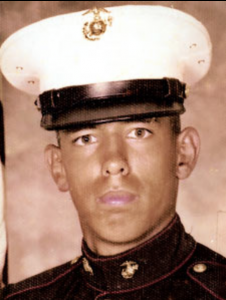
Allman, John R.
Marines Private 1st class

John R. Allman, age 19, from Carlsbad, New Mexico, Eddy county.

Service era: Beirut bombings

Date of death: Sunday, October 23, 1983
Death details: Among more than 200 military personnel killed in the terroist bombing of Marine headquarters in Beirut.

Source: White House Commission on Remembrance

Flores, William Ray
Coast Guard Seaman apprentice

William Ray Flores, age 18, from Carlsbad, New Mexico, Eddy county.

Service era: Cold War

Date of death: Monday, January 28, 1980
Death details: Among the 23 who died when the Coast Guard Cutter Blackthorn collided with a tanker near the Sunshine Skyway Bridge in Tampa Bay in Florida.
Cemetery: Benbrook, Texas

Source: United State Coast Guard, Tampa Bay Times (1980), findagrave.com

Garcia, Andres
Marines Lance corporal

Andres Garcia from New Mexico, Eddy county.

Service era: Vietnam

Date of death: Thursday, May 15, 1975
Death details: Marine Corps Pfc. Daniel A. Benedett of Seattle, Wash., was buried May 15, 2013 at Arlington National Cemetery, along with Air Force 2nd Lt. Richard Vandegeer of Cleveland, Ohio; Navy Hospital Corpsman 1st Class Bernard Gause Jr., of Birmingham, Ala.; Hospitalman Ronald J. Manning of Steubenville, Ohio; Marine Corps servicemen Lance Cpl. Gregory S. Copenhaver of Lewistown, Pa.; Lance Cpl. Andres Garcia of Carlsbad, N.M.; Pfc. Lynn Blessing of Lancaster, Pa.; Pfc. Walter Boyd of Portsmouth, Va.; Pfc. James J. Jacques of La Junta, Colo.; Pfc. James R. Maxwell of Memphis, Tenn.; Pfc. Richard W. Rivernburgh of Schenectady, N.Y.; Pfc. Antonio R. Sandoval of San Antonio, Texas; and Pfc. Kelton R. Turner of St. Louis, Mo. On May 12, 1975, Khmer Rouge gunboats captured the S.S. Mayaguez in the Gulf of Thailand, approximately 60 nautical miles off the coast of Cambodia. After the vessel was taken to Koh Tang Island, U.S. aircraft began surveillance flights around the island. When efforts to secure the release of the ship and its crew failed, U.S. military forces began a rescue mission. Three days after the Mayaguez seizure, the Air Force dispatched six helicopters to the island. One of the helicopters came under heavy enemy fire and crashed into the surf with 26 men on board. Thirteen of the men were rescued at sea, leaving Benedett and 12 other service members unaccounted-for from the crash. Between 1991 and 2008, investigators conducted more than 10 investigations and excavations, led by Joint POW/MIA Accounting Command (JPAC). On three occasions, Cambodian authorities turned over remains believed to be those of American servicemen. In 1995, U.S. and Cambodian specialists conducted an underwater recovery of the helicopter crash site where they located remains, personal effects and aircraft debris associated with the loss. Between 2000 and 2004, all of the missing service members from this helicopter, except Benedett, were accounted-for. On January 30, 2013, Benedett was accounted-for. Scientists from JPAC and the Armed Forces Identification Laboratory (AFDIL) used circumstantial evidence and DNA process of elimination to account for his remains.
Cemetery: Arlington National

Source: National Archives, Department of Defense

Romero, Manuel Torrio
Army Private 1st class

Manuel Torrio Romero, age 21, from New Mexico, Eddy county.

Service era: Korea

Date of death: Friday, July 10, 1953
Death details: On July 6, 1953, a large Chinese Communist Forces (CCF) unit attacked and overran the U.S. Army outposts on Pork Chop Hill in an attempt to seize whatever territory possible before the impending armistice agreement. After fighting for the position for four days, on July 10, the 7th Infantry Division Commander determined that the CCF disregard for casualties and desire to hold the outpost outweighed the position’s tactical value, and ordered a withdrawal that was eventually completed on July 11. The U.S. never again controlled Pork Chop Hill, preventing thorough recovery efforts for those who were killed or went missing during the fighting. Private First Class Manuel Torrio Romero entered the U.S. Army from New Mexico and was a member of Company K of the 3rd Battalion, 32nd Infantry Regiment, 7th Infantry Division. He was killed when his company’s outpost was hit by intense CCF ground assaults on July 10, 1950, during the fighting at Pork Chop Hill. His remains were not recovered at the time of his loss due to battle conditions, and further attempts to locate them were unsuccessful. Today, Private First Class Romero is memorialized on the Courts of the Missing at the National Memorial Cemetery of the Pacific.

Source: National Archives, Defense POW/MIA Accounting Agency

Pruitt, Oliver Lee
Army Private 1st class

Oliver Lee Pruitt, age 20, from New Mexico, Eddy county.

Service era: Korea
Military history: 35th Infantry Regiment

Date of death: Monday, November 27, 1950
Death details: On November 27, 1950, B Company of the U.S. Army’s 35th Infantry Regiment, an element of Task Force Dolvin/Wilson, was holding a hastily erected defensive position near the village of Tong-dong, North Korea, when Chinese Communist Forces (CCF) attacked the company’s perimeter from two sides. After heavy fighting, the Chinese successfully infiltrated the American positions, forcing a withdrawal under heavy mortar and artillery fire. The U.S. troops pulled back to another position a mile farther south. Corporal Oliver Lee Pruitt entered the U.S. Army from New Mexico and served with B Company, 1st Battalion, 35th Infantry Regiment, 25th Infantry Division. On November 27, CPL Pruitt was captured during the withdrawal from Tong-dong. As a prisoner of war (POW), he was eventually marched to Camp 5 on the south bank of the Yalu River, where he died on January 23, 1951. His remains were not identified among those returned to the U.S. following the ceasefire, and he is still unaccounted-for. Today, Corporal Pruitt is memorialized on the Courts of the Missing at the National Memorial Cemetery of the Pacific.

Source: National Archives, 35th Infantry Regiment Association, Defense POW/MIA Accounting Agency

Stokum, Richard W.
Army Private 1st class

Richard W. Stokum, age 24, from Eddy County Carlsbad, New Mexico .

Service era: Korea

Date of death: Friday, August 11, 1950
Death details: On August 11, 1950, twenty members of Company B, 3rd Combat Engineer Battalion, 24th Infantry Division, performed a reconnaissance patrol across the Naktong River to investigate North Korean forces near Chang-dong, South Korea. The patrol crossed to the west bank of the Naktong River, performed their reconnaissance, and were engaged by an enemy force of unknown strength. The patrol was still taking on heavy fire as they crossed the Naktong again to return from the mission, and only five members of the patrol ultimately made it back to friendly positions. Corporal Richard William Stokum joined the U.S. Army from New Mexico and was a member of B Company, 3rd Engineer Combat Battalion, 24th Infantry Division. He went missing in action during the patrol near Chang-dong on August 11. Corporal Stokum was never reported to be a prisoner of war, and he was not identified among remains returned to U.S. custody after the ceasefire. Today, Corporal Stokum is memorialized on the Courts of the Missing at the National Memorial Cemetery of the Pacific. His name is also inscribed on the Korean War Veterans Memorial Wall in Washington, DC, which was updated in 2022 to include the names of the fallen.

Source: National Archives, Defense POW/MIA Accounting Agency, Albuquerque Journal (1950)

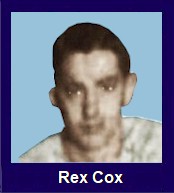
Cox, Rex B.
Army Staff sergeant

Rex B. Cox, age 26, from Carlsbad, New Mexico, Eddy county.

Parents: Frank Cox and Mrs. T.C. Maynard
Spouse: Betty Cox
Children: Don, 1, died in 1992

Service era: World War II
Military history: 35th Infantry Regiment

Date of death: Tuesday, May 1, 1945
Death details: Died of wounds in Luzon, Phillippines
Cemetery: Carlsbad Municipal

Source: National Archives, 35th Infantry Regiment Association

Austin, Thomas U.
Army Private

Thomas U. Austin from Eddy County New Mexico.

Service era: World War II
Schools: Marshall High graduate

Date of death: Sunday, January 28, 1945
Death details: On December 13, 1944, Japanese forces in the Philippines began the transfer of 1,621 Allied prisoners of war (POWs) to Japan. The POWs were to make the journey aboard transport ships whose harsh conditions and extreme overcrowding led survivors to refer to them as “Hell Ships.” The ships also lacked markings that would distinguish them from any other military target, causing some of them to be attacked by Allied forces who could not identify them as POW transports. On December 14, 1944, Allied aircraft attacked the first ship, the Oryoku Maru, in Subic Bay in the Philippines, killing many Allied POWs who became lost in the water, sank with the ship, or were washed ashore. Survivors of the bombing were put aboard two other ships, the Enoura Maru and the Brazil Maru, to continue on to Japan. During its journey on January 9, 1945, while anchored in Takao Harbor, Formosa (present-day Taiwan), the Enoura Maru was attacked by Allied aircraft from the USS Hornet (CV-8), killing Allied POWs who were lost in the water, on board the ship, or on the nearby shore. Survivors of the Enoura Maru bombing were loaded onto the Brazil Maru, and reached Japan on January 30, 1945. As a result of these incidents, Allied POWs were lost in the Philippines, at sea between the Philippines and Taiwan, while anchored in Taiwan, at sea between Taiwan and Japan, and in Japan. The attacks on these POW transports ultimately resulted in a series of death notifications from the Japanese government through the International Red Cross (IRC), and some casualties were given up to five different dates of death at various locations during the transfer. Witness accounts from surviving POWs offer detailed information for a handful of casualties, but the specific dates of loss and/or last-known locations for many of these POWs are based on the most recent reported date of death. Second Lieutenant Thomas U. Austin joined the U.S. Army from New Mexico and served in the 3rd Provisional Field Artillery Battalion during the defense of the Philippines. He was taken as a POW following the Japanese invasion and was interned in the islands until December 1944, when he was transferred to the Oryoku Maru for transport to Japan. Records indicate that 2LT Austin survived the sinking of the Oryoku Maru and the attack on the Enoura Maru before he was transferred to the Brazil Maru. 2LT Austin died on January 28, 1945, from wounds received during the bombing of the Enoura Maru and acute colitis. However, these reports often involve information furnished by enemy governments, with some casualties given multiple dates of death. Future research may determine these reports were inaccurate. 2LT Austin’s remains could not be identified following the war and he is still unaccounted-for. Today, Second Lieutenant Austin is memorialized on the Walls of the Missing at the Manila American Cemetery in the Philippines. Based on all information available, DPAA assessed the individual’s case to be in the analytical category of Non-recoverable.
Cemetery: Tablets of the Missing at Manila American Cemetery

Source: National Archives, American Battle Monuments Commission, Defense POW/MIA Accounting Agency, El Paso Times (1945)

Thorpe, Joseph D.
Army 1st lieutenant

Joseph D. Thorpe, age 29, from Eddy County New Mexico.

Service era: World War II

Date of death: Saturday, January 27, 1945
Death details: On December 13, 1944, Japanese forces in the Philippines began the transfer of 1,621 Allied prisoners of war (POWs) to Japan. The POWs were to make the journey aboard transport ships whose harsh conditions and extreme overcrowding led survivors to refer to them as “Hell Ships.” The ships also lacked markings that would distinguish them from any other military target, causing some of them to be attacked by Allied forces who could not identify them as POW transports. On December 14, 1944, Allied aircraft attacked the first ship, the Oryoku Maru, in Subic Bay in the Philippines, killing many Allied POWs who became lost in the water, sank with the ship, or were washed ashore. Survivors of the bombing were put aboard two other ships, the Enoura Maru and the Brazil Maru, to continue on to Japan. During its journey on January 9, 1945, while anchored in Takao Harbor, Formosa (present-day Taiwan), the Enoura Maru was attacked by Allied aircraft from the USS Hornet (CV-8), killing Allied POWs who were lost in the water, on board the ship, or on the nearby shore. Survivors of the Enoura Maru bombing were loaded onto the Brazil Maru, and reached Japan on January 30, 1945. As a result of these incidents, Allied POWs were lost in the Philippines, at sea between the Philippines and Taiwan, while anchored in Taiwan, at sea between Taiwan and Japan, and in Japan. The attacks on these POW transports ultimately resulted in a series of death notifications from the Japanese government through the International Red Cross (IRC), and some casualties were given up to five different dates of death at various locations during the transfer. Witness accounts from surviving POWs offer detailed information for a handful of casualties, but the specific dates of loss and/or last-known locations for many of these POWs are based on the most recent reported date of death. First Lieutenant Joseph D. Thorpe entered the U.S. Army from New Mexico and served with Battery E, 200th Coast Artillery Regiment, in the Philippines during World War II. He was taken as a POW following the Japanese invasion and was interned in the islands until December 1944, when he was transferred to the Oryoku Maru for transport to Japan. He survived the attack on the Oryoku Maru and was eventually transferred to the Brazil Maru. Records indicate that 1LT Thorpe died on January 27, 1945, from starvation and exposure to the elements, and he was reportedly buried at sea. However, these records often involve information solely furnished by enemy governments, with some casualties given multiple dates of death. Future research may determine these reports were inaccurate. 1LT Thorpe’s remains could not be identified following the war, and he is still unaccounted-for. Today, First Lieutenant Thorpe is memorialized on the Walls of the Missing at the Manila American Cemetery in the Philippines. Based on all information available, DPAA assessed the individual’s case to be in the analytical category of Non-recoverable.

Source: National Archives, Defense POW/MIA Accounting Agency

Back To Top