Skip to content

Fivelson, Barry Frank
Army Warrant officer

Barry Frank Fivelson from Evanston, Illinois, Cook county.

Service era: Vietnam

Date of death: Monday, February 15, 1971
Death details: On December 11, 2000, Joint Task Force-Full Accounting (JTF-FA, now DPAA) identified the remains of Warrant Officer 1 Barry Frank Fivelson, missing from the Vietnam War.

Warrant Officer 1 Fivelson entered the U.S. Army from Illinois and served with the 159th Aviation Battalion, 101st Airborne Division. On February 15, 1971, he was a passenger aboard a CH-47C Chinook (tail number 18506, call sign “Regard 25”) on a combat support/resupply mission over Laos. During the flight, “Regard 25” caught fire, exploded in mid-air, and crashed near the Pon River in Savannakhet Province, Laos. Warrant Officer 1 Fivelson was killed in the crash and his remains could not be recovered at the time. After the war, a series of joint U.S.-Laotian investigative teams located the crash site and recovered human remains, some of which were forensically identified as those of WO1 Fivelson.

Source: National Archives, Defense POW/MIA Accounting Agency

Lisowski, Andrew Zbigniew
Army Captain

Andrew Zbigniew Lisowski, age 24, from Evanston, Illinois, Cook county.

Service era: Vietnam

Date of death: Tuesday, May 5, 1970
Death details: Hostile, killed in South Vietnam
Cemetery: Fort Benning Main Post

Source: National Archives, findagrave.com

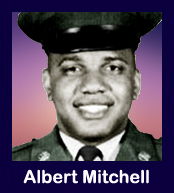
Mitchell, Albert Jean
Army Private 1st class

Albert Jean Mitchell, age 24, from Evanston, Illinois, Cook county.

Service era: Vietnam
Military history: 35th Infantry Regiment

Date of death: Wednesday, March 6, 1968
Death details: Hostile, died from wounds in South Vietnam

Source: National Archives, 35th Infantry Regiment Association

Wallace, Richard Frank
Marines Captain

Richard Frank Wallace, age 19, from Cook County Evanston, Illinois .

Parents: Frank and Anona
Spouse: Margaret Delaney Wallace
Children: John Andrew, Richard James, Robert Francis

Service era: Vietnam

Date of death: Tuesday, August 24, 1965
Death details: Killed when the transport plane he was aboard crashed in Hong Kong.
Cemetery: Saint Mary

Source: National Archives, UPI (1965), Chicago Tribune (1965)

Gustafson, Henry Leo
Army Private

Henry Leo Gustafson, age 19, from Cook County Evanston, Illinois .

Parents: Carl C. Gustafeon

Service era: Korea

Date of death: Monday, December 31, 1951
Death details: On June 28, 2011, the Joint POW/MIA Accounting Command (JPAC, now DPAA) identified the remains of Private First Class Henry Leo Gustafson, missing from the Korean War. Private First Class Gustafson entered the U.S. Army from Illinois and served in Battery B, 57th Field Artillery Battalion, 7th Infantry Division. He was captured by the enemy on December 2, 1950, as his unit withdrew from positions near Kaljon-ri, North Korea, during the Battle of Chosin Reservoir. PFC Gustafson died in enemy custody shortly after his capture from wounds he had sustained in combat, though the exact date of his death remains unknown. He was buried near the area of his death, but his remains were not returned to the U.S. immediately following the war. In 1993, the North Korean government repatriated the remains of several U.S. service members recovered from near the Chosin Reservoir, and in 2011, analysts were able to successfully identify PFC Gustafson from among these remains. Private First Class Gustafson is memorialized on the Courts of the Missing at the National Memorial Cemetery of the Pacific. His name is also inscribed on the Korean War Veterans Memorial Wall in Washington, DC, which was updated in 2022 to include the names of the fallen.

Source: National Archives, Sault St. Marie Evening News (1953)

Pearce, William Mansfield
Navy Reserves Lieutenant (junior grade)

William Mansfield Pearce, age 35, from Cook County Evanston, Illinois .

Spouse: Helen J. Pearce

Service era: World War II

Date of death: Saturday, December 15, 1945
Death details: On December 13, 1944, Japanese forces in the Philippines began the transfer of 1,621 Allied prisoners of war (POWs) to Japan. The POWs were to make the journey aboard transport ships whose harsh conditions and extreme overcrowding led survivors to refer to them as “Hell Ships.” The ships also lacked markings that would distinguish them from any other military target, causing some of them to be attacked by Allied forces who could not identify them as POW transports. On December 14, 1944, Allied aircraft attacked the first ship, the Oryoku Maru, in Subic Bay in the Philippines, killing many Allied POWs who became lost in the water, sank with the ship, or were washed ashore. Survivors of the bombing were put aboard two other ships, the Enoura Maru and the Brazil Maru, to continue on to Japan. During the journey, while anchored in Takao Harbor, Formosa (present-day Taiwan), the Enoura Maru was attacked by Allied aircraft from the USS Hornet (CV-8), killing Allied POWs who were lost in the water, on board the ship, or on the nearby shore. Survivors of the Enoura Maru bombing were loaded onto the Brazil Maru, and reached Japan on January 30, 1945. As a result of these incidents, Allied POWs were lost in the Philippines, at sea between the Philippines and Taiwan, while anchored in Taiwan, at sea between Taiwan and Japan, and in Japan. The attacks on these POW transports ultimately resulted in a series of death notifications from the Japanese government through the International Red Cross (IRC), and some casualties were given up to five different dates of death at various locations during the transfer. Witness accounts from surviving POWs offer detailed information for a handful of casualties, but the specific dates of loss and/or last-known locations for many of these POWs are based on the most recent reported date of death. Lieutenant Junior Grade William Mansfield Pearce, who entered the U.S. Navy from New Mexico, served with the 200th Coast Artillery Regiment and was stationed in the Philippines at the time of the Japanese invasion. He was taken prisoner by enemy forces and interned in the Philippines until December of 1944, when he was put aboard the ship Oryoku Maru for transport to Japan. LTJG Pearce was killed several weeks later in the attack on the Enoura Maru; however, these reports often involve information solely furnished by enemy governments, with some casualties given multiple dates of death. Future research may determine that these reports were inaccurate. LTJG Pearce’s remains could not be identified following the war, and he is still unaccounted for. Today, Lieutenant Junior Grade Pearce is memorialized on the Walls of the Missing at the Manila American Cemetery in the Philippines.

Source: National Archives, Defense POW/MIA Accounting Agency
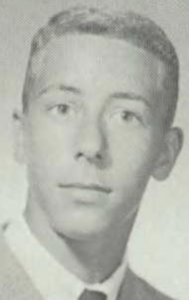
Barker, Raymond A.
Marine Reserves Corporal

Raymond A. Barker, age 22, from Evanston, Illinois, Cook county.

Parents: Harley C. Barker

Service era: World War II

Date of death: Saturday, November 20, 1943
Death details: On September 27, 2017, the Defense POW/MIA Accounting Agency (DPAA) identified the remains of Corporal Raymond Arthur Barker, missing from World War II. Corporal Barker, who joined the United States Marine Corps from Illinois, was a member of the 3rd Platoon, Company C, 2nd Tank Battalion, 2nd Marine Division. On November 20, 1943, he was killed during the amphibious assault on Betio Island, as part of the Battle of Tarawa. He was buried in a Marine cemetery on Betio. After the war, he was not identified among remains exhumed from Betio and repatriated to the United States. In 2017, the independent investigative group History Flight, in partnership with DPAA, located a burial trench on Betio and recovered human remains. DPAA analysts identified Cpl Barker from among these remains.
Cemetery: Tablets of the Missing at Honolulu Memorial

Source: National Archives, American Battle Monuments Commission, Defense POW/MIA Accounting Agency

Back To Top