Skip to content

Rossi, Vincent Louis Sr.
Army Sergeant 1st class

Vincent Louis Sr. Rossi, age 37, from Gloversville, New York, Fulton county.

Spouse: Married
Children: Daughter

Service era: Vietnam

Date of death: Sunday, November 15, 1970
Death details: Non-hostile, South Vietnam. Shot and killed

Source: National Archives, The Times Reocrd (1970)

Seeley, William Arthur
Army Specialist 4

William Arthur Seeley, age 19, from Stratford, New York, Fulton county.

Parents: Gordon A. Seeley

Service era: Vietnam

Date of death: Tuesday, September 1, 1970
Death details: Non-hostile, South Vietnam

Source: National Archives, Fort Worth Star Telegram (1970)

Coons, Robert Wayne
Army Sergeant

Robert Wayne Coons, age 22, from Johnstown, New York, Fulton county.

Service era: Vietnam

Date of death: Tuesday, May 19, 1970
Death details: Hostile, Cambodia

Source: National Archives

Fancher, Harold Steven
Army Private 1st Class

Harold Steven Fancher from New York, Fulton county.

Service era: Korea

Date of death: Friday, June 22, 1951
Death details: On July 11, 1950, the U.S. Army’s 21st Infantry Regiment, which had arrived in Korea six days earlier, was placed in defensive positions near the town of Chochiwon, South Korea. The regiment was not at full strength and lacked artillery and anti-tank weapons. That day, they were attacked by North Korean forces and were forced to withdraw to avoid being surrounded, as well as to buy time until they could be reinforced and resupplied. Corporal Harold Steven Fancher, who joined the U.S. Army from New York, served with the Medical Company, 21st Infantry Regiment, 24th Infantry Division. He was captured by enemy forces on July 12, in an area between Pyongtaek and Chochiwon, and forced to march north to the Apex prison camps in North Korea. He died of exhaustion and pneumonia on June 22, 1951, at a prison camp between the villages of An-dong and Kaeyambol and was buried near the camp. His remains were not identified among those returned to U.S. custody after the cease fire. Today, Corporal Fancher is memorialized on the Courts of the Missing at the National Memorial Cemetery of the Pacific.

Source: National Archives, Defense POW/MIA Accounting Agency
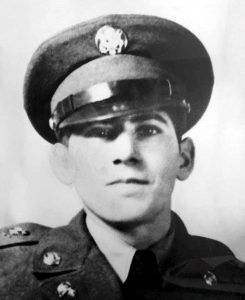
Gebou, William S.
Army Private 1st Class

William S. Gebou from New York, Fulton county.

Service era: Korea

Date of death: Friday, December 1, 1950
Death details: 

On the evening of November 27, 1950, Chinese Communist Forces (CCF) launched a massive attack against the U.S. and United Nations troops stationed in the Chosin Reservoir area in northeast North Korea, resulting in a seventeen-day conflict that became known as the Battle of Chosin Reservoir. At the time of the initial CCF attack, members the U.S. Army’s 31st and 32nd Infantry Regiments were defending the area north of Sinhung-ni, on the east side of the reservoir. The defenders were overwhelmed by the numerically superior CCF, and on December 1, were forced to withdraw to friendly lines at Hagaru-ri. Chinese roadblocks from Sinhung-ni to Hagaru-ri along with the constant enemy fire from the surrounding high ground, made the withdrawal route extremely dangerous. Eventually, the column was broken into separate segments, which the CCF attacked individually. Many men were lost or captured during the moving battle, with survivors reaching friendly lines in Hagaru-ri on December 2 and 3.

Corporal William Samuel Gebou entered the U.S. Army from New York and was a member of Company D, 1st Battalion, 31st Infantry Regiment, 7th Infantry Division. He went missing on December 1, 1950 during the withdrawal from Sinhung-ni to Hagaru-ri, though specific details regarding his loss are unknown. He was never reported as a prisoner of war, and his remains could not be located or identified following the war. Today, Corporal Gebou is memorialized on the Courts of the Missing at the National Memorial Cemetery of the Pacific.

Source: National Archives, Defense POW/MIA Accounting Agency
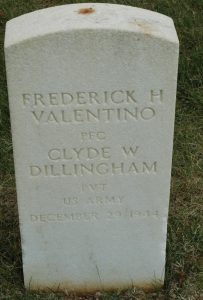
Trepasso, Joseph
Army Corporal

Joseph Trepasso from New York, Fulton county.

Service era: Korea

Date of death: Friday, December 1, 1950
Death details: On May 9, 2016, the Defense POW/MIA Accounting Agency (DPAA) identified the remains of Corporal Joseph Trepasso, missing from the Korean War.

Corporal Trepasso joined the U.S. Army from New York and was a member of Company L, 3rd Battalion, 31st Infantry Regiment, 7th Infantry Division. In late November 1950, Chinese Communist Forces launched a large-scale attack against U.S. troops at the Chosin Reservoir in North Korea, forcing them to withdraw south. CPL Trepasso’s unit was positioned on the eastern side of the reservoir at the outset of the attack, and he was reported missing in action once the withdrawal was complete. He was never reported to be a prisoner of war, and he was not identified among remains returned to U.S. custody immediately following the conflict’s ceasefire. In 2001, a joint U.S. and North Korean investigative team recovered remains from a site in the vicinity of the Chosin Reservoir. Forensic analysis eventually allowed for CPL Trepasso to be identified from among these remains. 

Source: National Archives, Defense POW/MIA Accounting Agency

Geisler, Donald Bruce
Army Corporal

Donald Bruce Geisler from New York, Fulton county.

Service era: Korea

Date of death: Thursday, November 2, 1950
Death details: During the last week of October 1950, Republic of Korea (ROK) Army forces under the control of the U.S. Eighth Army were advancing deep in North Korean territory, approaching the Yalu River on the Chinese-Korean border. Chinese Communist Forces (CCF) struck back in a surprise attack, engaging the ROK 1st and 6th Divisions near Unsan, some sixty miles north of Pyongyang. The U.S. 1st Cavalry Division, with the 8th Cavalry Regiment in the lead, was rushed forward to reinforce the ROK units in the Unsan area. On November 1, the regiment’s 1st Battalion took up positions north of Unsan, while the 2nd Battalion moved to guard the Nammyon River valley west of town, and the 3rd Battalion was placed in reserve at the valley’s southern end. Sergeant Donald Bruce Geisler, who joined the U.S. Army from New York, was a member of Company M, 3rd Battalion, 8th Cavalry Regiment, 1st Cavalry Division. By midnight on November 1, 1950, the 8th Cavalry Regiment was forced to withdraw from the Unsan area to avoid encirclement by the enemy. The 3rd Battalion was the last to withdraw, and was surrounded and cut-off by the CCF. They formed a defensive perimeter, and withstood attacks for the next few days before survivors either broke out to avoid capture or surrendered. Sergeant Geisler was captured during this moving battle. He was marched to Camp 5, a prison camp near Pyoktong, North Korea, on the southern bank of the Yalu River. Returning prisoners reported that SGT Geisler died of malnutrition while interned at Camp 5; however, the exact date of his loss is unknown. His remains have not been recovered, and he could not be identified among remains returned to U.S. custody after the war. Today, Sergeant Geisler is memorialized on the Courts of the Missing at the National Memorial Cemetery of the Pacific.

Source: National Archives, Defense POW/MIA Accounting Agency

Schweitzer, Richard W.
Army ts

Richard W. Schweitzer from New York, Fulton county.

Service era: World War II

Date of death: Monday, December 3, 1945
Death details: Death, non-battle
Cemetery: Zachary Taylor National

Source: National Archives, grave marker

Smida, Edward M.
Navy Pharmacist’s mate 1

Edward M. Smida, age 23, from Fulton County Gloversville, New York .

Service era: World War II

Date of death: Monday, August 6, 1945
Death details: Killed aboard USS Bullhead SS-332 when it was sunk by air attack near the Lombok Strait.

Source: On Eternal Patrol

Green, John McKinlay
Navy Reserves Ensign

John McKinlay Green, age 23, from Fulton County Gloversville, New York .

Parents: Gideon Green

Service era: World War II

Date of death: Thursday, October 15, 1942
Death details: On October 15, 1942, he was in a U.S. convoy of six ships that was towing barges loaded with urgently needed supplies toward Guadalcanal. The American forces on that island were in dire need of resupply. When the convoy was spotted by enemy aircraft, all but two ships withdrew from the area. The two ships that pressed on were the USS Meredith (DD-434,) a destroyer, and the USS Vireo (AM-54,) a lightly armed towing vessel. Upon receiving word that Japanese surface warships were operating in the area, both ships were forced to turn back from their mission. Because of its age and slow speed, Vireo was abandoned, and the crew taken aboard the Meredith. Within minutes, the Meredith was attacked by a large force of enemy aircraft. The destroyer sustained multiple bomb and torpedo hits and quickly sank. The survivors spent three days at sea before being rescued. The majority of the crews of both ships was killed in the incident.

Source: National Archives, Defense POW/MIA Accounting Agency

Back To Top