Skip to content

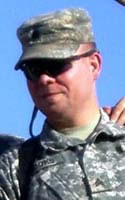
Brooks, Paul Faris
Army Staff Sergeant

Paul Faris Brooks, age 34, from Joplin, Missouri, Jasper county.

Parents: Barbara Brooks and Paul David Brooks
Spouse: Nicole Brooks
Children: Hayley, 14; Harmony, 11; Seth, 7; Logan, 6; Aiden, 5; Samara, 3; Denver, 2

Service era: Iraq
Schools: Jonesboro High
Military history: 935Th Aviation Support Battalion, Jefferson City, Mo

Date of death: Thursday, May 21, 2009
Death details: Hostile; Baghdad, Iraq
Cemetery: Missouri Veterans Cemetery at Springfield

Source: Department of Defense, Military Times, findagrave.com

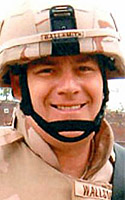
Wallsmith, Thomas Alexander
Army Master sergeant

Thomas Alexander Wallsmith, age 38, from Carthage, Missouri, Jasper county.

Service era: Iraq
Military history: Hhc, 3D Combat Support Battalion (Tf Baghdad), Fort Stewart, Ga

Date of death: Wednesday, October 26, 2005
Death details: Hostile; Rustamiyah, Iraq

Source: Department of Defense, Military Times

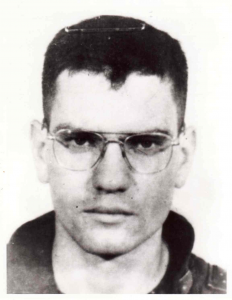
Rickman, Dwight Gray
Marines Captain

Dwight Gray Rickman from Joplin, Missouri, Jasper county.

Service era: Vietnam

Date of death: December 25, 1972
Death details: On December 25, 1972, he was the observer aboard an O-1 Bird Dog (tail number 51-12639, call sign “Hunter 24”) piloted by a member of the Vietnamese Air Force, on a low-level reconnaissance mission over South Vietnam. During the mission, radio contact with the aircraft was lost, and it failed to return to base. Search and rescue efforts were initiated but did not locate the aircraft or its crew.

Source: National Archives, Defense POW/MIA Accounting Agency

McCrea, Lawrence
Army Private 1st class

Lawrence McCrea, age 25, from Jasper County Joplin, Missouri .

Parents: Bertha M. Poole

Service era: Vietnam

Date of death: Tuesday, April 5, 1966
Death details: Non-hostile in South Vietnam.
Cemetery: Carver Memorial Park

Source: National Archives, Associated Press (1966), The Times (1966)

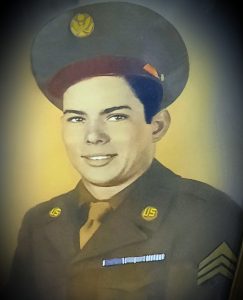
Allumbaugh, Lloyd Albert
Army Corporal

Lloyd Albert Allumbaugh from Jasper County Missouri.

Service era: Korea

Date of death: Tuesday, November 28, 1950
Death details: On April 21, 2020, the Defense POW/MIA Accounting Agency (DPAA) identified the remains of Sergeant Lloyd Albert Alumbaugh, missing from the Korean War. Sergeant Alumbaugh joined the U.S. Army from Missouri and served with the Ambulance Company, 7th Medical Battalion, 7th Infantry Division. He was reported missing in action following a Chinese Communist Forces attack on his unit’s position near the Chosin Reservoir of North Korea on November 28, 1950. He was not identified among remains returned to the U.S. after the war. In 2018, following a summit meeting between the leaders of the two nations, the D.P.R.K. turned over fifty-five boxes of remains to U.S. custody. These remains were accessioned into the DPAA laboratory for analysis in August of 2018. One box contained remains reportedly recovered from Sinhing-ri, D.P.R.K., an area associated with the fighting around the Chosin Reservoir. Analysts were eventually able to identify SGT Alumbaugh from among these remains. Sergeant Alumbaugh is memorialized on the Courts of the Missing at the National Memorial Cemetery of the Pacific. His name is also inscribed on the Korean War Veterans Memorial Wall in Washington, DC, which was updated in 2022 to include the names of the fallen.

Source: National Archives

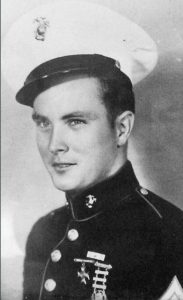
Martin, Elmer Leon
Marines Corporal

Elmer Leon Martin, age 23, from Webb City, Missouri, Jasper county.

Parents: Nora Martin

Service era: World War II

Date of death: Saturday, November 20, 1943
Death details: From November 20 through 23, 1943, the U.S. Marine Corps and U.S. Navy conducted a large-scale amphibious assault on the Japanese-held atoll of Tarawa as part of Operation Galvanic, the Allied capture of the Gilbert Islands. Located 2,500 miles southwest of Hawaii, Tarawa was a crucial stepping stone in the planned U.S. offensive across the central Pacific toward Japan. The Japanese garrison on Tarawa’s main island of Betio was well-entrenched with hundreds of bunkers and gun positions behind formidable beach obstacles. The first wave of Marines approaching the shore encountered lower-than-expected tides, forcing them to leave their landing craft on the reef and wade the hundreds of yards to the beach under intense enemy fire. The heaviest number of U.S. casualties were suffered during this phase of the landing. Eventually, rising tides allowed U.S. warships to maneuver closer to shore and support the troops with effective naval gunfire. More Marines landed on the second day, launching attacks inland from the beaches and seizing the Japanese airfield on the island. However, the enemy launched vicious counterattacks and two more days of intense fighting were needed to secure Betio. The last enemy strongpoints were taken on the morning of November 23. The fighting on Betio cost the Marines nearly 3,000 casualties but enabled U.S. forces to press further across the Pacific and yielded valuable tactical lessons that reduced U.S. losses in future amphibious landings. Corporal Elmer Leon Martin entered the U.S. Marine Corps from Oklahoma and served in Company B, 1st Battalion, 2nd Marine Regiment, 2nd Marine Division. He was killed in action on November 20, 1943 during the Battle of Tarawa. Corporal Martin was buried in Cemetery #33 on Betio Island, but his remains could not be identified among those disinterred from the island after the war. Today, Corporal Martin is memorialized on the Courts of the Missing at the National Memorial Cemetery of the Pacific.

Source: National Archives, Defense POW/MIA Accounting Agency

Hutchens, Joseph L.
Army Technician 5

Joseph L. Hutchens from Missouri, Jasper county.

Service era: World War II

Date of death: Sunday, June 21, 1942
Death details: Following the Allied surrender on the Bataan Peninsula on April 9, 1942, the Japanese began the forcible transfer of American and Filipino prisoners of war to various prison camps in central Luzon, at the northern end of the Philippines. The largest of these camps was the notorious Cabanatuan Prison Camp. At its peak, Cabanatuan held approximately 8,000 American and Filipino prisoners of war that were captured during and after the Fall of Bataan. Camp overcrowding worsened with the arrival of Allied prisoners who had surrendered from Corregidor on May 6, 1942. Conditions at the camp were poor, with food and water extremely limited, leading to widespread malnutrition and outbreaks of malaria and dysentery. By the time the camp was liberated in early 1945, approximately 2,800 Americans had died at Cabanatuan. Prisoners were forced to bury the dead in makeshift communal graves, often completed without records or markers. As a result, identifying and recovering remains interred at Cabanatuan was difficult in the years after the war. Technician Fifth Grade Joseph L. Hutchens joined the U.S. Army from Missouri and was a member of the 33rd Quartermaster Truck Regiment in the Philippines during World War II. He was captured in Bataan following the American surrender on April 9, 1942 and died of malaria and dysentery on June 21, 1942 at the Cabanatuan Prison Camp in Nueva Ecija Province. He was buried in a communal grave in the camp cemetery along with other deceased American POWs; however, his remains could not be associated with any remains recovered from Cabanatuan after the war. Today, Technician Fifth Grade Hutchens is memorialized on the Walls of the Missing at the Manila American Cemetery in the Philippines.

Source: National Archives, Defense POW/MIA Accounting Agency

Barnard, William Marion
Army Private

William Marion Barnard from Jasper County Joplin, Missouri .

Parents: William H. Barnard

Service era: Korea

Date of death: Unknown
Death details: On February 5, 1951, Allied forces in Korea launched an offensive against North Korean and Chinese Communist Forces (CCF) north of Wonju. Republic of Korea units and the 38th Infantry Regiment and supporting artillery units, including the 15th and 503rd Field Artillery Battalions, and the 82nd Antiaircraft Artillery and Automatic Weapons Battalion, initially met light resistance on their drive to the north. On February 11, the CCF launched an aggressive counteroffensive that caused the Allies to withdraw back southward. However, the CCF had established a series of roadblocks on the road to the south, forcing the Allies to fight their way back to friendly lines. Private First Class William Marion Barnard entered the U.S. Army from Missouri and was a member of L Company, 3rd Battalion, 38th Infantry Regiment, 2nd Infantry Division. On February 12, 1951, he was taken as a prisoner of war (POW) by enemy forces at a roadblock near Saemal, South Korea, during the 38th Infantry Regiment’s withdrawal. Following his capture, he was marched with other POWs to holding camps along the Yalu River in North Korea. Private First Class Barnard died of unknown causes while still held captive, though the exact date and location of his loss were not recorded. U.S. investigators have not been able to access the area to search for his burial site, and he has not been associated with any of the remains returned to U.S. custody after the war. He is still unaccounted-for. Today, Private First Class Barnard is memorialized on the Courts of the Missing at the National Memorial Cemetery of the Pacific. His name is also inscribed on the Korean War Veterans Memorial Wall in Washington, DC, which was updated in 2022 to include the names of the fallen.

Source: National Archives, Defense POW/MIA Accounting Agency, Kansas City Star (1951)
Back To Top