Skip to content

Hively, Bennie Ray
Army Specialist 4

Bennie Ray Hively, age 20, from Jonesboro, Arkansas, Craighead county.

Service era: Vietnam

Date of death: Saturday, April 24, 1971
Death details: Killed in action
Cemetery: Cash, Arkansas

Source: National Archives, findagrave.com, Northwest Arkansas Times (1971)

Chambers, Joseph Lee
Army 1st lieutenant

Joseph Lee Chambers, age 23, from Jonesboro, Arkansas, Craighead county.

Parents: Joseph F. Chambers
Spouse: Karen

Service era: Vietnam

Date of death: Tuesday, September 1, 1970
Death details: Killed in Vietnam in a helicopter crash

Source: National Archives, Associated Press (1970)

Henry, George D. Jr.
Air Force Captain

George D. Jr. Henry, age 27, from Jonesboro, Arkansas, Craighead county.

Service era: Vietnam

Date of death: Thursday, August 13, 1970
Death details: Killed in a helicopter crash in Thailand during a routine training mission

Source: National Archives, Associated Press (1970)

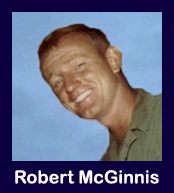
McGinnis, Robert Ray
Army Sergeant

Robert Ray McGinnis, age 20, from Jonesboro, Arkansas, Craighead county.

Service era: Vietnam
Military history: 35th Infantry Regiment

Date of death: Wednesday, July 2, 1969
Death details: Killed by mortars, Pleiku Province
Cemetery: Markham Cemetery in Egypt, Arkansas

Source: National Archives, 35th Infantry Regiment Association

Tell, Britt Jr.
Army Private 1st class

Britt Jr. Tell, age 22, from Craighead County Jonesboro, Arkansas .

Parents: Elnora Watkins

Service era: Vietnam

Date of death: Thursday, May 5, 1966
Death details: Died in Vietnam from hepetitiis and malaria.

Source: National Archives, The Sun (1966)

Schaeffer, Billy J.
Army Army Volunteer Corps

Billy J. Schaeffer, age 19, from Craighead County Jonesboro, Arkansas .

Service era: World War II

Date of death: Thursday, October 18, 1945
Death details: Died in the crash of a B-24 training plane in Texas

Source: National Archives, Houston Chronicle (1945), The Sun (1945)

Lewis, John L.
Army Lieutenant colonel

John L. Lewis from Chicot County Jonesboro, Arkansas .

Spouse: Mary Lynn Lewis
Children: John, Broadus, 16; Scottie, 14; Mary Lynn, 12

Service era: World War II
Schools: Arkansas State College

Date of death: Thursday, January 25, 1945
Death details: On December 13, 1944, Japanese forces in the Philippines began the transfer of 1,621 Allied prisoners of war (POWs) to Japan. The POWs were to make the journey aboard transport ships whose harsh conditions and extreme overcrowding led survivors to refer to them as “Hell Ships.” The ships also lacked markings that would distinguish them from any other military target, causing some of them to be attacked by Allied forces who could not identify them as POW transports. On December 14, 1944, Allied aircraft attacked the first ship, the Oryoku Maru, in Subic Bay in the Philippines, killing many Allied POWs who became lost in the water, sank with the ship, or were washed ashore. Survivors of the bombing were put aboard two other ships, the Enoura Maru and the Brazil Maru, to continue on to Japan. During its journey on January 9, 1945, while anchored in Takao Harbor, Formosa (present-day Taiwan), the Enoura Maru was attacked by Allied aircraft from the USS Hornet (CV-8), killing Allied POWs who were lost in the water, on board the ship, or on the nearby shore. Survivors of the Enoura Maru bombing were loaded onto the Brazil Maru, and reached Japan on January 30, 1945. As a result of these incidents, Allied POWs were lost in the Philippines, at sea between the Philippines and Taiwan, while anchored in Taiwan, at sea between Taiwan and Japan, and in Japan. The attacks on these POW transports ultimately resulted in a series of death notifications from the Japanese government through the International Red Cross (IRC), and some casualties were given up to five different dates of death at various locations during the transfer. Witness accounts from surviving POWs offer detailed information for a handful of casualties, but the specific dates of loss and/or last-known locations for many of these POWs are based on the most recent reported date of death. Lieutenant Colonel John L. Lewis entered the U.S. Army from Arkansas and served with the 23rd Field Artillery Regiment (Philippine Scouts) in the Philippines during World War II. He was taken as a POW following the Japanese invasion and was interned in the islands until December 1944, when he was transferred to the Oryoku Maru for transport to Japan. He survived the attack on the Oryoku Maru and was eventually transferred to the Brazil Maru. Records indicate that LTC Lewis died while aboard the Brazil Maru on January 25, 1945, due to acute colitis and was buried at sea. However, these records often involve information solely furnished by enemy governments, with some casualties given multiple dates of death. Future research may determine these reports were inaccurate. LTC Lewis’ remains could not be identified following the war, and he is still unaccounted-for. Today, Lieutenant Colonel Lewis is memorialized on the Walls of the Missing at the Manila American Cemetery in the Philippines. Based on all information available, DPAA assessed the individual’s case to be in the analytical category of Non-recoverable.

Source: National Archives, Defense POW/MIA Accounting Agency, The Sun (1945)
Livingston, Lloyd Lynn
Marines Reserves Private

Lloyd Lynn Livingston, age 19, from Jonesboro, Arkansas, Craighead county.

Service era: World War II

Date of death: Saturday, November 20, 1943
Death details: From November 20 through 23, 1943, the U.S. Marine Corps and U.S. Navy conducted a large-scale amphibious assault on the Japanese-held atoll of Tarawa as part of Operation Galvanic, the Allied capture of the Gilbert Islands. Located 2,500 miles southwest of Hawaii, Tarawa was a crucial stepping stone in the planned U.S. offensive across the central Pacific toward Japan. The Japanese garrison on Tarawa’s main island of Betio was well-entrenched with hundreds of bunkers and gun positions behind formidable beach obstacles. The first wave of Marines approaching the shore encountered lower-than-expected tides, forcing them to leave their landing craft on the reef and wade the hundreds of yards to the beach under intense enemy fire. The heaviest number of U.S. casualties were suffered during this phase of the landing. Eventually, rising tides allowed U.S. warships to maneuver closer to shore and support the troops with effective naval gunfire. More Marines landed on the second day, launching attacks inland from the beaches and seizing the Japanese airfield on the island. However, the enemy launched vicious counterattacks and two more days of intense fighting were needed to secure Betio. The last enemy strongpoints were taken on the morning of November 23. The fighting on Betio cost the Marines nearly 3,000 casualties but enabled U.S. forces to press further across the Pacific and yielded valuable tactical lessons that reduced U.S. losses in future amphibious landings. Private Lloyd Lynn Livingston entered the U.S. Marine Corps from Tennessee and served in Company G, 2nd Battalion, 8th Marine Regiment, 2nd Marine Division. He was killed in action on Betio Island on November 20, 1943, during the Battle of Tarawa. His remains were buried in Cemetery #33, Main Marine Cemetery, on Betio but after the war his remains were not recovered. Today, Private Livingston is memorialized on the Courts of the Missing at the National Memorial Cemetery of the Pacific.

Source: National Archives, Defense POW/MIA Accounting Agency

Back To Top