Skip to content

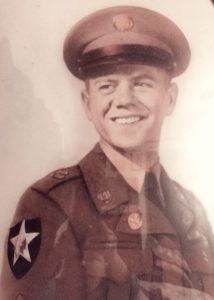
Parson, David Bryan
Army Sergeant

David Bryan Parson, age 30, from Kannapolis, North Carolina, Cabarrus county.

Service era: Iraq
Military history: Hhc 1St Battalion 37Th Armor, Apo Ae 09074

Date of death: Sunday, July 6, 2003
Death details: Hostile; Baghdad, Iraq

Source: Department of Defense, Military Times

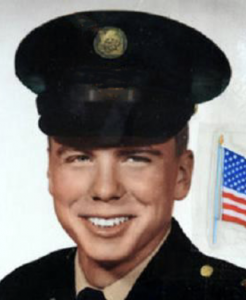
Shue, Donald Monroe
Army Sergeant 1st class

Donald Monroe Shue from Kannapolis, North Carolina, Cabarrus county.

Service era: Vietnam

Date of death: Monday, November 3, 1969
Death details: Army Sgt. 1st Class William T. Brown of La Habra, Calif., Sgt. 1st Class Donald M. Shue of Kannapolis, N.C., and Sgt. 1st Class Gunther H. Wald of Palisades Park, N.J., were buried as a group on Aug. 30, in a single casket representing the three soldiers, in Arlington National Cemetery. Brown and Shue were each individually buried on Sept. 26, 2011, at Arlington and May 1 in Kannapolis, N.C. On Nov. 3, 1969, the menand six Vietnamese soldiers were part of a Special Forces reconnaissance patrol operating in Quang Tri Province, near the Vietnam-Laos border. The patrol was ambushed by enemy forces and all three Americans were wounded. Brown was reported to have suffered a gunshot wound to his side. Due to heavy enemy presence and poor weather conditions, the search-and-rescue team was not able to reach the site until eight days later. At that time, they found military equipment belonging to Shue, but no other signs of the men. Between 1993 and 2010, joint United States/Socialist Republic of Vietnam (S.R.V.) teams, led by the Joint POW/MIA Accounting Command (JPAC), conducted multiple interviews on nine different occasions in Quang Tri Province. Additionally, the S.R.V. teams unilaterally investigated this case, but were unable to develop new leads. Among those interviewed by the joint teams were former Vietnamese militiamen who claimed in 1969 they ambushed three Americans in the area near the Laos-Vietnam border. In 2007, a Vietnamese citizen led investigators to human remains that he had discovered and buried near the site of the ambush. In 2008, a military identification tag for Brown was turned over to the U.S. Government from a U.S. citizen with ties to Vietnam. Finally, in April 2010, joint teams excavated a hilltop area near Huong Lap Village, recovering additional human remains, military equipment, another military identification tag for Brown, and a “Zippo” lighter bearing the name “Donald M. Shue” and the date “1969.” Scientists from the JPAC and the Armed Forces DNA Identification Laboratory used circumstantial and material evidence, along with mitochondrial DNA – which matched that of some of the soldiers’ family members – in the identification of the remains.
Cemetery: In Kannapolis, North Carolina

Source: National Archives, Department of Defense
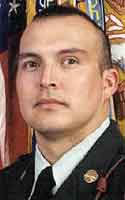
Miller, Joseph Edward
Army Private 1st class

Joseph Edward Miller, age 21, from Cabarrus County Kannapolis, North Carolina .

Parents: R. C. Miller Sr.

Service era: Korea
Schools: Odell High and Cannon High

Date of death: Monday, February 12, 1951
Death details: On February 5, 1951, Allied forces in Korea launched an offensive against North Korean and Chinese Communist Forces (CCF) north of Wonju. Republic of Korea units and the 38th Infantry Regiment and supporting artillery units, including the 15th and 503rd Field Artillery Battalions, and the 82nd Antiaircraft Artillery and Automatic Weapons Battalion, initially met light resistance on their drive to the north. On February 11, the CCF launched an aggressive counteroffensive that caused the Allies to withdraw back southward. However, the CCF had established a series of roadblocks on the road to the south, forcing the Allies to fight their way back to friendly lines. Corporal Joseph Edward Miller entered the U.S. Army from North Carolina and was a member of K Company, 3rd Battalion, 38th Infantry Regiment, 2nd Infantry Division. He was taken as a prisoner of war (POW) by enemy forces during the Regiment’s February 1951 withdrawal and placed among a group of prisoners who were transferred north toward the Suan Bean POW camp. However, CPL Miller never reached the camp, and was reportedly shot by an enemy guard while the group was near a cluster of villages just north of the current border between North and South Korea. U.S. investigators have not yet been able to access the area to search for CPL Miller’s burial site, and he has not been associated with any of the remains later returned to U.S. custody. Today, Corporal Miller is memorialized on the Courts of the Missing at the National Memorial Cemetery of the PacificHis name is also inscribed on the Korean War Veterans Memorial Wall in Washington, DC, which was updated in 2022 to include the names of the fallen.

Source: National Archives, Defense POW/MIA Accounting Agency, Statesville Record and Landmark (1954)

Carrouth, Ralph Norman
Army Private 1st class

Ralph Norman Carrouth, age 20, from Cabarrus County Kannapolis, North Carolina .

Parents: Leslie Carrouth

Service era: Korea

Date of death: Saturday, July 29, 1950
Death details: On July 28, 1950, members of the 3rd Battalion, 34th Infantry Regiment, 24th Infantry Division, were in defensive positions near Kochang, South Korea, west of the Naktong River. They served as part of a defensive formation soon to be known as the Pusan Perimeter, meant to delay the North Korean People’s Army’s (NKPA) advance through South Korea long enough so that reinforcements could arrive at Pusan Harbor. That night, members of the 34th Infantry reported seeing a procession of enemy tanks and infantry assemble behind a roadblock west of Kochang. The next morning, this NKPA force attacked the 34th Infantry positions from two directions. Continuous enemy fire eventually forced the regiment to withdraw to the east; however, Company I was cut off by the NKPA. A counterattack was successful in rescuing all but one platoon from Company I, though many men were killed or went missing during these actions. Corporal Ralph Norman Carrouth entered the U.S. Army from North Carolina and was a member of I Company, 3rd Battalion, 34th Infantry Regiment, 24th Infantry Division. He was captured during the fighting near Kochang on July 29. Following his capture, CPL Carrouth was marched with other prisoners of war (POWs) toward Seoul and Pyongyang. After the war, returned prisoners reported that CPL Carrouth died of dysentery and malnutrition while still traveling north on October 9, and was buried on the side of the road south of Pyongyang. His remains were not recovered, and he was not identified among the remains returned to the U.S. following the war. Today, Corporal Carrouth is memorialized on the Courts of the Missing at the National Memorial Cemetery of the Pacific. His name is also inscribed on the Korean War Veterans Memorial Wall in Washington, DC, which was updated in 2022 to include the names of the fallen.

Source: National Archives, Defense POW/MIA Accounting Agency, News and Reocrd (1950)

Patterson, Clarence R.
Army 2nd lieutenant

Clarence R. Patterson, age 21, from Rowan County Kannapolis, North Carolina .

Service era: World War II
Schools: Cannon High (1940)

Date of death: Thursday, November 16, 1944
Death details: Killed during a training mission when the medium bomber he was flying crashed near Myrtle Beach, South Carolina.

Source: Charlotte Observer (1944)

Back To Top