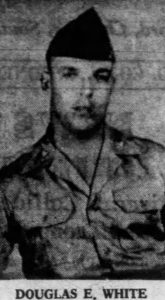
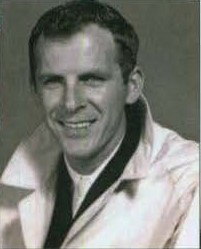
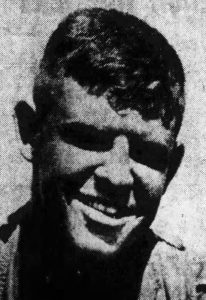
Donald A. Dorman, age 21, from New Haven County Meriden, Connecticut .
Parents: Lillian Dorman
Service era: World War II
Schools: Lewis High graduate
Military history: Silver Star
Date of death: Thursday, March 22, 1945
Death details: On Sept. 19, 2025, the Defense POW/MIA Accounting Agency identified the remains of U.S. Army Air Forces Technical Sgt. Donald A. Dorman, missing from World War II. Dorman entered the U.S. Army Air Forces in Connecticut and served with 429th Bombardment Squadron, 2nd Bombardment Group (Heavy). On March 22, 1945, he was the upper turret gunner aboard a B-17G Flying Fortress aircraft, serial number 44-8191, with ten crew members, which took part in a bombing mission on oil refineries in Ruhland, Germany. While over the target area, the B-17G was hit by anti-aircraft fire, damaging the plane and prompting the pilot to fly towards Allied Soviet-held territory for an emergency landing. While over Poland, the bomber was attacked by several German fighter aircraft and was critically damaged, forcing the crew to bail out. Survivor reports indicate that the enemy fighters fired on the crew as they parachuted to the ground. Of the ten crew members, eight, including Dorman, were lost at some point during or after the crash. The two survivors, who were captured by German troops and later returned to U.S. custody, were not sure how many crew members had managed to bail out. After the war, the American Graves Registration Command (AGRC) searched for and disinterred the remains of U.S. personnel missing from the European Theater. However, at the time, the AGRC investigations in the Soviet occupied zone of Europe, including Poland, were severely limited. Between 2008 and 2012, DPAA predecessor organizations undertook three field investigations into the loss of Dorman’s aircraft. These investigations determined that a B-17 “Flying Fortress” had crashed near the Polish town of Glinica in 1945. Additional investigations by DPAA followed in 2017 and 2018. Between 2019 and 2024, DPAA partnered with Alta Archaeological Consulting to plan and conduct five excavations at the site of the crash. During the excavations, teams led by Alta Archaeological Consulting recovered possible remains, which were transferred to a DPAA Laboratory for scientific analysis. There, based on the laboratory analysis, circumstantial evidence, and previous recoveries, the remains were identified as those of Dorman.
Source: Defense POW/MIA Accounting Agency, The Journal (1945)