Skip to content

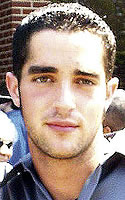
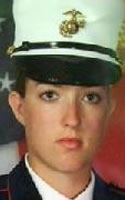
Casanova, Casey Lynne
Marines Lance corporal

Casey Lynne Casanova, age 22, from Mccomb, Mississippi, Pike county.

Service era: Iraq
Military history: Clb-1, Clr-1, 1St Mlg, Camp Pendleton, California

Date of death: Friday, May 2, 2008
Death details: Hostile; Karmah, Iraq

Source: Department of Defense, Military Times

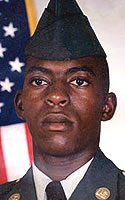
Osbey, Timothy Ryndale
Army Sergeant

Timothy Ryndale Osbey, age 29, from Magnolia, Mississippi, Pike county.

Service era: Iraq
Military history: Hhc, 1St Battalion, 155Th Infantry (Mechanized), (1 Mef), Mccomb, Ms

Date of death: Wednesday, February 16, 2005
Death details: Iskandariyah, Iraq

Source: Department of Defense, Military Times

Rahaim, Joseph Andrew
Army Sergeant

Joseph Andrew Rahaim, age 22, from Magnolia, Mississippi, Pike county.

Service era: Iraq
Military history: A Company, 1St Battalion, 155Th Infantry, (1 Mef), Tylertown, Ms

Date of death: Wednesday, February 16, 2005
Death details: Fob Iskandariyah, Iraq

Source: Department of Defense, Military Times

Shaw, John Dillinger
Army Private

John Dillinger Shaw, age 22, from Pike County Summit, Mississippi .

Parents: Elizabeth Shaw

Service era: Vietnam

Date of death: Wednesday, July 7, 1965
Death details: Killed in action in Vietnam

Source: UPI (1965)

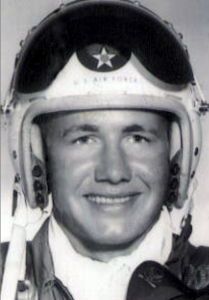
Cutrer, Fred Clay Jr.
Air Force Captain

Fred Clay Jr. Cutrer, age 29, from Pike County Osyka, Mississippi .

Service era: Vietnam

Date of death: Thursday, August 6, 1964
Death details: On July 3, 2001, the Central Identification Laboratory-Hawaii (CILHI, now DPAA) identified the remains of Captain Fred Clay Cutrer Jr., missing from the Vietnam War. Captain Cutrer entered the U.S. Air Force from Mississippi and served in the 405th Fighter Wing. On August 6, 1964, he was the pilot of a B-57B Canberra (tail number 53-3870, call sign “Cuba Delta 4”) on a deployment mission out of Clark Air Base in the Philippines to Bien Hoa Air Base in South Vietnam. During the approach to Bien Hoa, the Canberra struck trees at wing-level and then crashed in the Ma Da Forest, roughly twenty-six miles north of the base. Capt Cutrer was killed in the crash, and search teams were unable to reach the crash site due to enemy presence in the area. In 1992, a joint U.S./Vietnamese team located the crash site and subsequent investigations recovered human remains from among the wreckage. Capt Cutrer was eventually identified from the remains recovered. Captain Cutrer is memorialized on the Courts of the Missing at the National Memorial Cemetery of the Pacific. His name is also inscribed along with all his fallen comrades on the Vietnam Veterans Memorial Wall in Washington, DC.

Source: National Archives, Defense POW/MIA Accounting Agency

Coon, Ellis
Army Sergeant

Ellis Coon from Pike County Mississippi.

Service era: Korea

Date of death: Wednesday, February 14, 1951
Death details: By mid-November 1950, U.S. and Allied forces had advanced to within approximately sixty miles of the Yalu River, the border between North Korea and China. On November 25, approximately 300,000 Chinese Communist Forces (CCF) “volunteers” suddenly and fiercely counterattacked after crossing the Yalu. The 2nd Infantry Division, located the farthest north of units at the Chongchon River, could not halt the CCF advance and was ordered to withdraw to defensive positions at Sunchon in the South Pyongan province of North Korea. As the division pulled back from Kunu-ri toward Sunchon, it conducted an intense rearguard action while fighting to break through well-defended roadblocks set up by CCF infiltrators. The withdrawal was not complete until December 1, and the 2nd Infantry Division suffered extremely heavy casualties in the process. Sergeant First Class Ellis Coon, who joined the U.S. Army from Michigan, was a member of Battery C, 503rd Field Artillery Battalion, 2nd Infantry Division. He was captured during the fighting withdrawal from the Kunu-ri area on December 1, 1950. He was marched to Camp 5, a prison camp on the bank of the Yalu River in Pyoktong, North Korea, where he died of malnutrition on February 14, 1951. His remains were not recovered, and he was not identified among the remains returned to U.S. custody after the war. Today, Sergeant First Class Coon is memorialized on the Courts of the Missing at the National Memorial Cemetery of the Pacific.

Source: National Archives, Defense POW/MIA Accounting Agency, McComb Enterprise Journal (1998)

McNair, Joseph E.
Army 1st lieutenant

Joseph E. McNair, age 34, from Pike County Summit, Mississippi .

Spouse: Virginia (Robinson)

Service era: World War II

Date of death: Wednesday, January 10, 1945
Death details: On December 13, 1944, Japanese forces in the Philippines began the transfer of 1,621 Allied prisoners of war (POWs) to Japan. The POWs were to make the journey aboard transport ships whose harsh conditions and extreme overcrowding led survivors to refer to them as “Hell Ships.” The ships also lacked markings that would distinguish them from any other military target, causing some of them to be attacked by Allied forces who could not identify them as POW transports. On December 14, 1944, Allied aircraft attacked the first ship, the Oryoku Maru, in Subic Bay in the Philippines, killing many Allied POWs who became lost in the water, sank with the ship, or were washed ashore. Survivors of the bombing were put aboard two other ships, the Enoura Maru and the Brazil Maru, to continue on to Japan. During its journey on January 9, 1945, while anchored in Takao Harbor, Formosa (present-day Taiwan), the Enoura Maru was attacked by Allied aircraft from the USS Hornet (CV-8), killing Allied POWs who were lost in the water, on board the ship, or on the nearby shore. Survivors of the Enoura Maru bombing were loaded onto the Brazil Maru, and reached Japan on January 30, 1945. As a result of these incidents, Allied POWs were lost in the Philippines, at sea between the Philippines and Taiwan, while anchored in Taiwan, at sea between Taiwan and Japan, and in Japan. The attacks on these POW transports ultimately resulted in a series of death notifications from the Japanese government through the International Red Cross (IRC), and some casualties were given up to five different dates of death at various locations during the transfer. Witness accounts from surviving POWs offer detailed information for a handful of casualties, but the specific dates of loss and/or last-known locations for many of these POWs are based on the most recent reported date of death. First Lieutenant Joseph E. McNair entered the U.S. Army from the Philippines and served in the Quartermaster Corps during the defense of the Philippines. He was taken as a POW following the Japanese invasion and was interned in the islands until December 1944, when he was transferred to the Oryoku Maru for transport to Japan. He survived the attack on the Oryoku Maru but was killed by the Japanese in Takao harbor on January 10, 1945. 1LT McNair’s death was witnessed by two fellow officers who submitted affidavits after the war. However, these records often include additional information furnished by enemy governments, with some casualties given multiple dates of death. Future research may determine these reports were inaccurate. 1LT McNair’s remains could not be identified following the war, and he is still unaccounted-for. Today, First Lieutenant McNair is memorialized on the Walls of the Missing at the Manila American Cemetery in the Philippines. Based on all information available, DPAA assessed the individual’s case to be in the analytical category of Non-recoverable.

Source: National Archives, Defense POW/MIA Accounting Agency, Enterprise Journal (1945)
Elrod, Henry F.
Army Sergeant

Henry F. Elrod from Mississippi, Pike county.

Service era: World War II

Date of death: Saturday, December 12, 1942
Death details: Following the Allied surrender on the Bataan Peninsula on April 9, 1942, the Japanese began the forcible transfer of American and Filipino prisoners of war to various prison camps in central Luzon, at the northern end of the Philippines. The largest of these camps was the notorious Cabanatuan Prison Camp. At its peak, Cabanatuan held approximately 8,000 American and Filipino prisoners of war that were captured during and after the Fall of Bataan. Camp overcrowding worsened with the arrival of Allied prisoners who had surrendered from Corregidor on May 6, 1942. Conditions at the camp were poor and food and water supplied extremely limited, leading to widespread malnutrition and outbreaks of malaria and dysentery. By the time the camp was liberated in early 1945, approximately 2,800 Americans had died at Cabanatuan. Prisoners were forced to bury the dead in makeshift communal graves often completed without records or markers. As a result, identifying and recovering remains interred at Cabanatuan was difficult in the years after the war. Sergeant Henry F. Elrod joined the U.S. Army Air Forces from Mississippi and served with the 454th Ordnance Company in the Philippines during World War II. He was captured in Bataan following the American surrender and died of dysentery on December 12, 1942, at the Cabanatuan Prison Camp in Nueva Ecija Province. He was buried in a communal grave in the camp cemetery along with other deceased American POWs; however, his remains could not be associated with any remains recovered from Cabanatuan after the war. Today, Sergeant Elrod is memorialized on the Walls of the Missing at the Manila American Cemetery in the Philippines.

Source: National Archives, Defense POW/MIA Accounting Agency

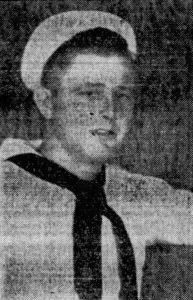
Fortenberry, Alvie Charles
Navy Coxswain

Alvie Charles Fortenberry, age 20, from Pike County Magnolia, Mississippi .

Service era: World War II

Date of death: Sunday, December 7, 1941
Death details: Killed aboard the USS Arizona

Source: National Archives, Defense POW/MIA Accounting Agency, Memphis Commercial Appeal (1942), Jackson Clarion Ledger (1941)

Back To Top