Skip to content

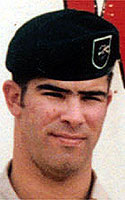
Allison, Glenn Richard
Army Sergeant

Glenn Richard Allison, age 24, from Pittsfield, Massachusetts, Berkshire county.

Service era: Iraq
Military history: Company C, 2D Battalion, 14th Infantry Regiment, Fort Drum, New York

Date of death: Thursday, December 18, 2003
Death details: Baghdad, Iraq

Source: Department of Defense

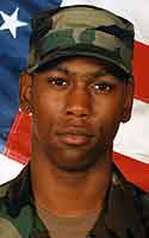
Petithory, Daniel Henery
Army Sergeant 1st class

Daniel Henery Petithory, age 32, from Pittsfield, Massachusetts, Berkshire county.

Service era: Iraq
Military history: Company A, 3D Battalion, 5Th Sfg (Airborne), Fort Campbell, Ky 42223

Date of death: Wednesday, December 5, 2001
Death details: Hostile; Khaneh Gerdab, Afghanistan

Source: Department of Defense, Military Times

Shufelt, George Jerry
Army Private 1st class

George Jerry Shufelt, age 18, from Berkshire County Pittsfield, Massachusetts .

Service era: Vietnam

Date of death: Monday, February 7, 1966
Death details: Hostile, South Vietnam

Source: National Archives, Berkshire Eagle (1966)

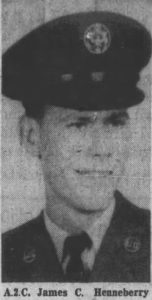
Henneberry, James Calvin
Air Force Airman 2

James Calvin Henneberry, age 23, from Berkshire County Pittsfield, Massachusetts .

Parents: Preceded in death by John Henneberry

Service era: Vietnam
Schools: Pittsfield High (1969), University of Massachusetts

Date of death: Wednesday, June 30, 1965
Death details: Hostile, South Vietnam

Source: National Archives, Berkshire Eagle (1965)

Fahey, James Roque
Navy Radioman 3

James Roque Fahey, age 20, from Berkshire County Pittsfield, Massachusetts .

Parents: James P. Fahey

Service era: World War II
Schools: Saint Joseph’s High graduate, Cranwell School

Date of death: Monday, August 6, 1945
Death details: Killed aboard USS Bullhead SS-332 when it was sunk by air attack near the Lombok Strait.

Source: On Eternal Patrol, Bershire County Eagle (1946)

Bansley, Donald Edmond
Navy Pharmacist’s mate 1st class

Donald Edmond Bansley, age 30, from Berkshire County Pittsfield, Massachusetts .

Parents: William H. and Amanda Bansley

Service era: World War II
Schools: Pittsfield High (1932)

Date of death: Friday, January 19, 1945
Death details: On December 13, 1944, Japanese forces in the Philippines began the transfer of 1,621 Allied prisoners of war (POWs) to Japan. The POWs were to make the journey aboard transport ships whose harsh conditions and extreme overcrowding led survivors to refer to them as “Hell Ships.” The ships also lacked markings that would distinguish them from any other military target, causing some of them to be attacked by Allied forces who could not identify them as POW transports. On December 14, 1944, Allied aircraft attacked the first ship, the Oryoku Maru, in Subic Bay in the Philippines, killing many Allied POWs who became lost in the water, sank with the ship, or were washed ashore. Survivors of the bombing were put aboard two other ships, the Enoura Maru and the Brazil Maru, to continue on to Japan. During its journey on January 9, 1945, while anchored in Takao Harbor, Formosa (present-day Taiwan), the Enoura Maru was attacked by Allied aircraft from the USS Hornet (CV-8), killing Allied POWs who were lost in the water, on board the ship, or on the nearby shore. Survivors of the Enoura Maru bombing were loaded onto the Brazil Maru, and reached Japan on January 30, 1945. As a result of these incidents, Allied POWs were lost in the Philippines, at sea between the Philippines and Taiwan, while anchored in Taiwan, at sea between Taiwan and Japan, and in Japan. The attacks on these POW transports ultimately resulted in a series of death notifications from the Japanese government through the International Red Cross (IRC), and some casualties were given up to five different dates of death at various locations during the transfer. Witness accounts from surviving POWs offer detailed information for a handful of casualties, but the specific dates of loss and/or last-known locations for many of these POWs are based on the most recent reported date of death. Pharmacist’s Mate First Class Donald Edmond Bansley, who entered the U.S. Navy from Massachusetts, was serving with the 4th Marine Regiment in the Philippines during World War II. He was taken as a POW following the Japanese invasion and was interned in the islands until December 1944, when he was transferred to the Oryoku Maru for transport to Japan. Records indicate PHM1 Bansley survived the attack on the Oryoku Maru and was eventually transferred to the Brazil Maru. He died on January 19, 1945, due to wounds he had suffered in the earlier attack. He may have been buried at Takao Harbor; however, these reports often involve information solely furnished by enemy governments, with some casualties given multiple dates of death. Future research may determine these reports were inaccurate. PHM1 Bansley’s remains could not be identified following the war and he is still unaccounted-for. Today, Pharmacist’s Mate First Class Bansley is memorialized on the Walls of the Missing at the Manila American Cemetery in the Philippines. Based on all information available, DPAA assessed the individual’s case to be in the analytical category of Non-recoverable.
Cemetery: Tablets of the Missing at Manila American

Source: National Archives, American Battle Monuments Commission, Defense POW/MIA Accounting Agency, Berkshire Eagle (1945)
Secunda, Gustave
Army Staff sergeant

Gustave Secunda, age 30, from Berkshire County Pittsfield, Massachusetts .

Parents: Morris

Service era: World War II

Date of death: Saturday, May 20, 1944
Death details: On July 30, 2025, the Defense POW/MIA Accounting Agency identified the remains of U.S. Army Air Forces Staff Sgt. Gustave Secunda, missing from World War II. Secunda entered the U.S. Army Air Forces from Massachusetts and served with the 710th Bombardment Squadron, 447th Bombardment Group. On May 20, 1944, he was the radio operator aboard a B-17G Flying Fortress aircraft, serial number 42-97176, with a crew of ten, which departed Rattlesden, Suffolk, England, in a formation of 200 bombers for a mission against enemy targets around Liege, Belgium. Approximately halfway across the English Channel, the crew noticed .50 caliber machine gun bullet holes along the right wing of the B-17, and that one of the engines was on fire. The aircraft dropped its bomb load in the Channel, and the crew bailed out of the aircraft before it crashed into the water. The air rescue squadron called to the scene found two crew members alive, and the body of a third in the water. Seven crew members, including Secunda, were missing and presumed drowned. In 2017, Wessex Archaeology, a DPAA partner team, recovered human remains during an underwater survey operation at a wind farm off the coast of England. In Jan. 2020, DPAA’s European Detachment, coordinating with officials from the U.S. Army Regional Mortuary Europe/Africa, arranged for the remains to be transferred to local authorities in Great Britain, and thereafter the evidence sent to a DPAA laboratory for analysis. There, based on the laboratory analysis and total circumstantial evidence the remains were found to be those of Secunda.
Cemetery: Memorialized at Arlington National

Source: National Archives, American Battle Monuments Commission, Defense POW/MIA Accounting Agency, Berkshire County Eagle (1945, 2002)

Back To Top