Skip to content

Holmes, James Jay
Army Specialist

James Jay Holmes, age 28, from East Grand Forks, Minnesota, Polk county.

Service era: Iraq
Military history: Co B, 141St Combat Engineer Battalion, Jamestown, North Dakota

Date of death: Saturday, May 8, 2004
Death details: Hostile; Landstuhl, Germany

Source: Department of Defense, Military Times

Algaard, Harold Lowell
Army Warrant officer

Harold Lowell Algaard, age 22, from Fosston, Minnesota, Polk county.

Spouse: Judith A. Algaard

Service era: Vietnam

Date of death: Thursday, March 4, 1971
Death details: On March 4, 1971, a JU-21 LEFT JAB (tail number 18065, call sign “Vanguard 216”) with a crew of five departed Phu Bai Air Base, South Vietnam, on a signal intelligence collection mission over Quang Tri Province. The aircraft’s last radio communication was from a location near the Demilitarized Zone where an enemy artillery regiment was believed to be located and where witnesses saw an aerial explosion. Search and rescue efforts were carried out for two days, but were unsuccessful. Warrant Officer 1 Harold Lowell Algaard entered the U.S. Army from Minnesota and served with the 138th Aviation Company, 224th Aviation Battalion, 509th Radio Research Group. He was the copilot of “Vanguard 216” when it disappeared, and his remains were not recovered. Today, Warrant Officer 1 Algaard is memorialized on the Courts of the Missing at the National Memorial Cemetery of the Pacific.
Cemetery: Memorialized at Kingo in Fosston

Source: National Archives, Defense POW/MIA Accounting Agency, findagrave.com, Associated Press (1971)

Frisk, Robert Duaine
Army Private 1st class

Robert Duaine Frisk, age 22, from Polk County McIntosh, Minnesota .

Parents: John A. Frisk

Service era: Korea

Date of death: Tuesday, June 19, 1951
Death details: On February 5, 1951, Allied forces in Korea launched an offensive against North Korean and Chinese Communist Forces (CCF) north of Wonju. Republic of Korea units and the 38th Infantry Regiment and supporting artillery units, including the 15th and 503rd Field Artillery Battalions, and the 82nd Antiaircraft Artillery and Automatic Weapons Battalion, initially met light resistance on their drive to the north. On February 11, the CCF launched an aggressive counteroffensive that caused the Allies to withdraw back southward. However, the CCF had established a series of roadblocks on the road to the south, forcing the Allies to fight their way back to friendly lines. Corporal Robert Duaine Frisk entered the U.S. Army from Minnesota and was a member of C Company, 1st Battalion, 38th Infantry Regiment, 2nd Infantry Division. On February 12, 1951, he was taken as a prisoner of war (POW) near Hoengsong, South Korea, during the 38th Infantry Regiment’s fighting withdrawal. After his capture, he was marched with other prisoners to holding camps along the Yalu River in North Korea. A repatriated POW reported that CPL Frisk died of malnutrition and pulmonary tuberculosis on June 19, 1951 at Changsong POW Camp, and was likely buried nearby. U.S. investigators have not been able to access this location to search for his grave, and he has not been associated with any remains returned to U.S. custody after the war. Today, Corporal Frisk is memorialized on the Courts of the Missing at the National Memorial Cemetery of the Pacific. His name is also inscribed on the Korean War Veterans Memorial Wall in Washington, DC, which was updated in 2022 to include the names of the fallen.

Source: National Archives, Defense POW/MIA Accounting Agency, Austin Daily Herald (1953)
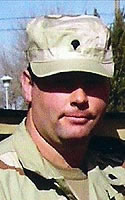
Noyes, Johnny
Army Sergeant

Johnny Noyes from Minnesota, Polk county.

Service era: World War II

Date of death: Monday, July 31, 1944
Death details: Killed in action
Cemetery: Zachary Taylor National

Source: National Archives, grave marker

Coulter, Adrian J.
Army Private

Adrian J. Coulter from Minnesota, Polk county.

Service era: World War II

Date of death: Saturday, July 4, 1942
Death details: Following the Allied surrender on the Bataan Peninsula on April 9, 1942, the Japanese began the forcible transfer of American and Filipino prisoners of war to various prison camps in central Luzon, at the northern end of the Philippines. The largest of these camps was the notorious Cabanatuan Prison Camp. At its peak, Cabanatuan held approximately 8,000 American and Filipino prisoners of war that were captured during and after the Fall of Bataan. Camp overcrowding worsened with the arrival of Allied prisoners who had surrendered from Corregidor on May 6, 1942. Conditions at the camp were poor and food and water supplied extremely limited, leading to widespread malnutrition and outbreaks of malaria and dysentery. By the time the camp was liberated in early 1945, approximately 2,800 Americans had died at Cabanatuan. Prisoners were forced to bury the dead in makeshift communal graves often completed without records or markers. As a result, identifying and recovering remains interred at Cabanatuan was difficult in the years after the war. Technician Fourth Grade Adrian J. Coulter entered the U.S. Army from Minnesota and served with the 194th Tank Battalion in the Philippines during World War II. He was captured in Bataan following the American surrender and died of malaria on July 4, 1942, at the Cabanatuan Prison Camp in Nueva Ecija Province. He was buried in a communal grave in the camp cemetery along with other deceased American POWs; however, his remains could not be associated with any remains recovered from Cabanatuan after the war. Today, Technician Fourth Grade Coulter is memorialized on the Walls of the Missing at the Manila American Cemetery in the Philippines.

Source: National Archives, Defense POW/MIA Accounting Agency

Sampson, Sherley Rolland
Navy Reserves Radioman 3rd class

Sherley Rolland Sampson, age 24, from Polk County Erskine, Minnesota .

Spouse: Fern Vivian Sampson

Service era: World War II

Date of death: Sunday, December 7, 1941
Death details: Killed aboard the USS Arizona. Remains not recovered.

Source: Defense POW/MIA Accounting Agency, Minneapolist Star Tribune (1944)

Back To Top