Skip to content

Grant, Jonathan Walter
Marines Lance corporal

Jonathan Walter Grant, age 23, from Santa Fe, New Mexico, Santa Fe county.

Service era: Iraq
Military history: D Co, 4Th Recon Bn, 4Th Mar Div, Albuquerque, Nm

Date of death: Wednesday, May 11, 2005
Death details: Hostile; Karabilah, Iraq

Source: Department of Defense, Military Times

Jacques, Joseph Arthur
Army Private 1st class

Joseph Arthur Jacques, age 21, from Santa Fe, New Mexico, Santa Fe county.

Service era: Vietnam

Date of death: Sunday, November 29, 1970
Death details: Ten minutes after his departure from Phan Rang Air Base, the pilot started the descent to Cam Ranh Bay via a steep valley (3 km wide and 15 km long) at an altitude of 2,700 feet via heading 30°. Shortly later, ATC instructed the crew to change heading to 100° when contact was lost. The airplane struck trees with its both wings, stalled and crashed in flames in a dense wooded area located few km from Cam Ranh Bay Airport. Rescuers arrived on the scene five days later and found two men still alive while 42 other occupants were killed. At the time of the accident, the visibility was nil due to low clouds.

Source: National Archives, UPI (1970), Pensacola News (1970)

McFarlane, Richard Dean
Army Specialist 4

Richard Dean McFarlane, age 25, from Santa Fe, New Mexico, Santa Fe county.

Spouse: Elizabeth M. McFarlane

Service era: Vietnam

Date of death: Sunday, September 20, 1970
Death details: Non-hostile death in Vietnam

Source: National Archives, Albuquerque Tribune (1970)

Montoya, Joe Herman
Marines 1st lieutenant

Joe Herman Montoya, age 27, from Santa Fe, New Mexico, Santa Fe county.

Service era: Vietnam

Date of death: Sunday, September 20, 1970
Death details: Killed in action in Vietnam

Source: National Archives, Santa Fe New Mexican (1970)

Smith, Jol Nebane
Army 1st lieutenant

Jol Nebane Smith, age 25, from Santa Fe, New Mexico, Santa Fe county.

Spouse: Lynn A. (Galvin) married in February 1968

Service era: Vietnam
Schools: Santa Fe High (1962), College of Santa Fe (1967)

Date of death: Saturday, August 8, 1970
Death details: Killed in action in Vietnam while on a flying combat mission

Source: National Archives, Santa Fe New Mexican (1970)

Garcia, David Jose
Army Sergeant

David Jose Garcia, age 20, from Santa Fe, New Mexico, Santa Fe county.

Parents: Silas T. Garcia

Service era: Vietnam
Schools: Highland University

Date of death: Tuesday, May 26, 1970
Death details: Killed in action in a night raid

Source: National Archives

Anaya, George Michael
Army Corporal

George Michael Anaya, age 18, from Galisico, New Mexico, Santa Fe county.

Service era: Vietnam

Date of death: Monday, March 30, 1970
Death details: Non-hostile death in Vietnam

Source: National Archives, Associated Press (1970)

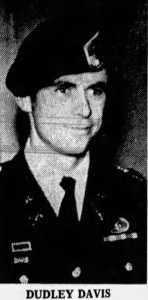
Davis, Dudley
Army 1st lieutenant

Dudley Davis, age 23, from Santa Fe, New Mexico, Santa Fe county.

Parents: Bert Davis

Service era: Vietnam
Schools: Santa Few High (1964), Colorado State University, Adams State college

Date of death: Thursday, March 12, 1970
Death details: Fatally injured at an aircraft landing zone in Vietnam.

Source: National Archives, Santa Fe New Mexican (1970)

Sadler, James E.
Army Captain

James E. Sadler, age 30, from Santa Fe County New Mexico.

Parents: T. E. Sadler
Spouse: Carmen

Service era: World War II

Date of death: Tuesday, January 16, 1945
Death details: On December 13, 1944, Japanese forces in the Philippines began the transfer of 1,621 Allied prisoners of war (POWs) to Japan. The POWs were to make the journey aboard transport ships whose harsh conditions and extreme overcrowding led survivors to refer to them as “Hell Ships.” The ships also lacked markings that would distinguish them from any other military target, causing some of them to be attacked by Allied forces who could not identify them as POW transports. On December 14, 1944, Allied aircraft attacked the first ship, the Oryoku Maru, in Subic Bay in the Philippines, killing many Allied POWs who became lost in the water, sank with the ship, or were washed ashore. Survivors of the bombing were put aboard two other ships, the Enoura Maru and the Brazil Maru, to continue on to Japan. During its journey on January 9, 1945, while anchored in Takao Harbor, Formosa (present-day Taiwan), the Enoura Maru was attacked by Allied aircraft from the USS Hornet (CV-8), killing Allied POWs who were lost in the water, on board the ship, or on the nearby shore. Survivors of the Enoura Maru bombing were loaded onto the Brazil Maru, and reached Japan on January 30, 1945. As a result of these incidents, Allied POWs were lost in the Philippines, at sea between the Philippines and Taiwan, while anchored in Taiwan, at sea between Taiwan and Japan, and in Japan. The attacks on these POW transports ultimately resulted in a series of death notifications from the Japanese government through the International Red Cross (IRC), and some casualties were given up to five different dates of death at various locations during the transfer. Witness accounts from surviving POWs offer detailed information for a handful of casualties, but the specific dates of loss and/or last-known locations for many of these POWs are based on the most recent reported date of death. Captain James E. Sadler joined the U.S. Army from New Mexico and served with Battery A, 200th Coast Artillery Regiment in the Philippines during World War II. He was taken as a POW following the Japanese invasion and was interned in the islands until December 1944, when he was transferred to the Oryoku Maru for transport to Japan. Records indicate that CPT Sadler survived the sinking of the Oryoku Maru and was eventually transferred to the Brazil Maru, but died on January 16, 1945, from wounds sustained during the previous bombing. However, these reports often involve information furnished by enemy governments, with some casualties given multiple dates of death. Future research may determine these reports were inaccurate. CPT Sadler’s remains could not be identified following the war and he is still unaccounted-for. Today, Captain Sadler is memorialized on the Walls of the Missing at the Manila American Cemetery in the Philippines. Based on all information available, DPAA assessed the individual’s case to be in the analytical category of Non-recoverable.

Source: National Archives, Defense POW/MIA Accounting Agency, Clovis News Journal (1945)
Powell, Francis B.
Army Private

Francis B. Powell, age 25, from Santa Fe County Santa Fe, New Mexico .

Parents: Iva Powell

Service era: World War II

Date of death: Sunday, January 14, 1945
Death details: On December 13, 1944, Japanese forces in the Philippines began the transfer of 1,621 Allied prisoners of war (POWs) to Japan. The POWs were to make the journey aboard transport ships whose harsh conditions and extreme overcrowding led survivors to refer to them as “Hell Ships.” The ships also lacked markings that would distinguish them from any other military target, causing some of them to be attacked by Allied forces who could not identify them as POW transports. On December 14, 1944, Allied aircraft attacked the first ship, the Oryoku Maru, in Subic Bay in the Philippines, killing many Allied POWs who became lost in the water, sank with the ship, or were washed ashore. Survivors of the bombing were put aboard two other ships, the Enoura Maru and the Brazil Maru, to continue on to Japan. During its journey on January 9, 1945, while anchored in Takao Harbor, Formosa (present-day Taiwan), the Enoura Maru was attacked by Allied aircraft from the USS Hornet (CV-8), killing Allied POWs who were lost in the water, on board the ship, or on the nearby shore. Survivors of the Enoura Maru bombing were loaded onto the Brazil Maru, and reached Japan on January 30, 1945. As a result of these incidents, Allied POWs were lost in the Philippines, at sea between the Philippines and Taiwan, while anchored in Taiwan, at sea between Taiwan and Japan, and in Japan. The attacks on these POW transports ultimately resulted in a series of death notifications from the Japanese government through the International Red Cross (IRC), and some casualties were given up to five different dates of death at various locations during the transfer. Witness accounts from surviving POWs offer detailed information for a handful of casualties, but the specific dates of loss and/or last-known locations for many of these POWs are based on the most recent reported date of death. Private Francis B. Powell entered the U.S. Army from New Mexico and served with the 31st Infantry Regiment in the Philippines during World War II. He was taken as a POW following the Japanese invasion and was interned in the islands until December 1944, when he was transferred to the Oryoku Maru for transport to Japan. He survived the attack on the Oryoku Maru and was eventually transferred to the Brazil Maru. Records indicate that Private Powell died on January 14, 1945, as a result of wounds he had sustained in the earlier attacks, and he was buried at sea. However, these records often involve information solely furnished by enemy governments, with some casualties given multiple dates of death. Future research may determine these reports were inaccurate. Private Powell’s remains could not be identified following the war and he is still unaccounted-for. Today, Private Powell is memorialized on the Walls of the Missing at the Manila American Cemetery in the Philippines. Based on all information available, DPAA assessed the individual’s case to be in the analytical category of Non-recoverable.

Source: National Archives, Defense POW/MIA Accounting Agency, Santa Fe New Mexican (1945)

Back To Top