Skip to content

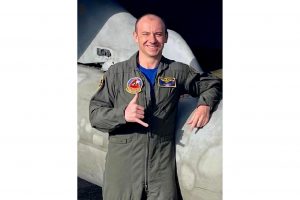
Bullock, Richard
Navy Lieutenant

Richard Bullock from Butte, Montana, Silver Bow county.

Service era: Afghanistan
Military history: Strike Fighter Squadron 113 based at Naval Air Station Lemoore, California

Date of death: Friday, June 3, 2022
Death details: Died when his F/A-18 Super Hornet crashed during a routine training flight over the desert near Trona, California

Source: Washington Times (2022), Associated Press, KBZK

Bercier, Kenneth Sandford
Army Specialist 4

Kenneth Sandford Bercier, age 21, from Montana, Silver Bow county.

Parents: Ruth Andreson

Service era: Vietnam

Date of death: Monday, December 28, 1970
Death details: Killed in action in Vietnam

Source: National Archives, Associated Press (1970)

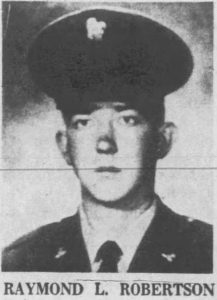
Robertson, Raymond L. Jr.
Army Private 1st class

Raymond L. Jr. Robertson, age 20, from Butte, Montana, Silver Bow county.

Service era: Vietnam
Schools: Butte High (1968)
Military history: 219th Montanan

Date of death: Friday, May 29, 1970
Death details: Killed in Southeast Asia

Source: National Archives, Montana Standard (1970)

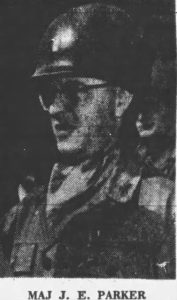
Parker, Joseph E. Jr.
Army Major

Joseph E. Jr. Parker, age 40, from Silver Bow County Butte, Montana .

Parents: Joseph E. Parker and preceded in death by Alice Harrington Parker

Service era: Vietnam
Schools: Boys Central High, Santa Clara University graduate
Military history: Korean War veteran

Date of death: Wednesday, June 30, 1965

Source: National Archives, Montana Standard (1965)

Fouracres, Henry John
Army Sergeant

Henry John Fouracres, age 27, from Silver Bow County Glastonbury, Montana .

Parents: Henry S. Fouracres

Service era: Korea
Schools: Saint John’s School in Glastonbury

Date of death: Thursday, November 30, 1950
Death details: By mid-November 1950, U.S. and Allied forces had advanced to within approximately sixty miles of the Yalu River, the border between North Korea and China. On November 25, approximately 300,000 Chinese Communist Forces (CCF) “volunteers” suddenly and fiercely counterattacked after crossing the Yalu. The 2nd Infantry Division, located the farthest north of units at the Chongchon River, could not halt the CCF advance and was ordered to withdraw to defensive positions at Sunchon in the South Pyongan province of North Korea. As the division pulled back from Kunu-ri toward Sunchon, it conducted an intense rearguard action while fighting to break through well-defended roadblocks set up by CCF infiltrators. The withdrawal was not complete until December 1, and the 2nd Infantry Division suffered extremely heavy casualties in the process. Sergeant First Class Henry John Fouracres, who joined the U.S. Army from Montana, served with the Headquarters, Headquarters and Service Company, 2nd Engineer Combat Battalion, 2nd Infantry Division. He went missing in action during his unit’s withdrawal from Kunu-ri to Sunchon. No one saw him fall, and his body was not recovered after the battle. He was not reported to be a prisoner of war, and his remains were not among those returned by North Korea. Sergeant First Class Fouracres is memorialized on the Courts of the Missing at the National Memorial Cemetery of the Pacific.

Source: National Archives, Defense POW/MIA Accounting Agency, Central Somerset Gazette (1954)
Cassatt, Patrick Thomas
Army Private

Patrick Thomas Cassatt from Montana, Silver Bow county. Their last known residence was in Brookville, Pennsylvania.

Parents: Darwin Gilbert Cassatt

Service era: Korea

Date of death: Thursday, November 2, 1950
Death details: During the last week of October 1950, Republic of Korea (ROK) Army forces under the control of the U.S. Eighth Army were advancing deep in North Korean territory, approaching the Yalu River on the Chinese-Korean border. Chinese Communist Forces (CCF) struck back in a surprise attack, engaging the ROK 1st and 6th Divisions near Unsan, some sixty miles north of Pyongyang. The U.S. 1st Cavalry Division, with the 8th Cavalry Regiment in the lead, was rushed forward to reinforce the ROK units in the Unsan area. On November 1, the regiment’s 1st Battalion took up positions north of Unsan, while the 2nd Battalion moved to guard the Nammyon River valley west of town, and the 3rd Battalion was placed in reserve at the valley’s southern end. Private First Class Patrick Thomas Cassatt, who joined the U.S. Army from Montana, was a member of Company E of the 2nd Battalion, 8th Cavalry Regiment, 1st Cavalry Division. On November 1, 1950, he was with members of Company E defending its sector near Unsan; his unit came under heavy enemy fire and he went missing during the chaotic fighting that followed. He was not listed as a prisoner of war, and his remains have not been recovered or identified following the ceasefire. Today, Private First Class Cassatt is memorialized on the Courts of the Missing at the National Memorial Cemetery of the Pacific.

Source: National Archives, Defense POW/MIA Accounting Agency, Montana Standard (1950), Indiana Gazette (1954)

Perkins, Harold Edward
Marines Reserves Private 1st class

Harold Edward Perkins, age 26, from Butte, Montana, Silver Bow county.

Service era: World War II

Date of death: Sunday, November 21, 1943
Death details: From November 20 through 23, 1943, the U.S. Marine Corps and U.S. Navy conducted a large-scale amphibious assault on the Japanese-held atoll of Tarawa as part of Operation Galvanic, the Allied capture of the Gilbert Islands. Located 2,500 miles southwest of Hawaii, Tarawa was a crucial stepping stone in the planned U.S. offensive across the central Pacific toward Japan. The Japanese garrison on Tarawa’s main island of Betio was well-entrenched with hundreds of bunkers and gun positions behind formidable beach obstacles. The first wave of Marines approaching the shore encountered lower-than-expected tides, forcing them to leave their landing craft on the reef and wade the hundreds of yards to the beach under intense enemy fire. The heaviest number of U.S. casualties were suffered during this phase of the landing. Eventually, rising tides allowed U.S. warships to maneuver closer to shore and support the troops with effective naval gunfire. More Marines landed on the second day, launching attacks inland from the beaches and seizing the Japanese airfield on the island. However, the enemy launched vicious counterattacks and two more days of intense fighting were needed to secure Betio. The last enemy strongpoints were taken on the morning of November 23. The fighting on Betio cost the Marines nearly 3,000 casualties but enabled U.S. forces to press further across the Pacific and yielded valuable tactical lessons that reduced U.S. losses in future amphibious landings. Private First Class Harold Edward Perkins entered the U.S. Marine Corps from Montana and served in Company F, 2nd Battalion, 2nd Marine Regiment, 2nd Marine Division. He was killed in action on November 21, 1943, during the Battle of Tarawa. Private First Class Perkins was buried on Betio in Main Marine Cemetery, Cemetery #33. After the war, his remains were not identified among those disinterred from the island. Private First Class Perkins is memorialized on the Courts of the Missing at the National Memorial Cemetery of the Pacific.

Source: National Archives, Defense POW/MIA Accounting Agency

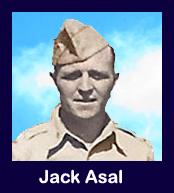
Asal, John Marian Jr.
Army 2nd lieutenant

John Marian Jr. Asal, age 27, from Butte, Montana, Silver Bow county.

Parents: Mrs. W.S. Hickey and J.M. Asal

Service era: World War II
Schools: Butte High, Butte Business College, Montana State University (1941)
Military history: 35th Infantry Regiment

Date of death: Wednesday, January 13, 1943
Death details: Died missing ina action. Wounded in the battle of Guadalcanal and was being evacuated to a hospital when the transport failed to reach its destination.
Cemetery: Tablets of the Missing at Manila American Cemetery

Source: National Archives, American Battle Monuments Commission, 35th Infantry Regiment Association

Bordner, Henry D.
Army Private

Henry D. Bordner, age 24, from Silver Bow County Montana.

Service era: World War II

Date of death: Tuesday, October 20, 1942
Death details: On April 2, 2025, the Defense POW/MIA Accounting Agency (DPAA) identified the remains of Pvt. Henry D. Bordner, missing from World War II. Bordner entered the U.S. Army Air Forces from Montana and served with Headquarters Company of the 194th Tank Battalion in the Philippines during World War II. He was captured following the American surrender of the Bataan Peninsula on April 9, 1942, and was ultimately interned in the notorious Cabanatuan Prison Camp in Nueva Ecija Province, where he died on Oct. 20, 1942. At its peak, Cabanatuan held approximately 8,000 American and Filipino prisoners of war that were captured during and after the Fall of Bataan. Conditions at the camp were poor, with food and water extremely limited, leading to widespread malnutrition and outbreaks of malaria and dysentery. By the time the camp was liberated in early 1945, approximately 2,800 Americans had died at Cabanatuan. Bordner was buried in Common Grave 701 at the local Cabanatuan Camp Cemetery along with other deceased American POWs. Following the war, American Graves Registration Service (AGRS) personnel exhumed those buried at the Cabanatuan cemetery and relocated the remains to a temporary U.S. military mausoleum near Manila. In 1947, the AGRS examined the remains in an attempt to identify them. Five of the seven sets of remains from Common Grave 701 were identified, but the remaining two were declared unidentifiable and were buried at the Manila American Cemetery and Memorial as Unknowns. In 2020, the remains associated with Common Grave 701 were disinterred and sent to the DPAA laboratory for scientific study. The laboratory analysis and the totality of the circumstantial evidence available established an association between one set of unknown remains and Bordner.
Cemetery: Manila American Cemetery

Source: National Archives, American Battle Monuments Commission, Defense POW/MIA Accounting Agency

Buyan, Frank
Army Private

Frank Buyan, age 34, from Montana, Silver Bow county.

Service era: World War II

Date of death: Wednesday, July 1, 1942
Death details: Following the Allied surrender on the Bataan Peninsula on April 9, 1942, the Japanese began the forcible transfer of American and Filipino prisoners of war to various prison camps in central Luzon, at the northern end of the Philippines. The largest of these camps was the notorious Cabanatuan Prison Camp. At its peak, Cabanatuan held approximately 8,000 American and Filipino prisoners of war that were captured during and after the Fall of Bataan. Camp overcrowding worsened with the arrival of Allied prisoners who had surrendered from Corregidor on May 6, 1942. Conditions at the camp were poor, with food and water extremely limited, leading to widespread malnutrition and outbreaks of malaria and dysentery. By the time the camp was liberated in early 1945, approximately 2,800 Americans had died at Cabanatuan. Prisoners were forced to bury the dead in makeshift communal graves, often completed without records or markers. As a result, identifying and recovering remains interred at Cabanatuan was difficult in the years after the war. Private First Class Frank Buyan entered the U.S. Army from Montana and served in Company C of the 31st Infantry Regiment in the Philippines during World War II. He was captured in Bataan following the American surrender and died of diphtheria on July 1, 1942 at the Cabanatuan Prison Camp in Nueva Ecija Province. He was buried in a communal grave in the camp cemetery along with other deceased American POWs; however, his remains could not be associated with any remains recovered from Cabanatuan after the war. Today, Private First Class Buyan is memorialized on the Walls of the Missing at the Manila American Cemetery in the Philippines.
Cemetery: Manila American Cemetery

Source: National Archives, American Battle Monuments Commission, Defense POW/MIA Accounting Agency

Back To Top