Skip to content

Rushing, Stephen Abram
Army Sergeant

Stephen Abram Rushing, age 20, from Ames, Iowa, Story county.

Parents: Napoleon B. Rushing

Service era: Vietnam
Schools: Iowa State University
Military history: Fourth Infantry

Date of death: Thursday, July 30, 1970
Death details: Killed in a surprise attack in Vietnam

Source: National Archives, Associated Press (1970)

Strain, Edward W.
Air Force Staff Sergeant

Edward W. Strain, age 24, from Story City, Iowa, Story county.

Parents: Max Strain
Spouse: Married
Children: Tracy

Service era: Vietnam
Schools: Marshalltown High graduate

Date of death: Friday, April 10, 1970
Death details: Killed when an RF4 Reconnaissance jet crashed into the air base at Udorn, Thailand.

Source: National Archives, AFTN VFW Memorial Post 10249, Des Moines Register (1970)

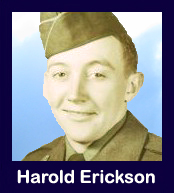
Erickson, Harold Louis
Army Private 1st class

Harold Louis Erickson, age 23, from Iowa, Story county.

Service era: Korea
Military history: 35th Infantry Regiment

Date of death: Friday, September 7, 1951
Death details: 

On September 7, 1951, members of the 3rd Battalion, 35th Infantry Regiment, 25th Infantry Division, were positioned on Hill 682 and Hill 717, located south of Pyonggang, North Korea, in the “No Man’s Land” between the front lines of U.S. forces and the opposing Communist Chinese and North Koreans. After coming under heavy fire from Chinese and North Korean artillery, the 3rd Battalion was forced to fall back to Hill 717 to their west. Enemy action then pushed the 3rd Battalion to Hill 432, where the supporting batteries of the 64th Field Artillery were stationed. They were attacked again that night, but repulsed the enemy. On the morning of September 8, the 3rd Battalion launched a patrol to Hill 717 to search for the dead and missing, but enemy presence there stymied search efforts. During the patrol’s return to Hill 432, they encountered a small enemy force, and a firefight ensued until the enemy was dispersed. That night, Hill 432 came under yet another attack. Although the defensive perimeter was penetrated in several places, the enemy was ultimately repelled, and the perimeter re-established. After this fighting, the 3rd Battalion was relieved by the 2nd Battalion.

Private First Class Harold Louis Erickson, who joined the U.S. Army from Iowa, was a member of Company M, 3rd Battalion, 35th Infantry Regiment, 25th Infantry Division. He was killed in action on September 7, 1951, near Hill 432 in the “No Man’s Land” area of North Korea. PFC Erickson’s remains were not recovered at the time of his loss, and he has not been associated with any remains returned to U.S. custody after the war. Today, Private First Class Erickson is memorialized on the Courts of the Missing at the National Memorial Cemetery of the Pacific.

Source: National Archives, 35th Infantry Regiment Association, Defense POW/MIA Accounting Agency
Forbes, Donald Wayne
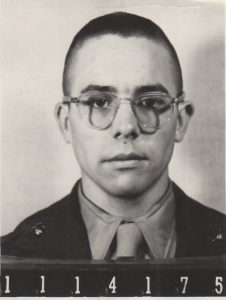
Marines Private 1st class

Donald Wayne Forbes from Nevada, Iowa, Story county.

Service era: Korea

Date of death: Wednesday, November 29, 1950
Death details: On the evening of November 27, 1950, a huge Chinese force launched an attack against the U.S. and United Nations (UN) troops stationed in the Chosin Reservoir area in north-east North Korea. The resulting seventeen-day conflict became known as the Battle of Chosin Reservoir. After a fierce defense, U.S. and UN forces attempted to withdraw south from the Chosin Reservoir to the port of Hungnam. A single seventy-eight-mile roadway connecting the reservoir to Hungnam offered the only retreat route, and the withdrawing men faced significant enemy resistance as they traveled down it, attempting to avoid encirclement. After suffering heavy casualties, the U.S. and UN troops eventually broke through Chinese lines and reached Hungnam. Private First Class Donald Wayne Forbes joined the U.S. Marine Corps from Iowa and was a member of Company B, 1st Battalion, 5th Marine Regiment, 1st Marine Division. He was killed in action against enemy forces on November 29, 1950, during the fighting at the Chosin Reservoir. The exact details surrounding PFC Forbes’s death are unknown, and his body was not recovered at the time of his loss. He was not identified among remains returned to U.S. custody after the conflict’s ceasefire, and he is still unaccounted-for. Today, Private First Class Forbes is memorialized on the Courts of the Missing at the National Memorial Cemetery of the Pacific.

Source: National Archives, Defense POW/MIA Accounting Agency

Delamore, Thomas H.
Army Captain

Thomas H. Delamore from Story County Iowa.

Service era: World War II

Date of death: Tuesday, January 9, 1945
Death details: On December 13, 1944, Japanese forces in the Philippines began the transfer of 1,621 Allied prisoners of war (POWs) to Japan. The POWs were to make the journey aboard transport ships whose harsh conditions and extreme overcrowding led survivors to refer to them as “Hell Ships.” The ships also lacked markings that would distinguish them from any other military target, causing some of them to be attacked by Allied forces who could not identify them as POW transports. On December 14, 1944, Allied aircraft attacked the first ship, the Oryoku Maru, in Subic Bay in the Philippines, killing many Allied POWs who became lost in the water, sank with the ship, or were washed ashore. Survivors of the bombing were put aboard two other ships, the Enoura Maru and the Brazil Maru, to continue on to Japan. During the journey, while anchored in Takao Harbor, Formosa (present-day Taiwan), the Enoura Maru was attacked by Allied aircraft from the USS Hornet (CV-8), killing Allied POWs who were lost in the water, on board the ship, or on the nearby shore. Survivors of the Enoura Maru bombing were loaded onto the Brazil Maru, and reached Japan on January 30, 1945. As a result of these incidents, Allied POWs were lost in the Philippines, at sea between the Philippines and Taiwan, while anchored in Taiwan, at sea between Taiwan and Japan, and in Japan. The attacks on these POW transports ultimately resulted in a series of death notifications from the Japanese government through the International Red Cross (IRC), and some casualties were given up to five different dates of death at various locations during the transfer. Witness accounts from surviving POWs offer detailed information for a handful of casualties, but the specific dates of loss and/or last-known locations for many of these POWs are based on the most recent reported date of death. Captain Thomas H. Delamore, who joined the U.S. Army from Iowa, served in the Headquarters of the Far East Army Air Forces in the Philippines during World War II. He was taken as a POW following the Japanese invasion and interned in the islands until December 1944, when he was put aboard the Oryoku Maru for transport to Japan. Records indicate CPT Delamore was killed several weeks later in the attack on the Enoura Maru; however, these reports often involve information solely furnished by enemy governments, with some casualties given multiple dates of death. Future research may determine that these reports were inaccurate. Captain Delamore’s remains could not be identified following the war, and he is still unaccounted for. Today, Captain Delamore is memorialized on the Walls of the Missing at the Manila American Cemetery in the Philippines.

Source: National Archives, Defense POW/MIA Accounting Agency

Ose, Alvan S.
Army 2nd lieutenant

Alvan S. Ose, age 26, from Story County Story City, Iowa .

Service era: World War II

Date of death: Friday, December 15, 1944
Death details: On December 13, 1944, Japanese forces in the Philippines began the transfer of 1,621 Allied prisoners of war (POWs) to Japan. The POWs were to make the journey aboard transport ships whose harsh conditions and extreme overcrowding led survivors to refer to them as “Hell Ships.” The ships also lacked markings that would distinguish them from any other military target, causing some of them to be attacked by Allied forces who could not identify them as POW transports. On December 14, 1944, Allied aircraft attacked the first ship, the Oryoku Maru, in Subic Bay in the Philippines, killing many Allied POWs who became lost in the water, sank with the ship, or were washed ashore. Survivors of the bombing were put aboard two other ships, the Enoura Maru and the Brazil Maru, to continue on to Japan. During the journey, while anchored in Takao Harbor, Formosa (present-day Taiwan), the Enoura Maru was attacked by Allied aircraft from the USS Hornet (CV-8), killing Allied POWs who were lost in the water, on board the ship, or on the nearby shore. Survivors of the Enoura Maru bombing were loaded onto the Brazil Maru, and reached Japan on January 30, 1945. As a result of these incidents, Allied POWs were lost in the Philippines, at sea between the Philippines and Taiwan, while anchored in Taiwan, at sea between Taiwan and Japan, and in Japan. The attacks on these POW transports ultimately resulted in a series of death notifications from the Japanese government through the International Red Cross (IRC), and some casualties were given up to five different dates of death at various locations during the transfer. Witness accounts from surviving POWs offer detailed information for a handful of casualties, but the specific dates of loss and/or last-known locations for many of these POWs are based on the most recent reported date of death. First Lieutenant Alvan S. Ose joined the U.S. Army Air Forces from Iowa and was serving with the 16th Bombardment Squadron, 27th Bombardment Group (Light), in the Philippine Islands during World War II. He was taken as a POW following the Japanese invasion and was interned in the islands until December 1944, when he was put aboard the Oryoku Maru for transport to Japan. Records indicate 1LT Ose was killed several weeks later in the attack on the Enoura Maru; however, these reports often involve information solely furnished by enemy governments, with some casualties given multiple dates of death. Future research may determine that these reports were inaccurate. His remains were not recovered or identified in post-war investigations of the area, and he remains unaccounted-for. Today, First Lieutenant Ose is memorialized on the Walls of the Missing at the Manila American Cemetery in the Philippines.

Source: National Archives, Defense POW/MIA Accounting Agency, Des Moines Register (1945)

Back To Top