Leonard Michael Weis, age 22, from Teutopolis, Illinois, Effingham county.
Parents: Leonard B. Weis
Service era: World War II
Military history: Uss Canopus (As-9); United States Navy
Date of death: Wednesday, June 3, 1942
Death details: Following the Allied surrender on the Bataan Peninsula on April 9, 1942, the Japanese began the forcible transfer of American and Filipino prisoners of war to various prison camps in central Luzon, at the northern end of the Philippines. The largest of these camps was the notorious Cabanatuan Prison Camp. At its peak, Cabanatuan held approximately 8,000 American and Filipino prisoners of war that were captured during and after the Fall of Bataan. Camp overcrowding worsened with the arrival of Allied prisoners who had surrendered from Corregidor on May 6, 1942. Conditions at the camp were poor, with food and water extremely limited, leading to widespread malnutrition and outbreaks of malaria and dysentery. By the time the camp was liberated in early 1945, approximately 2,800 Americans had died at Cabanatuan. Prisoners were forced to bury the dead in makeshift communal graves, often completed without records or markers. As a result, identifying and recovering remains interred at Cabanatuan was difficult in the years after the war. Radioman Third Class Leonard M. Weis entered the U.S. Navy from Illinois and served aboard the USS Canopus (AS-9) anchored off Mariveles in the Philippines during the Japanese invasion. In late February 1942, crew members from the Canopus were evacuated to Corregidor to support the 4th Marine Regiment’s defense of the island. After the American surrender on May 6, 1942, RM3 Weis was taken prisoner and interned at the Cabanatuan Prison Camp in Nueva Ecija Province, where he died of heart disease on June 3, 1942. He was buried in a communal grave in the camp cemetery along with other deceased American POWs; however, his remains could not be associated with any remains recovered from Cabanatuan after the war. Today, Radioman Third Class Weis is memorialized on the Walls of the Missing at the Manila American Cemetery in the Philippines.
Source: National Archives, Defense POW/MIA Accounting Agency
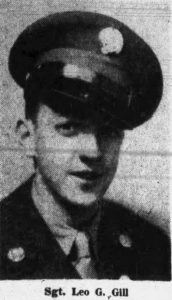 Leo George Gill, age 19, from Effingham County Teutopolis, Illinois .