Skip to content

Cuming, Kevin Alexander
Army Specialist

Kevin Alexander Cuming, age 22, from White Plains, New York, Westchester county.

Service era: Iraq
Military history: Hht, 1St Squadron, 7Th Armored Cavalry Regiment, (1Cd), Fort Hood, Tx 76544

Date of death: Saturday, August 21, 2004
Death details: Hostile; Baghdad, Iraq

Source: Department of Defense, Military Times

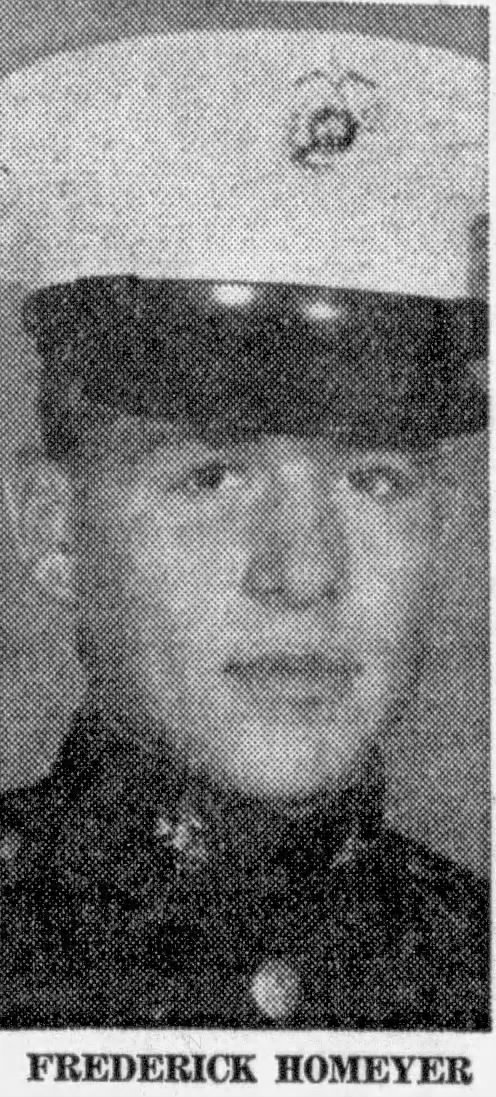
Homeyer, Frederick
Marines Lance corporal

Frederick Homeyer, age 21, from Westchester County White Plains, New York .

Parents: Mrs. Salvatore Davino

Service era: Vietnam
Schools: White Plains High (1963)
Military history: Battery A, 1st Battalion, 11th Marines, 3rd Marine Division

Date of death: Monday, April 18, 1966
Death details: Hostile, South Vietnam; died from multiple gunshot wounds.

Source: National Archives, Reporter Dispatch (1966)

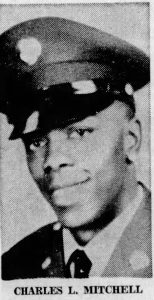
Mitchell, Charles Leroy Jr.
Army Private

Charles Leroy Jr. Mitchell, age 22, from Westchester County White Plains, New York .

Parents: Leroy Mitchell and Vernell Parker

Service era: Vietnam
Schools: High school in White Plains (1962), Iowa State University

Date of death: Monday, November 8, 1965
Death details: Killed by enemy fire in Vietnam.

Source: National Archives, Reporter Dispatch (1965)

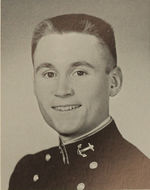
Parsons, Guy Carrington Jr.
Navy Lieutenant (Junior grade)

Guy Carrington Jr. Parsons, age 25, from Westchester County White Plains, New York .

Service era: Vietnam
Schools: US Naval Academy

Date of death: Wednesday, April 10, 1963
Death details: Killed aboard the atomic submarine Thresher when the ship went missing 220 miles East of Cape Cod, Massachusetts

Source: ussthresher.com, Associated Press (1963), US Naval Academy, oneternalpatrol.com

Brennan, Mark J.
Army Sergeant

Mark J. Brennan, age 23, from Westchester County White Plains, New York .

Service era: Korea

Date of death: Thursday, June 18, 1953
Death details: Killed in the crash of an Air Force C0124 Globemaster near Tokyo.
Cemetery: Saint Mary’s

Source: United Press (1953), Daily Item (1953)

Taft, Kenneth Edwin Jr.
Marines Captain

Kenneth Edwin Jr. Taft, age 26, from White Plains, New York, Westchester county.

Service era: Korea

Date of death: Thursday, March 26, 1953
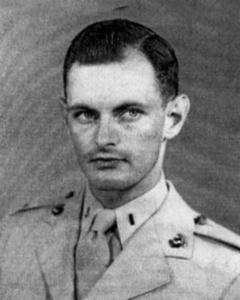
Death details: In late March 1953, elements of the 1st Marine Division manned a string of outposts along a 33-mile section of the main line of resistance on the Korean Peninsula, near the present-day Demilitarized Zone (DMZ). The 1st Marine Division’s 5th Marine Regiment was responsible for three of these outposts, named Carson, Reno, and Vegas, or collectively “the Nevada Cities Complex.” On March 26, Chinese Communist Forces attacked all three outposts. Although Carson managed to stave off the assault, Reno and Vegas, which were more lightly manned, eventually succumbed to the enemy. Over 1,000 Marines were killed, wounded, or went missing during the attack on the Nevada Cities Complex. Captain Kenneth Edwin Taft Jr. joined the U.S. Marine Corps from New York and was a member of H Company, 3rd Battalion, 5th Marine Regiment, 1st Marine Division. He was killed in action on March 26, 1953, at outpost Vegas, one of the outposts in the Nevada Cities Complex. His body could not be recovered at the time of his loss, and he was not identified among remains returned to U.S. custody after the ceasefire. He is still unaccounted-for. Today, Captain Taft is memorialized on the Courts of the Missing at the National Memorial Cemetery of the Pacific.

Source: National Archives, Defense POW/MIA Accounting Agency
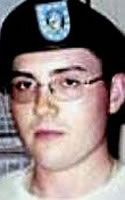
Mannix, Kenneth Francis
Marines Reserves Private 1st class

Kenneth Francis Mannix, age 19, from White Plains, New York, Westchester county.

Parents: James Mannix

Service era: World War II

Date of death: Saturday, November 20, 1943
Death details: From November 20 through 23, 1943, the U.S. Marine Corps and U.S. Navy conducted a large-scale amphibious assault on the Japanese-held atoll of Tarawa as part of Operation Galvanic, the Allied capture of the Gilbert Islands. Located 2,500 miles southwest of Hawaii, Tarawa was a crucial stepping stone in the planned U.S. offensive across the central Pacific toward Japan. The Japanese garrison on Tarawa’s main island of Betio was well-entrenched with hundreds of bunkers and gun positions behind formidable beach obstacles. The first wave of Marines approaching the shore encountered lower-than-expected tides, forcing them to leave their landing craft on the reef and wade the hundreds of yards to the beach under intense enemy fire. The heaviest number of U.S. casualties were suffered during this phase of the landing. Eventually, rising tides allowed U.S. warships to maneuver closer to shore and support the troops with effective naval gunfire. More Marines landed on the second day, launching attacks inland from the beaches and seizing the Japanese airfield on the island. However, the enemy launched vicious counterattacks and two more days of intense fighting were needed to secure Betio. The last enemy strongpoints were taken on the morning of November 23. The fighting on Betio cost the Marines nearly 3,000 casualties but enabled U.S. forces to press further across the Pacific and yielded valuable tactical lessons that reduced U.S. losses in future amphibious landings. Private First Class Kenneth Francis Mannix entered the U.S. Marine Corps from New York and served with Company I, 3rd Battalion, 8th Marine Regiment, 2nd Marine Division, which took part in the Battle of Tarawa. On November 20, 1943, he was killed in action against Japanese forces on Tarawa and was buried in Division Cemetery #5. He was not identified among remains disinterred from burial sites on Tarawa after the war. Today, Private First Class Mannix is memorialized in the Courts of the Missing at the National Memorial Cemetery of the Pacific.

Source: National Archives, Defense POW/MIA Accounting Agency
Back To Top