Skip to content

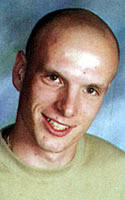
Adamski, Frank E. III
Army Staff sergeant

Frank E. Adamski III, age 26, from Moosup, Connecticut, Windham county.

Service era: Afghanistan
Military history: 2nd Battalion, 327th Infantry Regiment, 1st Brigade Combat Team, 101st Airborne Division (Air Assault), Fort Campbell, Kentucky.

Date of death: Tuesday, March 29, 2011
Death details: Died of wounds suffered when enemy forces attacked his unit with small arms fire in Konar Province, Afghanistan. Killed were Sgt. 1st Class Ofren Arrechaga; Staff Sgt. Frank E. Adamski III; Spc. Jameson L. Lindskog.

Source: Department of Defense, Military Times

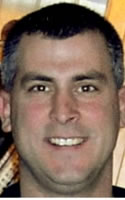
Phaneuf, Joseph Edgar II
Army Specialist

Joseph Edgar Phaneuf II, age 38, from Eastford, Connecticut.

Parents: Peter Phaneuf and Barbara Ortega Phaneuf
Spouse: Michele Kozey Phaneuf

Service era: Iraq
Military history: Hhc, 1St Battalion, 102D Infantry, (Tf Iron Grays), Hartford, Ct

Date of death: Friday, December 15, 2006
Death details: Hostile; Mehtar Lam, Afghanistan
Cemetery: Arlington National

Source: Department of Defense, Military Times, legacy.com

Hoskins, Christopher Lee
Army Specialist

Christopher Lee Hoskins, age 21, from Danielson, Connecticut, Windham county.

Service era: Iraq
Military history: Company C, 1St Battalion, 9Th Infantry, (2Mef), Fort Carson, Co

Date of death: Tuesday, June 21, 2005
Death details: Hostile; Ramadi, Iraq

Source: Department of Defense, Military Times

Hoyt, Robert William
Army Specialist

Robert William Hoyt, age 21, from Ashford, Connecticut, Windham county.

Service era: Iraq
Military history: C Company, 1St Battalion, 102D Infantry, Bristol, Ct

Date of death: Saturday, December 11, 2004
Death details: Hostile; Baghdad, Iraq

Source: Department of Defense, Military Times

Beaudoin, Cindy
Army Speciaist

Cindy Beaudoin, age 19, from Plainfield, Connecticut, Windham county.

Parents: Paul Beaudoin

Service era: Gulf War

Date of death: Thursday, February 28, 1991
Death details: Killed by a U.S. explosive.
Cemetery: St. John’s, Plainfield

Source: White House Commission on Remembrance, Gulf War Chronicles, Hartford Courant

Covey, William F. Jr.
Army Private 1st class

William F. Jr. Covey, age 18, from Windham County Willimantic, Connecticut .

Parents: William F and Meary Stead Covey Sr.

Service era: Vietnam
Schools: Windham Regional Technical School

Date of death: Wednesday, June 30, 1965
Death details: Died at the US Army Presidio in San Francisco from injuries suffered in an accident in Vietnam.

Source: National Archives, Hartford Courant (1965)

Shea, John Francis
Army Private 1st class

John Francis Shea, age 20, from Windham County Willimantic, Connecticut .

Parents: C. Vincent and William S. Shea.

Service era: Vietnam

Date of death: Monday, March 9, 1964
Death details: Died in a helicopter crash in South Vietnam.
Cemetery: Saint Joseph’s

Source: National Archives, Hartford Courant (1964)

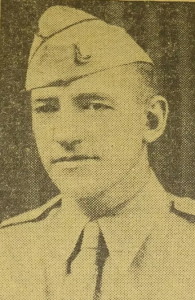
Kennedy, Leonard Mason
Army Private 1st class

Leonard Mason Kennedy from Windham, Connecticut, Windham county.

Service era: Korea

Date of death: Thursday, November 2, 1950
Death details: During the last week of October 1950, Republic of Korea (ROK) Army forces under the control of the U.S. Eighth Army were advancing deep in North Korean territory, approaching the Yalu River on the Chinese-Korean border. Chinese Communist Forces (CCF) struck back in a surprise attack, engaging the ROK 1st and 6th Divisions near Unsan, some sixty miles north of Pyongyang. The U.S. 1st Cavalry Division, with the 8th Cavalry Regiment in the lead, was rushed forward to reinforce the ROK units in the Unsan area. On November 1, the regiment’s 1st Battalion took up positions north of Unsan, while the 2nd Battalion moved to guard the Nammyon River valley west of town, and the 3rd Battalion was placed in reserve at the valley’s southern end. Corporal Leonard Mason Kennedy joined the U.S. Army from Connecticut and was a member of Company K of the 3rd Battalion, 8th Cavalry Regiment, 1st Cavalry Division. On November 2, 1950, Company K was near Unsan when the 8th Cavalry Regiment was cut off from its allies during a CCF surprise attack. Despite putting up a fierce resistance, the regiment was forced to withdraw. It was during this time that Corporal Kennedy went missing. Following the ceasefire, a returning prisoner of war confirmed that CPL Kennedy had been captured and died at POW Camp 5 at Pyoktong North Korea; however, no burial location was known and he was not identified among the remains returned to U.S. custody after the ceasefire. Today, Corporal Kennedy is memorialized on the Courts of the Missing at the National Memorial Cemetery of the Pacific.

Source: National Archives, Defense POW/MIA Accounting Agency

Thayer, Allen
Army Lieutenant colonel

Allen Thayer from Connecticut, Windham county.

Service era: World War II

Date of death: Monday, January 29, 1945
Death details: On December 13, 1944, Japanese forces in the Philippines began the transfer of 1,621 Allied prisoners of war (POWs) to Japan. The POWs were to make the journey aboard transport ships whose harsh conditions and extreme overcrowding led survivors to refer to them as “Hell Ships.” The ships also lacked markings that would distinguish them from any other military target, causing some of them to be attacked by Allied forces who could not identify them as POW transports. On December 14, 1944, Allied aircraft attacked the first ship, the Oryoku Maru, in Subic Bay in the Philippines, killing many Allied POWs who became lost in the water, sank with the ship, or were washed ashore. Survivors of the bombing were put aboard two other ships, the Enoura Maru and the Brazil Maru, to continue on to Japan. During its journey on January 9, 1945, while anchored in Takao Harbor, Formosa (present-day Taiwan), the Enoura Maru was attacked by Allied aircraft from the USS Hornet (CV-8), killing Allied POWs who were lost in the water, on board the ship, or on the nearby shore. Survivors of the Enoura Maru bombing were loaded onto the Brazil Maru, and reached Japan on January 30, 1945. As a result of these incidents, Allied POWs were lost in the Philippines, at sea between the Philippines and Taiwan, while anchored in Taiwan, at sea between Taiwan and Japan, and in Japan. The attacks on these POW transports ultimately resulted in a series of death notifications from the Japanese government through the International Red Cross (IRC), and some casualties were given up to five different dates of death at various locations during the transfer. Witness accounts from surviving POWs offer detailed information for a handful of casualties, but the specific dates of loss and/or last-known locations for many of these POWs are based on the most recent reported date of death. Lieutenant Colonel Allen Thayer entered the U.S. Army from Connecticut and served with the 23rd Field Artillery Regiment (Philippine Scouts) in the Philippines during World War II. He was taken as a POW following the Japanese invasion and was interned in the islands until December 1944, when he was transferred to the Oryoku Maru for transport to Japan. He survived the attack on the Oryoku Maru and was eventually transferred to the Brazil Maru. Records indicate that LTC Thayer died of starvation and exposure while aboard the Brazil Maru on January 29, 1945, and was reportedly buried at sea. However, these records often involve information solely furnished by enemy governments, with some casualties given multiple dates of death. Future research may determine these reports were inaccurate. LTC Thayer’s remains could not be identified following the war, and he is still unaccounted-for. Today, Lieutenant Colonel Thayer is memorialized on the Walls of the Missing at the Manila American Cemetery in the Philippines. Based on all information available, DPAA assessed the individual’s case to be in the analytical category of Non-recoverable.

Source: National Archives, Defense POW/MIA Accounting Agency

Longnecker, Harry Jr.
Army Private

Harry Jr. Longnecker from Connecticut, Windham county.

Service era: World War II

Date of death: Monday, August 17, 1942
Death details: Following the Allied surrender on the Bataan Peninsula on April 9, 1942, the Japanese began the forcible transfer of American and Filipino prisoners of war to various prison camps in central Luzon, at the northern end of the Philippines. The largest of these camps was the notorious Cabanatuan Prison Camp. At its peak, Cabanatuan held approximately 8,000 American and Filipino prisoners of war that were captured during and after the Fall of Bataan. Camp overcrowding worsened with the arrival of Allied prisoners who had surrendered from Corregidor on May 6, 1942. Conditions at the camp were poor, with food and water extremely limited, leading to widespread malnutrition and outbreaks of malaria and dysentery. By the time the camp was liberated in early 1945, approximately 2,800 Americans had died at Cabanatuan. Prisoners were forced to bury the dead in makeshift communal graves, often completed without records or markers. As a result, identifying and recovering remains interred at Cabanatuan was difficult in the years after the war. Private Harry Longnecker Jr. entered the U.S. Army Air Forces from Illinois and served with the 21st Pursuit Squadron, 24th Pursuit Group in the Philippines during World War II. He was captured in Bataan following the American surrender on April 9, 1942, and died of malaria and dysentery on August 17, 1942, at the Cabanatuan Prison Camp in Nueva Ecija Province. He was buried in a communal grave in the camp cemetery along with other deceased American POWs; however, his remains could not be associated with any remains recovered from Cabanatuan after the war. Today, Private Longnecker is memorialized on the Walls of the Missing at the Manila American Cemetery in the Philippines.

Source: National Archives, Defense POW/MIA Accounting Agency
Back To Top